in Barcelona
 3 to 5 Nov 2026
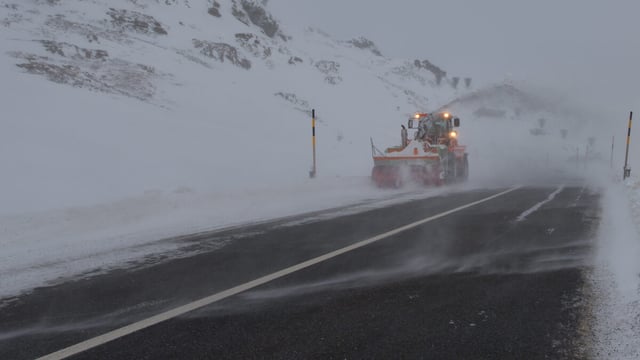
The Landkreis Hof in Upper Franconia, Bavaria, a district of 92,191 residents, presented its TauSENSE app at the Kreisbauhof road maintenance depot on 5 November 2026, giving winter-service crews and, according to the announcement, private users access to readings from dew-point sensors installed at about 130 locations across the district. The app is a component of the district’s Smart City model project, hoferLand.digital, which is financed under the federal Smart City programme in which 73 German cities and regions are testing digital applications, as Radio Euroherz reported on the day of the presentation.
Replacing night patrols with a dashboard
Until the sensor network was installed, municipal depots in the district sent crews on night-time control routes to establish whether roads needed gritting, a practice the district administration described in its August 2025 announcement of the sensor rollout. Every inspection drive that finds a dry or sufficiently warm road consumes crew hours and fuel without producing a treatment decision, and the sensors are intended to remove that category of trip.
Dr. Oliver Bär, Landrat of Landkreis Hof, framed the change in the district’s press release of 29 August 2025: “Künftig genügt ein Blick ins Dashboard,” which translates as “In future, a glance at the dashboard will be enough.”
Three measurements and one calculated value
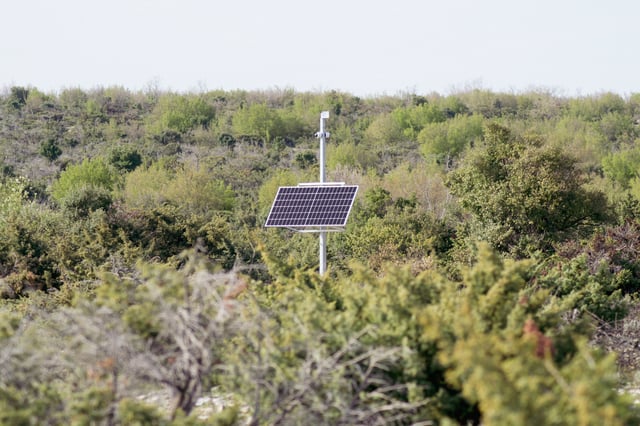
Each of the roughly 130 sites combines an infrared sensor that measures road surface temperature with a small weather station that records ambient air temperature and relative humidity, according to the hoferLand.digital project page. The dew point is then calculated from the air temperature and humidity readings and compared with the surface temperature, which indicates whether moisture is likely to condense or freeze on the carriageway.
Installation began in late summer 2025, and Neue Landschaft reported in its November 2025 issue that the sensors had been operating since early November of that year. The 2026 presentation therefore follows one full winter of depot use and extends access from the depots to a wider audience.
Federal funding framework
hoferLand.digital was selected in the federal Smart City programme and, according to the regional newspaper Frankenpost, had €17 million in funds available for the project. The project page lists the Kreditanstalt für Wiederaufbau (KfW), the Federal Ministry for Housing, Urban Development and Building (BMWSB) and the Smart City Dialog as its funders, and the sensor network is one of several applications built within that programme.
The district announced a further group of applications for October 2025, comprising a digital twin, statistical dashboards and a data catalogue, which places the winter-service sensors inside a wider municipal data platform rather than a standalone road-weather system.
Who gets access and when
The web application first serves the Bauhöfe, the municipal maintenance depots, which gain central access to all relevant weather information for the district. The district stated in 2025 that access would later be extended to companies, rescue services and interested residents, and the November 2026 presentation announcement says TauSENSE is meant to be usable by private individuals as well.
Programme manager Hermann Seiferth of hoferLand.digital described the objective on the project page as creating the basis for data-based decisions in winter service, which means that gritting is carried out where readings indicate a hazard and omitted where they do not.
Forecasting is the next component
Hochschule Hof, the district’s university of applied sciences, is cooperating with the project on a prediction model that would estimate location-specific icing probability for the coming hours and days. Current sensor readings describe conditions at the time of measurement, so a forecast layer is what would allow dispatchers to schedule vehicles ahead of a frost event rather than respond to a dashboard alert after surfaces have already cooled.
The winter of 2026 to 2027, the second season of sensor operation and the first in which residents can view the same readings as the depots, will supply the next full set of site-level data against which that forecast model can be trained and checked.