Palm Beach County is moving forward with the installation of an Adaptive Traffic Control System (ATCS) across two of downtown West Palm Beach’s most congested corridors, in a two-phase upgrade backed by nearly $5.75 million in state grants from the Florida Department of Transportation. The programme will equip 13 intersections on Okeechobee Boulevard and eight on Quadrille Boulevard with real-time sensors, upgraded controllers and monitoring cameras designed to dynamically retime signals based on actual traffic demand.
A Gridlock Corridor at the Heart of the State’s East Coast
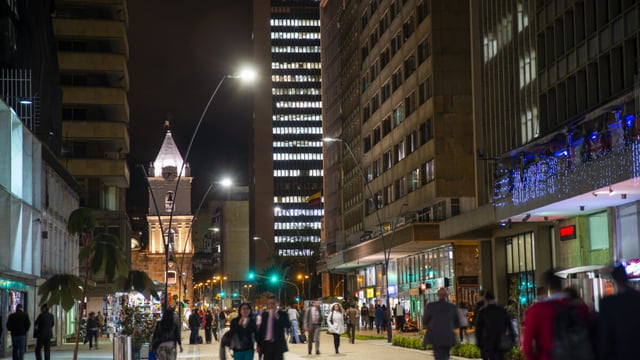
The Okeechobee Boulevard corridor between the I-95 overpass and Flagler Drive carries more than 76,000 vehicles per day between I-95 and Australian Avenue, according to FDOT traffic counts cited by the county. The segment funnels commuters, tourists and commercial traffic into downtown West Palm Beach and across three Intracoastal Waterway bridges to the Town of Palm Beach. It also sits alongside two active railroad crossings, operated by CSX and Florida East Coast Railway, a drawbridge and high pedestrian volumes, all of which routinely disrupt signal progression during peak hours.
Quadrille Boulevard, the north–south complement to Okeechobee inside the downtown core, connects Okeechobee to US-1 and A1A before reaching Flagler Drive. According to the Palm Beach County Engineering and Public Works Department, which operates and maintains traffic signals in the area on behalf of FDOT, the corridor experiences similar pressure from pedestrian activity, an adjacent rail line and bridge preemption events.
Phase 1: $2.75 Million for 13 Okeechobee Intersections
Phase 1 covers the Okeechobee Boulevard stretch from the I-95 overpass to Flagler Drive. A state-funded grant agreement approved by the Palm Beach County Board of County Commissioners allocates $2.75 million in FDOT reimbursement for design, furnishing, installation and construction engineering inspection services, with the county providing a local match of $33,476, representing roughly 1.2% of the total estimated project cost of $2,783,476. The grant falls under the Catalog of State Financial Assistance programme number 55.039 for Highway Operations.
The contract terms require the upgraded intersections to be operational by December 31, 2026. The county’s Traffic Division is procuring the work via a single furnish-and-install package under Request for Proposal 26-020/CB, issued on November 13, 2025 with proposals due at year-end. The contract term is set at 24 months, followed by a one-year maintenance period that may be extended twice for a total of up to 36 months of vendor-supported operations.
Phase 2: $3 Million for Quadrille Boulevard
On February 3, 2026, the Board of County Commissioners adopted a resolution approving a second FDOT-funded grant agreement of up to $3 million to extend the system to eight intersections on Quadrille Boulevard from Okeechobee Boulevard to Flagler Drive. Phase 2 covers design, furnishings, installation and construction engineering inspection, with a contract completion date also set for December 31, 2026.
Together, the two phases represent roughly $5.75 million in committed state funding and 21 signalised intersections across the downtown core. The county’s Traffic Division operates more than 750 signalised intersections countywide through a joint Transportation Management Center co-located with FDOT District 4, linked by over 500 miles of fibre-optic communications.
How the System Works
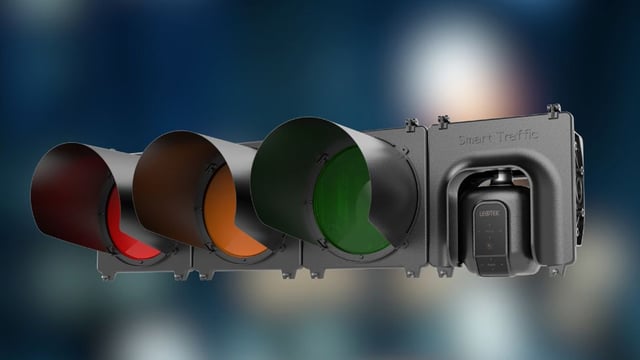
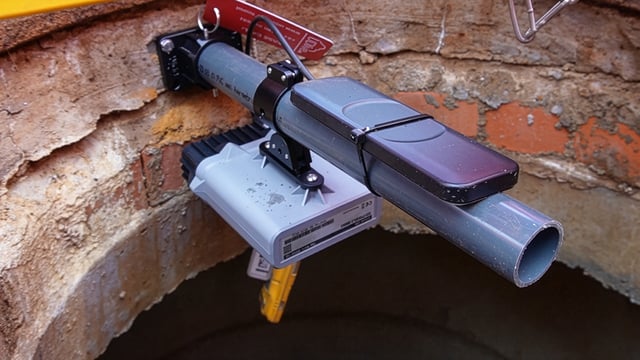
The project replaces the existing fixed-time signal regime with an adaptive architecture. According to the county RFP, the scope includes Advanced Traffic Controllers, Automated Traffic Signal Performance Measures (ATSPM) detection, central management software, updated controller firmware, replacement of the existing traffic monitoring camera system and the ATCS software platform itself.
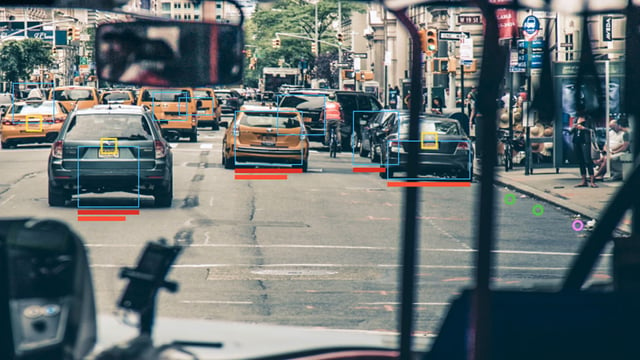
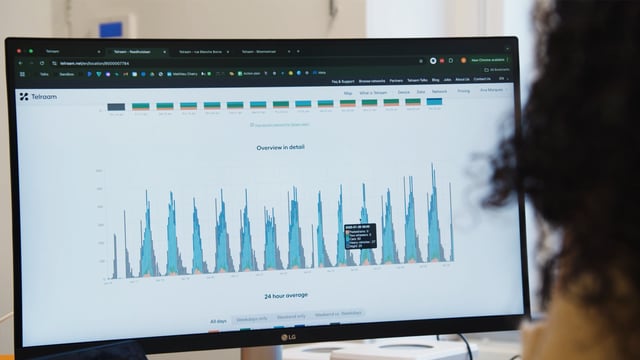
In practice, embedded roadway detectors and video-based vehicle counting feed real-time volume, speed and occupancy data to the traffic management centre, where the control logic recalculates green time on a cycle-by-cycle basis. David Ricks, Palm Beach County Engineer and Public Works Director, has described the design intent as allocating additional green time to whichever approach is carrying higher demand at a given moment, whether that is the main east–west flow along Okeechobee or heavier side-street arrivals during events at downtown venues such as the Kravis Center or the Palm Beach County Convention Center.
The deployment is also structured to handle the corridor’s non-recurring disruptions, including railroad and drawbridge preemptions, which today can force signals out of coordination for several cycles after each event.
A Second Attempt After a 2019 Decommissioning
Palm Beach County is not new to adaptive control. An earlier ATCS deployed on Okeechobee Boulevard in 2015 was decommissioned in 2019 after performance shortcomings, according to a 2022 presentation by Ricks to the Palm Beach Transportation Planning Agency. County officials have publicly attributed the original system’s removal to reliability issues and have indicated that the current procurement targets a more mature generation of controllers, detectors and algorithms.
In the interim, Okeechobee Boulevard has been managed through FDOT’s Active Arterial Management programme, a real-time monitoring and intervention effort run from the county’s Traffic Management Center, which retimes signals manually in response to congestion, incidents and special events. The new ATCS is intended to automate much of that intervention layer.
National and International Context
Adaptive signal control remains a relatively niche technology in US deployment terms. The Federal Highway Administration, through its Every Day Counts initiative, has historically estimated that adaptive systems are installed on less than 3% of the country’s signalised intersections, despite documented delay reductions of 10% to 40% across projects in Florida, California and other states.
Within Florida, Miami-Dade County has run an $11 million adaptive deployment across 34 intersections along US-1, and FDOT District 7 awarded a five-year, up-to-$5 million regional traffic signal retiming contract to Iteris in 2020 covering Tampa-area corridors. Palm Beach County’s own Phase 5 ATCS planning documents, published through FDOT’s District 4 and 6 ITS architecture, indicate further adaptive deployments under consideration for Glades Road in the southern part of the county.
Internationally, similar projects are accelerating. Kurrant has previously reported on Barcelona’s 2025 plan to cut congestion by up to 20% through AI-driven adaptive signals at 200 intersections, and on Amsterdam’s decision to halt its smart traffic light programme over data privacy and cybersecurity concerns — a contrast that underscores both the potential and the governance challenges that US deployments such as Palm Beach County’s are likely to encounter as sensor and camera footprints expand.
What Comes Next
The county has signalled that performance on the Okeechobee and Quadrille corridors will shape any broader rollout. Under the FDOT grant, county traffic engineers are expected to monitor corridor performance for at least a year after commissioning, using the embedded ATSPM infrastructure to measure delay, arrivals on green, split failures and other operational indicators. If results meet expectations, the county has indicated that further adaptive deployments could follow at other chronically congested corridors within its roughly 1,300-intersection network.
For now, the near-term outcome is a concentrated deployment in downtown West Palm Beach, funded almost entirely by the state, intended to restore reliability on a corridor where more than 76,000 daily vehicles compete with trains, pedestrians and a drawbridge for a finite amount of green time.