in Barcelona
 3 to 5 Nov 2026
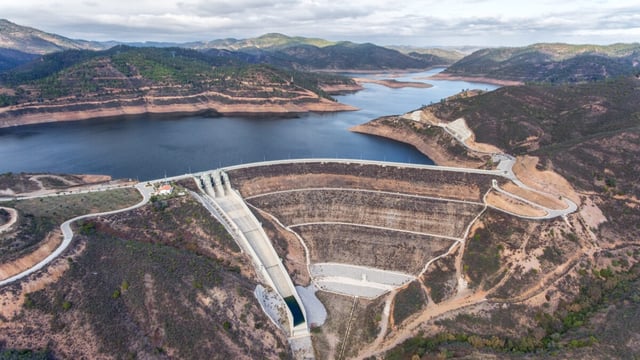
Portugal’s national water strategy, Água que Une (“Water that Unites”), foresees investment of about €5 billion until 2035, of which about €2 billion is expected to come from European funds, while the European Commission has identified a financing gap of about €371 million per year by 2027 in water protection and management, according to Water News Europe on 4 November 2026. The strategy, which covers roughly 300 measures intended to make more than 1 billion m³ of additional water available, was presented in March 2025 and officially approved on 24 June 2026.
The Commission’s 2026 Portugal country report links the gap largely to wastewater infrastructure needs. It notes that EU funding under the 2021-2027 cohesion policy and the Recovery and Resilience Facility addresses part of the need, while a significant number of planned measures, including those under PRORIOS 2030, still depend on future funding programmes and lack fully secured financing.
Nine Programmes Under Three Pillars
The strategy rests on three pillars, efficiency, resilience and intelligent water management, and is organised into nine programmes: the National Programme for Reducing Water Losses, the Programme for the Reuse of Treated Wastewater, the Programme for Innovation and Digitalisation of the Water Cycle, the Plan for the Rehabilitation and Restoration of Rivers and Streams, the Programme for Increasing Water Storage Capacity, the Programme for Improving the Efficiency of Agricultural Irrigation Infrastructure, the Programme for Managing Water Supplies to the Sines Industrial Complex, the Tagus Water Resilience Programme, which includes the new Alvito/Ocreza Dam, and a new corporate model for water infrastructure modelled on the state-owned Alqueva development company EDIA.
This project is heading to tender
New smart water tenders worldwide, flagged daily with an AI summary.
The Portuguese government’s announcement describes 294 measures and a €5 billion estimate, and lists full digitisation of the water cycle and specialised management structures for the Médio Tejo and Mondego regions among the structuring programmes. That page, published on 28 June 2025, refers to a 2030 horizon, while the later Water News Europe report refers to 2035, so the investment period differs between the two sources.
Priority regions include the Algarve and coastal Alentejo, which are most affected by drought and water scarcity, and the strategy also aims to strengthen agricultural and industrial capacity elsewhere in the country and to safeguard investments already made.
How the Strategy Proposes to Finance Itself
The official strategy states that funding sources will be identified according to the nature of the expenditure and the type of solution. Grants financed by national or EU funds are foreseen for direct interventions on public land, such as interconnections between river basins and the restoration of watercourses.
For other measures it points to loans from commercial banks, Banco de Fomento and the European Investment Bank, for example for multipurpose infrastructure projects, together with equity financing for individual dams, distribution networks and tertiary systems and for interventions along sections of privately owned watercourses.
On those numbers, the EU contribution covers about 40% of the €5 billion, so the remaining €3 billion has to come from national grants, loans and private equity. The €371 million annual gap identified by the Commission would amount to about €1.48 billion if it persisted from 2027 through 2030, although the Commission describes it as an annual figure for water protection and management needs rather than a shortfall specific to this strategy.
Farm Sector and Opposition Pressure on Delivery
The president of the Confederation of Farmers of Portugal (CAP), Álvaro Mendonça e Moura, said in the economic newspaper Sapo that the strategy is an opportunity to change Portuguese agriculture structurally, increase production and strengthen export capacity, but that he cannot identify in the State Budget the amounts needed to reach the €5 billion goal.
The opposition party Iniciativa Liberal has asked for a public timetable to monitor implementation, according to RTP. The party cited persistent water losses of 30% to 40% in municipal distribution networks and has sent questions to Environment and Energy Minister Maria da Graça Carvalho on works completed, under way and not yet started.
The 30% to 40% loss rate matters for the technology content of the strategy, because the National Programme for Reducing Water Losses and the Programme for Innovation and Digitalisation of the Water Cycle are the two programmes most directly tied to metering, leak detection, network monitoring and data platforms.
What Buyers and Vendors Should Track
For suppliers of smart water technology, the strategy is a pipeline signal rather than a procurement: the programmes name categories of work, such as loss reduction and digitisation, but contracts will follow only as funding lines are opened. The strategy also proposes a new corporate vehicle for developing and managing water infrastructure projects, which would become a significant buyer if it is created along the lines of EDIA.
Municipal utilities hold most of the distribution networks where the 30% to 40% losses are reported, so tenders for the loss reduction programme are more likely to come from many local operators than from a single national body.
The decisive date for the funding question is 2027, the year by which the Commission expects the €371 million annual gap to materialise, and the State Budget allocations and the next cohesion programme decisions before then will show how much of the €5 billion moves from strategy to committed money.