in Barcelona
 3 to 5 Nov 2026

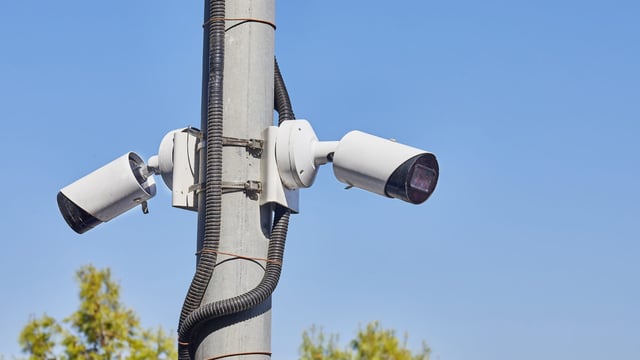
TIM Brasil, the Brazilian mobile operator, and Smart Luz, the concessionaire that manages public lighting in the city of Rio de Janeiro, announced on 6 November 2026 a partnership to connect more than 12,000 urban surveillance cameras, none of them yet installed, to TIM’s 5G network, according to Mobile Time. The cameras will be mounted on the city’s lighting poles and will send video through a dedicated slice of the mobile network, with images carried over a virtual private network instead of the public internet.
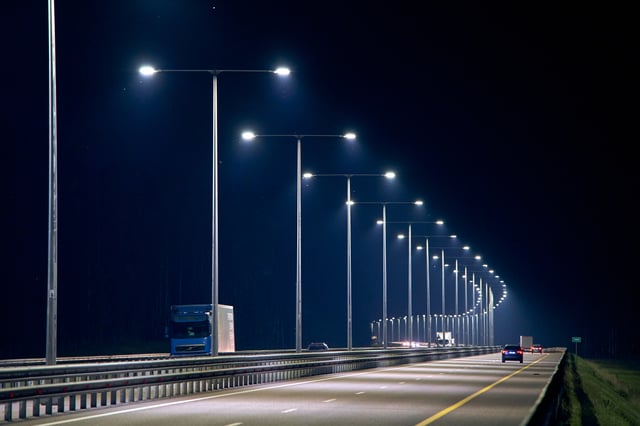
The two companies already operate more than 63,000 smart lighting points in the city, according to Mobile Time, which gives the camera project an existing pole network and an existing commercial relationship to build on, and the camera count is roughly 19 percent of that installed lighting base.
A Camera Network Added To An Existing Smart Lighting Base
Mobile Time reports that the partnership between TIM and Smart Luz has already put more than 63,000 smart lighting points into service in Rio de Janeiro, allowing remote, real-time monitoring of luminaire operation and energy consumption, which the publication says lowers operating costs and speeds up maintenance. The surveillance cameras would be added to the same poles, so that each 5G-connected pole becomes a point for real-time image transmission, as Minha Operadora describes the design.
This project is heading to tender
New smart city and utility tenders worldwide, flagged daily with an AI summary.
The figure of 12,000 cameras is reported as “more than” by Mobile Time and as “about” by Diário do Rio, so the final installed count will depend on how many poles the concessionaire equips.
Network Slicing And A Private Tunnel Carry The Video
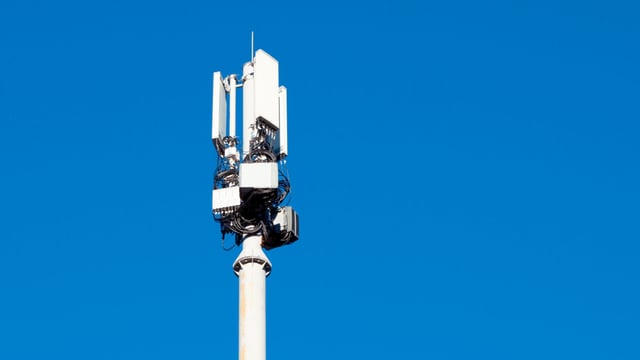
The technical case rests on 5G network slicing, which reserves a dedicated portion of the operator’s mobile network for a single application so that a video feed holds up during periods of heavy traffic from other users. Diário do Rio reports that TIM also routes the images through a VPN that creates a protected path between the cameras and the point where footage is delivered.
“The video monitoring system will be able to count on dedicated capacity for the continuous transmission of images,” said Fábio Costa, B2B vice president at TIM Brasil, in comments reported by Minha Operadora in November 2026 and translated here from Portuguese.
Costa also said that mobile connectivity reduces the need for extensive cabling, which the operator presents as a way to deploy faster and to expand the network more easily than a fibre-based design would allow.
Where The Operator’s Role Stops
TIM’s responsibility is confined to connectivity: it supplies 5G access, the routers and the private transport needed to move images in real time, while the storage of recordings, access control and the handling of footage fall outside its scope, according to both Mobile Time and Diário do Rio. Smart Luz, as the party that holds the lighting concession and the poles, is the project partner on the infrastructure side.
The split matters for procurement and governance, because the party that carries the video is not the party that retains it, and any data-protection obligations attach to whoever operates storage and access rather than to the network provider.
The analytics layer is intended to flag out-of-pattern situations, incidents and relevant changes in the movement of people and vehicles, and to send alerts in real time to the responsible teams.
São Paulo’s Smart Sampa Sets The Domestic Benchmark
The project was announced shortly after security failures in Smart Sampa, the São Paulo municipal camera programme, according to Minha Operadora, which makes that system the closest domestic comparison. São Paulo selected a bid in May 2023 for an initial 20,000 facial recognition cameras at R$9.2 million per month, about US$1.9 million, as reported by Biometric Update.
By August 2026 the programme had reached about 50,000 cameras, with a current contract running until August 2028 at up to R$10 million per month, and a public call allowing companies and condominiums to integrate their own cameras that meet a minimum of 2 megapixels and store images in the cloud for seven days, according to BNews São Paulo. The same report lists 6,247 arrests in flagrante and 3,428 fugitives captured, figures supplied by the programme itself.
What Will Decide The Rio Rollout
Rio’s design is notable operationally because the video transport is contracted from a mobile operator on a sliced 5G service, so performance is governed by the capacity reserved on TIM’s radio network at each pole location.
The next measurable point is the installation phase, since the cameras are not yet in place, and the test for the slice will be whether dedicated capacity holds for continuous transmission from more than 12,000 cameras alongside the 63,000 lighting points already reporting over the same partnership.