in Barcelona
 3 to 5 Nov 2026

The Comune di Viterbo has contracted Boldyn Networks Italia to install a citywide network of 12 AirQino multiparameter air quality and weather stations under a project called Living Smart Viterbo, with the station count reported by ViterboToday on 22 October 2026 and the project detailed in CorCom on 3 November 2026. The stations feed a cloud platform that forecasts air quality, maps urban heat islands and simulates the effect of planned interventions, giving the municipality in Lazio a data layer it can use to decide where to place traffic restrictions and new green areas.
Station Network and the Data It Collects
According to a TusciaTimes report on the project, each AirQino unit measures PM2.5, PM10, nitrogen dioxide and ozone, together with temperature, humidity, rainfall and wind, and the configuration varies between the city centre and the outlying hamlets, with extra density planned around high-traffic and industrial zones.
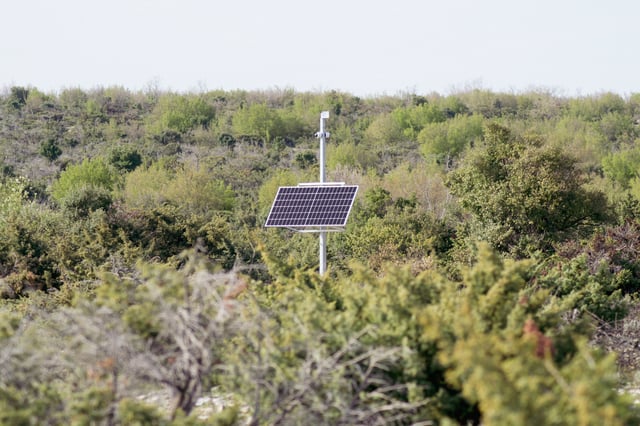
The stations are mounted on public lighting poles or existing buildings, which limits new construction and places the sensors at street level across the areas the municipality wants to cover.
The project sits under the “Esperienza digitale del cittadino” heading of Viterbo’s Strategia territoriale di sviluppo urbano, the urban development strategy through which the city channels digitalisation funding, and it is intended to supplement the institutional monitoring carried out by the regional environmental agency with more granular and more frequent readings.
Cloud Platform, Forecasting and Heat Island Mapping
Measurements are collected in real time on a cloud platform that gives municipal staff customisable alerts, air quality forecasts and warnings for significant weather events, and that integrates with the city’s information systems, geographic information system and open data channels.
Forecasting and simulation are the features that separate the platform from a conventional monitoring network, because a limited traffic zone or a new park can be assessed against modelled air quality outcomes before any works begin, and a public page will share the readings with citizens and schools.
A dedicated urban heat island service combines satellite surface temperature data with ground measurements from the stations to produce maps of thermal differences across the urban fabric, which the municipality intends to use when prioritising measures such as tree planting, reflective materials and the redevelopment of public spaces.
Role of the National Research Council
The Consiglio Nazionale delle Ricerche (CNR) is the scientific partner, and AirQino is the monitoring system CNR researchers have developed over more than ten years.
CNR will validate station data, track the long-term reliability of the sensors and produce periodic air quality bulletins, a function that matters because low-cost multiparameter sensors drift over time and are not equivalent to the reference-grade analysers operated by regulators.
Vendor Background and a Comparable Deployment
Boldyn Networks describes itself as a neutral host operator that builds shared wireless infrastructure for transit systems, venues, enterprises and smart cities, and it says it is majority owned by CPP Investments, operates through nine companies and manages 120,000 small cell sites, figures supplied by the company and not independently audited.
The company lists a transport network in Rome among its six, and Living Smart Viterbo extends its Italian business from connectivity into environmental data services, the kind of municipal contract that lets a tower and small-cell operator monetise assets such as lighting poles and rooftops beyond telecom tenancy.
The AirQino system has been used in other Italian cities, and the best documented comparison is Arezzo, where the Urban Innovative Actions portal records 11 AirQino sensors installed under the city’s 2021 Green City Accord commitment.
In Arezzo each unit costs between €3,000 and €4,500, renewal after two years costs about €2,000 per unit, and the total investment is put at €35,000 to €40,000 plus maintenance, with data refreshed every five minutes and the dashboards used to compare industrial, high-traffic and baseline sites and to identify hot spots during heatwaves.
Viterbo’s network of 12 stations is of similar size to the Arezzo deployment, which has since been replicated outside Italy, including in France and Slovenia, so the Arezzo cost range is a reference point for the scale of hardware involved and not the price of the Viterbo contract.
What the Contract Is Meant to Support
The stated purpose of the municipality and its contractor is to identify the areas most exposed to pollution and heat and to assess interventions such as new green areas or traffic changes before they are implemented, which moves the sensor network from monitoring into planning.
Mayor Chiara Frontini has framed the project as part of an effort to steer urban development toward environmental protection, and Boldyn’s chief executive for Italy described the commercial logic in direct terms.
“With Living Smart Viterbo we want to demonstrate how digital infrastructure can generate concrete value,” said Antonino Ruggiero, CEO of Boldyn Networks Italia, in comments published by TusciaTimes on the project launch (translated from Italian).
Because the heat island service relies on satellite surface temperature, its resolution is set by the satellite revisit and pixel size, so the first test of the platform will be whether the ground stations and satellite layer produce thermal difference maps detailed enough to separate individual districts and justify specific greening or traffic measures, a result the first CNR air quality bulletins should begin to show. Arezzo offers the timeline benchmark, since its stations were launched in 2021 and the municipal administration is only now expected to apply the accumulated evidence to policy decisions in summer 2026, which implies that the period between installation and measurable policy use can run to several years.