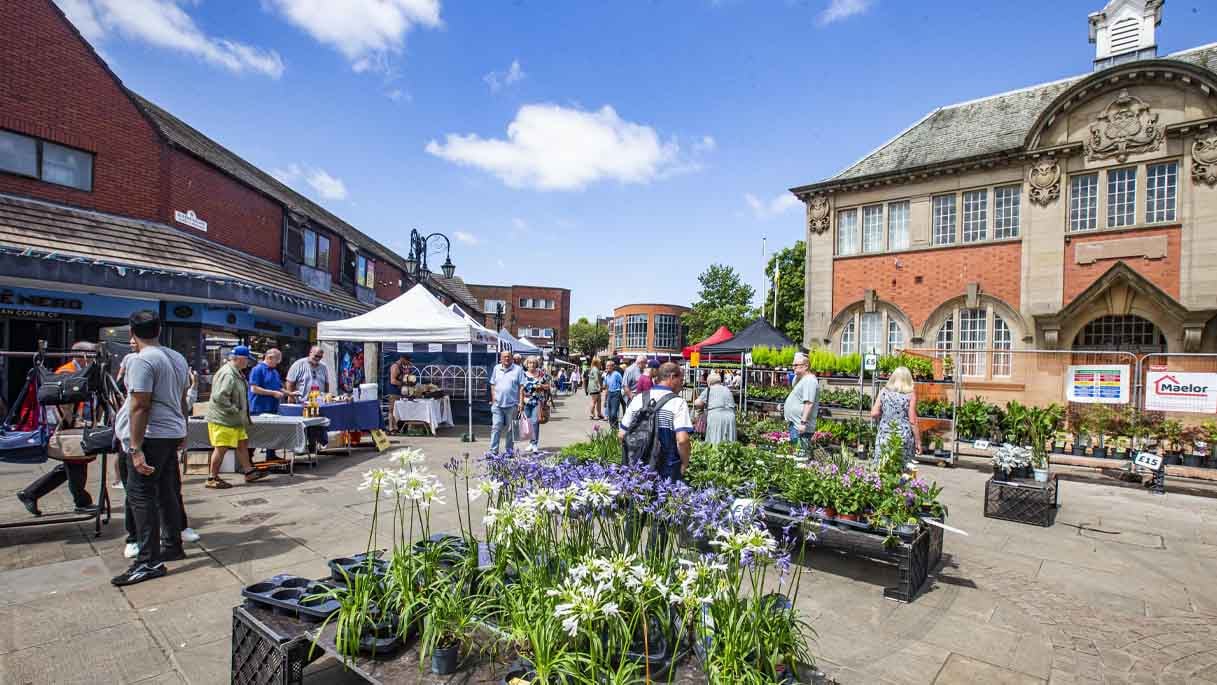
Wrexham’s Strategy Smart Tech to Revive Historic City Centre
View transcript auto-generated
Wrexham gained international fame when Hollywood actors Ryan Reynolds and Rob McElhenney purchased the city's football club in 2020. But this fame hasn’t spared Wrexham from a challenge many municipalities face in the UK. In the last decade, and especially after the pandemic, Wrexham’s city centre has seen many shops close their doors due to a lack of visitors, as many clients turned to online shopping. There has been a change in habits and needs. The council is looking to bring back the phrase ‘I'm going to pop into town’ and in order to improve their management as well as try to make the city more attractive, Wrexham has turned to smart solutions to revive the historic centre. Town centres now are more than retail, so we kind of have to offer an experience to attract visitors in families, children. In town centers, why do you see so many coffee shops and barbers? It's because you can't get a cup of coffee online or you can't get a haircut online. We need to kind of change the kind of offering in towns and city centres. And that's when smart technology can kind of help support that. To understand habits and gather data for current and future businesses, as well as to see how the council itself can attract more people into the centre, Wrexham Council started deploying various smart city sensors in the 2021/2022 season. One of their first projects involved the deployment of PCM radar traffic counters in certain roads and Milesight VS121 camera based footfall sensors in different businesses like cafes, shops or pubs and bars, and even at events. Their smart city plan took off so rapidly that the city now has some 600 sensors. Air quality. We look at obviously CO2 and particulate matter. We've got some outside of schools. We've got some car parking sensors, and that was a pilot. They were placed in the ground by a company called Nwave. The footfall sensors we've got in the businesses they are camera based, above your head, but are blurred out. The council also has sensors for noise, irrigation, waste collection, energy use in their buildings... To connect the solutions, they decided to go for LoRaWAN, as according to Dave, it was a cheaper option than cellular connectivity for their 600 sensors. They started with three gateways, now have just over ten. They're looking to bring the number up to 20 in hopes to cover the whole county by the end of 2025 with the Things Industries. The solutions have already guided some of the council's decisions. Let's take the parking sensor pilot as an example. When Covid hit, parking was free. The sensors allowed them to see dwell times at their different car parks. They found out that on many occasions, some cars were parked for even 16 hours. This allowed the city to understand use trends and adjust the policy. The data from all the sensors, including the parking ones, is sent to one same platform by Tago, which serves as a centralized data visualizer. It's one platform, so we have a dashboard, but then the businesses will have access to their data, and then different parts of the council will have access to their data. So active travel, they'll have access to the road traffic counters. The school will have access to their data. We're doing another project and looking at building efficiency in one of the council buildings that the team over there on the energy team, will have access to that data. So we can set up multiple users and set up different accounts so they only see certain parts of the data. To develop and deploy their smart city strategy, Wrexham relied on numerous Welsh government grants. Dave told me the average price of their sensors is around 150 to 200 pounds, but the price can range between 40 pounds, like some noise sensors, to 2500 for weather stations. The gateways have a cost of around 2,000 pounds, all that, plus the monthly fees of the platform, which depends on the amount of devices and the update times, but that has a starting point of $200 a month. So next question has to be ROI. There's the obvious one of attracting more people to the city, thus creating more business. There's also having a better management of council resources. One of their success stories comes from their humidity sensors in flowerbeds. To make the city centre prettier to visitors the council has many flowerbeds which require maintenance and water. We got some funding to place some moisture sensors in all the raised flowerbeds, so they just open the app on their phone and they can see if it's green, it doesn’t need water and if it's red, it needs watering. The feedback was it saved about three hours a day and 1,000 litres of water a day it's saved over the summer period. That equates to, about 30,000 pounds a year. Due to cost concerns, many of these projects are pilots. The smart towns office kicked off the pilots to prove to each department how technology can improve their services. That's the goal of their strategy at the moment. The flowerbeds started with five sensors. There are now 50. They started with one bin fill level sensor and now have 30. There are now three flood sensors, but the environmental office is looking to deploy up to 50. They also reuse many of their sensors by moving them around. They have noise sensors that they move to different locations depending on complaints, and even re-used the traffic counters with the police using them to see if there are speeding issues in different streets. The city, which only became a city in 2022, has bet on smart technology to improve the centre to make it more attractive for locals and the tourists they get with the football club becoming so famous. The city is focusing right now on building an infrastructure and slowly scaling, sort of gearing up for the growth it may experience after its fame and new status.


📰 Latest News

🎬 Kurrant Originals

🎥 Recent Event Coverage


🎯 Featured Case Studies
Real client work behind the news — strategy, M&A and engineering projects we've delivered for cities and utilities.



Stay in the Loop
Get smart cities and utilities insights delivered your way. Choose your channel
Join our WhatsApp Channel