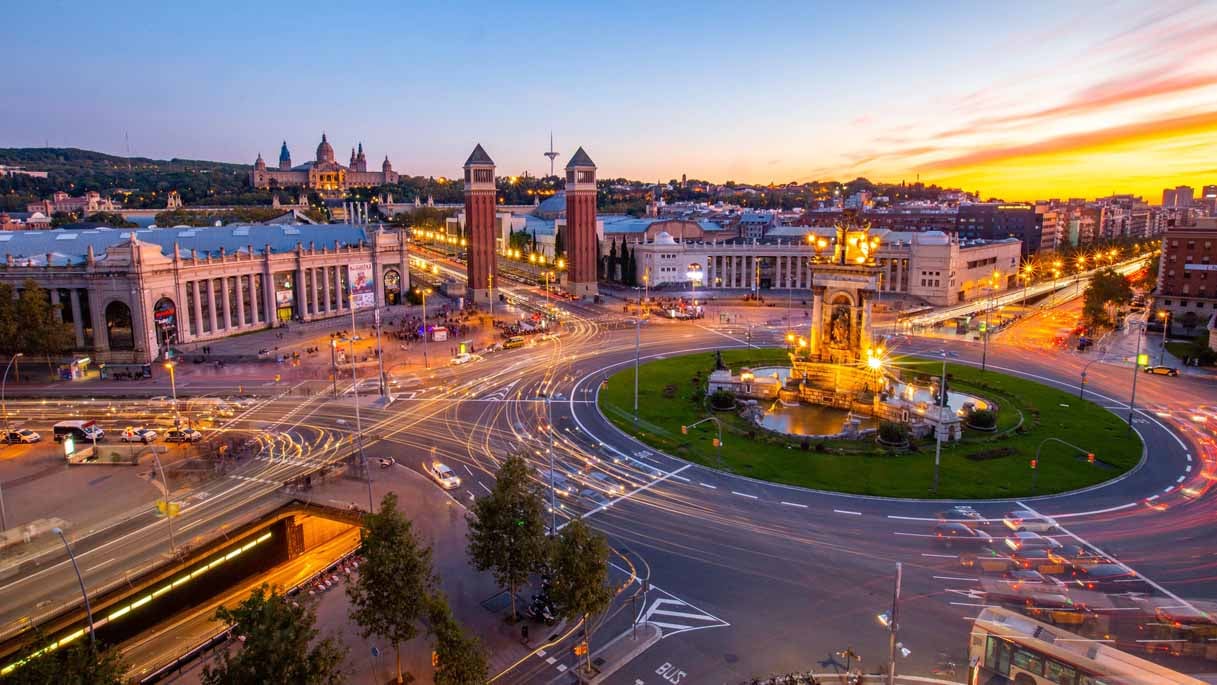
Catalonia’s Smart Region Strategy
View transcript auto-generated
The Spanish region of Catalonia has been marketing itself as a smart region for many years. They've been putting a lot of effort into it with the smart Catalonia strategy, the open data portal and its capital Barcelona, known as one of Europe's tech hubs, piloting and deploying numerous smart city solutions in smart parking, lighting, and in the past years, even a digital twin. However, the city and region have struggled to maintain this status. Politics got in the way and the previous Barcelona mayor Ada Colau wanted to rely less on technology, taking some steps back in smart city solutions. This was sort of a blow to the industry. But with new leadership both at city and regional levels, a new revival of smart cities seems to be on the horizon. For example, Barcelona politicians kicked off 2025 by asking the mayor to improve street lighting through remote control systems, complemented by various smart city sensors. To discuss Catalonia's digital strategy, we came to Barcelona's Free Trade Zone to talk to Maria Galindo, the region's new Secretary for Digital Policy. So there were many different digital strategies that Catalonia had put up in place since 2020, and basically they were focused on artificial intelligence, blockchain, 5G, 6G and also on new space technologies. Since then, what had been done was establishing this kind of strategies to really promote the ecosystem of different actors in Catalonia. So really matchmaking what startups were doing with what SMEs are doing with what research centers and universities were developing. So what I found was a very mature policy really, in terms of digitally advanced technologies. And I think that now it's the time to go further and to bring all those research projects that have been, developed and within that already established ecosystem to bring the capacities into the market. One of Galindo’s goals is all about AI. Onboarding companies so that all, whether startups or SMEs, can benefit in one capacity or another from artificial intelligence, from making them more efficient, to improving their solutions and services. To speed up this AI adoption, the region has allocated this year part of a €30 million grant for AI integration. For Miss Galindo, it's also key to partner with all smart city players to make the region smarter. This strategy is in line with Galindo's idea of a smart city. This is what she said in the 2022 Kurrant panel ‘Is Barcelona a smart city?’ It's basically impossible to deliver or to build a smart city just with the city managers. But you need everyone in the ecosystem. As we see more pressure being put on public funding globally, working together with all stakeholders is also an important part of the region's strategy in terms of funding. What I can say for sure is that the scarcity or the limitation of public funding and public budget for this kind of policies will only be solved, and I think that we must go for it, through a public private partnership. If we plan to do it alone and only with the public funding, we're not going anywhere. We need the private funding, and we need the private market, and we need, really the market, because this kind of solutions that we can start foreseeing and start funding at the very laboratory level, so at the very research level, then they have to become solutions, market solutions that can be deployed wherever. So we really need to work together. Public private research centers, universities, everyone in the ecosystem. The strategy will put a focus on collaboration and specific verticals: Climate change, mobility and health. Many of the smart city projects though, will focus mostly on climate, more specifically water, as the region continues to experience severe drought. Implementing different sensors in the waterbed, so not working at the house level, but actually at the region level with with the rivers. We can assess 30% loss of water through leakages. So we're working on that, and we're actually using the funds for nuclear transition. With the funds coming for the reconversion of those centers and of those areas we are also promoting the development of tech projects and smart projects. After the flooding in Valencia, there's also interest in flood monitoring, and in November, the city of Lleida proposed to install level sensors in risk areas of river headwaters or streams, for example, to alert of possible dangers. To assess this issue, the region has hopped on the global trend of using satellite data and are keen to use Earth observation not just for flooding, but also for crop watering, as well as drought and wildfire prevention. The day I interviewed Galindo, she’d visited IsardSat and Lobelia to better understand how these local companies can help tackle the region's issues. The latter uses satellite data for air quality and climate monitoring, agriculture and water management. Yesterday, we launched a competition for Catalan companies to present projects with the exploitation of, you know that we have some space missions, from Catalonia. So using our latest nanosatellite data. Data is open and anyone can check on the data of the nanosatellite. But using and exploiting this data, how they can promote projects to fight climate change. Barcelona and Catalonia are no different to any other region or city. They too experience issues with a siloed system. Galindo sees these silos in the government departments, but also regarding technology, having so many different solutions to approach one issue. Verticals need to talk to each other. But this is easier said than done as we saw with the city of Brussels, and Catalonia hasn't found the magic formula to get verticals working together. There is a program called the Digital Areas in the secretary, which accounts for like eight different digital areas in Catalonia, located in different regions. And the aim of these areas is to promote the use of disruptive technologies at the local level. So really building these ecosystems that we were mentioning before, but at the local level. And so my idea is to have all those areas built into our network, sort of a smart region laboratory really, where you can test, deploy and escalate the different technologies. Catalonia and Barcelona still have a road ahead of them. Speaking as a Barcelona resident myself, my experience is that there still needs to be a lot done regarding safety, street cleanliness, waste management, mobility, water... For example, my area still has non-digital water meters and I have to let a utility worker in to read it, something that doesn't happen in many other Spanish cities. However, it seems like the region is taking positive steps towards smarter management, allocating resources for the development of AI and deployment of smart solutions. Galindo has experience in smart city issues, as she was the Barcelona City Council manager for the Smart City program until 2015. During its golden era. She was key in smart city projects that put Barcelona in Smart City rankings. From our conversations, she understands the importance of ROI and collaboration between stakeholders, so it seems like the region and its capital will be pushing for smarter management.
📰 Latest News

🎬 Kurrant Originals

🎥 Recent Event Coverage



🎯 Featured Case Studies
Real client work behind the news — strategy, M&A and engineering projects we've delivered for cities and utilities.


Stay in the Loop
Get smart cities and utilities insights delivered your way. Choose your channel
Join our WhatsApp Channel