 in Barcelona
 3 to 5 Nov 2026
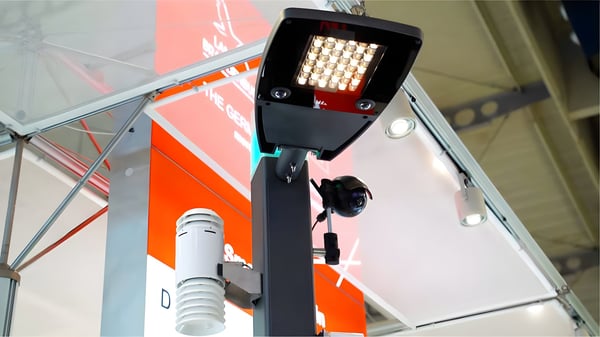
the city of philadelphia is looking to modernize its street lighting over three years and in a project valued at around 90 million dollars it plans to turn 120 000 streetlights into led smart lights but this is not the only smart street lighting project the city has embarked itself on in december 2021 the city teamed up with philadelphia -based comcast and non -profit us ignite to carry out a pilot with 14 advanced smart lighting fixtures from Lugano in two blocks of the city's commercial area. Through that piloting process, we are trying to acquire and install a lot of cutting edge technology and see how we can sort of leverage those technologies for city operations. Comcast recently announced that they will be diving deeper into the smart city industry. The announcement was made around the same time as their internet business stalled for the first time since. 2005. With hundreds of thousands of miles of fiber, we feel we are best positioned to be able to become a market leader in this space, supporting, you know, all of the different interesting applications that are out there. So could the conglomerate be looking to expand its smart city business to capture growth? For now, they're just testing the waters with small scale pilot projects across the US. Their case reminds us of that of French company Sogatrel, which was specialized in fiber optic connectivity and expanded to smart city applications as the fiber optics market was slowing down. The city wanted to explore a relationship with Comcast so that it could better understand the role that pilots and prototypes and proof of concepts play in the deployment of technology or high technology solutions that meet the needs of community. In the In the middle, the U.S. Ignite played a role in helping to navigate that process. What would be viable? What would be available? Technology would be available. What would be quick to market? And what would allow the city and a cable operator to engage with other partners? The funding for the pilot came from the Comcast Foundation through U.S. Ignite, so the city only had to pay for the installation of the advanced streetlights. We have multiple cameras embedded. in each of the lights. There are also environmental sensors. There's also network equipment in there that allows us to deploy, you know, public Wi -Fi. There's also significant edge compute power in each of the fixtures. Initially, the goal was to test some of the restrictions that were being placed like mask mandates, social distancing. So we put in crowd density sort of a metric. initial rollout but as the operations of this project came about we've moved away from those covid specific use cases that moved into testing some of the operational needs of the transportation planning world like counting vehicles counting pedestrians and bikes especially because the pilot is focused on a commercial corridor which gets a lot of football and on the other side we wanted to see how these technologies sort of support tracking of environmental metrics like humidity, temperature, and other things like that. As we go through the process, we're learning the advantages and disadvantages of real-time data collection. Because we've had the same type of data come through different legacy collection or data capture methods in the past. For example, we used pneumatic tubes to do counts on And And that happens twice for a 48 -hour period for the whole year for a street. Now we can see exactly what's happening every day, every minute, in real time, across the year for the entire street. Due to privacy -related issues, not all the sensors available on the advanced smart light fixture could be used. We did not, for legal reasons, switch on. any sound detection or mics in this in this product the city of san diego for example recently invested 30 million dollars in a street light project that included smart lighting fixtures due to resident privacy concerns they tried to shut down the problematic sensors but couldn't without shutting down the entire street light power grid after some time ubiqua the vendor had to step in and write a code to fix the issue the cameras in the philadelphia pilot on the other hand hand, use the Fixture's on-edge computing system to turn raw footage into metadata. The processing and data capture are so close that there's no need for storage of large quantities of data for long periods of time. And it also enhances privacy protections on the data handling practices. We have a fiber connectivity coming into a single edge. cabinet. That connection essentially creates like a mini data center on the edge where we have additional network gear there and also essentially starts a wireless mesh network for all of the streetlights to be connected to. So there's multiple wireless technologies that are being utilized, subgig, as as well as high band technology, but from a core backhaul perspective, it starts with fiber and then goes wireless through a wireless mesh between all the light fixtures. While the city of Philadelphia is learning from this pilot, the project seems to be looking to answer another question. In this pilot, cost is not an issue for the city, but if it was too important, invest in such an advanced solution would it be able to equip every street light and with all the sensors and technology involved how scalable are advanced lighting fixtures you don't need a hundred sensors on every street light and you don't even really need one sensor on every street light but you do need to determine what's the right number of sensors per mile per street mile of each whether it's sound light air capture, video, optical sensors, or otherwise, or public Wi -Fi. You need to have successful test beds to know what volume and what concentration of sensors are needed to address a particular use case. We have seen many cities capturing large amounts of data and not being able to make sense of it. This is a gap that solution vendors are still not completely filling. In the case of Philadelphia, the city seems... have already prepared for it by partnering with the city's university we've started learning recently about how data looks like what how it how it can be visualized on the dashboard how we can extract it out of the servers we own and now we're moving into that phase of learning what does the data actually show as in validating the data trying to understand are there any biases in it and we are moving forward to tap in into university partnerships to say, hey, can we leverage your data science capacity or capabilities to really dig into these data sets and say, did we meet our existing operation standards? And if so, what was the level of efficiency we can bring about if such technologies were deployed across the city? For phase two, they're planning to expand on the capacity and deepen the understanding of traffic a downtown and dense corridor. For follow -ups and other stories like this, remember, keep up with Current Insights!
A Look at Philadelphia’s Advanced Lighting Fixtures
PhiladelphiaStreet LightingStreetlighting control
In this video
-
 Akshay Malik
Smart Cities Director, City of Philadelphia
-
 Lee Davenport
Director of Community Development, US Ignite
-
 Jake Purcell
Director for Sales and Operation, Comcast's Smart Solutions
About this video
Imagine a cityscape where 120,000 streetlights morph into state-of-the-art LED smart lights, casting a new glow on the streets and lives of its residents. This project is the heart of our latest video, where we delve into the ambitious plan of the City of Philadelphia to not only modernize its street lighting but to start a journey towards digital urbanization.
The city's collaboration with Comcast and the non-profit US Ignite marks a significant leap into the future, piloting 14 advanced smart lighting fixtures in a vibrant commercial district. But what drives this pursuit of smart technology? We unpack the city's objectives, exploring the deeper implications of this tech-forward endeavor. Why is Comcast, a renowned name in digital services, venturing with such enthusiasm into the smart city arena? And what does this mean for traditional lighting systems?
Join us in an enlightening conversation with Akshay Malik, Smart Cities director at the City of Philadelphia, Lee Davenport, who is spearheading community development through technology at US Ignite; and Jake Purcell, a key player in Comcast's journey into smart solutions. Together, they shed light on the project's intricate details, motivations, and potential impact.
This video is a must-watch for city planners, tech enthusiasts, and anyone intrigued by the intersection of urban development and technology. Discover how Philadelphia's journey could signal a broader shift in urban living and what it might mean for cities globally. Whether you are a professional in the field or simply someone captivated by the evolution of urban spaces, this exploration offers insights and foresights into a world where every streetlight does more than just illuminate.
Read the transcript machine-generated
More in Street Lighting
See all 7:10
How New Orleans Plans for Resilient, Smart Future
 7:48
Unveiling Dallas’ First Official Smart Community
 6:45
Optimizing Street Lighting with Telco Network Data
 7:03
Valencia Targets Energy Efficiency & Light Pollution Reduction
 5:47
Are Smart Poles Scalable to Entire Cities?
 11:19
Las Condes’ Journey to Becoming a Smart City
Latest news in street lighting
All news- TALQ Consortium Releases Edition 5 Tender Template For Interoperable Smart Street Lighting31 Oct 2026
- Covilhã Municipality Awards €19M 16-Year Contract For 19,533 Connected LED Streetlights31 Oct 2026
- Monza Completes 12,688-Point LED Streetlight Replacement And Adds QR Fault Reporting25 Oct 2026
- Friuli Venezia Giulia Council Backs Adaptive Streetlight Study After €156.6M Udine Crash Toll22 Oct 2026
Kurrant advisory
Planning a street lighting project? Talk to Kurrant.
Behind these interviews is Kurrant's advisory team, working with utilities, cities and the companies that serve them.
- Strategy AdvisoryKurrant is actively involved in resolving the challenges that cities, utilities and industry players are facing.
- M&A AdvisorySmart city and utility expertise for successful deals, turning insights into strategic gains.
- Engineering & ProcurementBetter engineering and procurement decisions, by identifying and developing digital and IoT solutions across use cases.
Or write to us: contact@kurrant.com
Send us a message