 in Barcelona
 3 to 5 Nov 2026
Two cities in two drastically different countries. At CES 2020, we had the chance to hear from the mayor, Sol, and the CIO from the city of Coral Gables in Florida. One is home to nearly 10 million people and benefits from a country that was an early adopter of smart city concepts. The other has about 50,000 residents and receives little support from the federal government. Yet... Both are finding success with their smart city projects, and when you take a deeper look, you'll see their priorities really aren't that different. Seoul has been ranked number one in the global e -governance survey seven consecutive times. And Seoul is the first city to launch 5G network and is actively utilizing 5G to service its residents. When Park Won Soon took office in 2011, he declared that he would build a city where the citizens are the mayor. That led to the development of digital platforms that allow for citizens to have a greater say in policies. For example, we have built an integrated data sharing platform which shares all the administrative data and open data. We then got a look at Seoul's smart city hub with Hong Kong, the developers behind this platform. The mayor of Seoul specifically ordered this kind of platform. He wanted to set some priorities, so that's where he went to locate where the fine dust levels were bad. So he took immediate action to implement an air purification system within the subway and things like that. Now, part of what makes Seoul's smart city story a success centers around its scale. As I mentioned earlier, Seoul is home to over 10 million people, and its smart city solutions stretch across all sectors of the city. There are plans to now take that a step further. Seoul says it will invest over a billion dollars until 2022 on smart city initiatives that include solar panels for households, the deployment of 50 ,000 IoT sensors, real -time monitoring of its elderly living alone, and much more. In addition, South Korea is investing over $2 billion to two smart city projects where technologies will be tested with loose and regular... regulations. And that's important because if these technologies are a success, regulations could be revised nationwide, igniting new smart city projects in cities like Seoul. It's the kind of support that many cities in the U.S. are lacking from the federal government, but is that necessarily standing in the way of innovation? Put it this way, I'm a Fed. I go to a city and try to say, hey, Las Vegas, I'm a Fed. He said, I want you to express it. And I was going to say, go away. Ah, no, that's it. Sakwu Ray works for the U.S. Department of Commerce, and he makes an interesting point during his panel at CES about the role of public-private partnerships in the development of smart cities. U.S. P3s are very much bottom-up. Essentially, it has to be very grassroots. That's pretty much the only way to make it work in the United States. Now, is it splash? Is it shiny? Is it like globally? you know, visible project? Probably not. But at the same time, because it's less visible and because it's a crossroad level, I think it is more sustainable. Coral Gables, located not far from Miami, began its smart city journey in 2016 when it engineered a high -speed network for its communication needs, one that would withstand potential disasters like hurricanes. That led to the development of vehicle, pedestrian traffic sensors, smart policing tools, environmental monitoring systems. public wi -fi locations and more we are applying technology best practices and innovation to improve quality of life and residents can view the data in real time using coral gable's smart city hub so some of the technology that you can see here is the ability to have to engage with the city directly through citizen engagement to see a transparency data it can be financial transparency see how the city is spending the taxpayers dollars in projects and initiatives this is all real -time data that is connected and also you can have other data such as water sensors where you can see in real time the water quality in our water canals and the efforts appear to be paying off money just named coral gables as the best place to live in florida citing a lack of traffic and a busy downtown plus crime is at a 15-year low and officials say it's large due to these new technologies. To give you an example, our police department, in a period of two years, they were able to reduce crime in 40%. To foster this kind of innovation in its cities, the United States National Institute of Standards and Technology created the Global City Challenge Program. The program has attracted local governments, nonprofits, corporations and technologists from all around the world to work on IoT and cybersecurity applications related to the development of smart cities. It's not necessarily funding, but they provide a lot of resources and they bring people together. Now we also eventually, in some cases, we get grants from public safety for resiliency. But most of our smart city strategies have been funded by cost savings from process improvements. So there you have it, a look at two cities in two very different countries, both receiving varying levels of support from their federal governments. Now, does that really... play a big role in the development of these projects. I mean, Coral Gables has put forward a lot of pilot projects where Seoul has really transformed its city. But we want to hear from you. Send us a question or even just your thoughts at the link below. And if we get enough, we'll put a new story together. Till next time, I'm Diana Blass reporting for Current Insights.
Taking On The Smart City Dream : Seoul vs Coral Gables
City StrategyCoral GablesSeoul
In this video
- Raimundo Rodulfo Director of Technology and CIO, City of Coral Gables
-
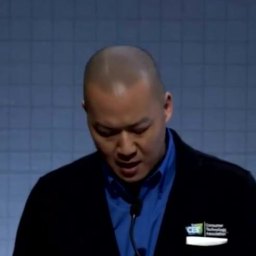 Brian Moon
VP of Sales & Business Development, CTA
-
 Park Won-soon
Mayor, City of Seoul
-
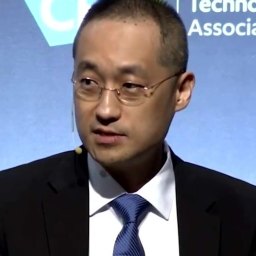 Sokwoo Rhee
Associate Dir., Cyber-Physical Systems Innovation, NIST, U.S. Dept. of Commerce
About this video
What value does a nation offer to its smart cities? This question becomes pertinent when comparing cities with varying levels of funding and federal support. For instance, Coral Gables in Florida, despite not receiving the same level of financial backing as cities like Seoul in South Korea, may still achieve remarkable sustainability.
This perspective is championed by Raimundo Rodulfo, the Director of Technology and CIO of the City of Coral Gables, Florida. His insights suggest that while funding is crucial, it's the strategic application of resources that leads to sustainable outcomes.
This video is especially relevant for city planners, smart cities enthusiasts, urban development researchers, and policymakers who are exploring the dynamics of smart city development and sustainability.
Read the transcript machine-generated
Latest Originals
See all 4:45
AI Agents in Digital Twins: Bringing Promises to Life?
 5:57
Nature as a Sensor: Rethinking Smart Cities, Utilities
 2:57
Audio, the Forbidden Fruit of Smart Cities in France
 2:56
Why did the metaverse fail?
 4:54
High-resolution, Predictive Weather Data: The Next Step for Mobility
 5:20
The State of the Smart Traffic Industry in 2026
Latest news
All news- Bryan Texas Utilities To Replace 50,000 Smart Meters Over Five Years29 Oct 2026
- UK National Parks Launch Wildfire Resilience Programme In Cairngorms29 Oct 2026
- Ameresco Completes $5.9M Water Metering Upgrade Covering 8,000 Meters In Mustang, Oklahoma29 Oct 2026
- Victoria Adds 11 AI Bushfire Cameras To Seven-Unit Plantation Network In A$3.8M Programme29 Oct 2026
Kurrant advisory
Planning a smart city or utility project? Talk to Kurrant.
Behind these interviews is Kurrant's advisory team, working with utilities, cities and the companies that serve them.
- Strategy AdvisoryKurrant is actively involved in resolving the challenges that cities, utilities and industry players are facing.
- M&A AdvisorySmart city and utility expertise for successful deals, turning insights into strategic gains.
- Engineering & ProcurementBetter engineering and procurement decisions, by identifying and developing digital and IoT solutions across use cases.
Or write to us: contact@kurrant.com
Send us a message