 in Barcelona
 3 to 5 Nov 2026
This is Bayview Hunters Point in San Francisco, California, a set of neighborhoods that many claim to be among the most polluted in the city. There's concrete batch plants. There's aggregate processing facilities. There's distribution centers that have a lot of diesel truck traffic. The air quality is not great. So we wanted information on the local air quality. Community members turned to a set of communities. consumer sensors known as purple air that measure hyper-local air quality. It's a type of data often missed by the large and expensive government-run sensors. Those sensors, the intention of them, the original purpose of the government network was not to determine when to go running or if the kids should play outside or if you should go somewhere to escape the wildfire smoke. It was to measure the results of regulation, of laws. like pollution controls, for instance, vehicle emission standards. And it was designed to measure the results of those efforts over months and years. Purple air sensors are among an emerging group of affordable compact consumer devices. Each cost about $200 and report their findings every 10 minutes on a public map once they're connected to Wi-Fi. Today, that map includes data from a network of nearly 10,000 sensors. Industry insiders blasted devices as backdoor gas. gadgets, they dismiss them for their tendency towards inaccuracies. But could that be changing as seen in this pilot project from the EPA? So what you're talking about is the EPA fire and smoke map, which is a pilot program that EPA put out last year before fire season in partnership with the U .S. Forest Service in an effort to kind of provide more information about air quality during wildfires. So it's really wildfire specific as a tool, but the application is kind of proved. useful for all kinds of different, different things outside of wildfires. Michael Flag works with the Bay Area Quality Management District, one of 35 districts in California responsible for managing local air quality. It also supports and provides funding to local air quality experiments like the ones seen in Bayview. However, the district only shares data publicly that's gathered from devices like this, federally regulated air quality sensors known as state and local air quality monitoring stations. These devices. measure pollutants that make up the air quality index, an official measurement on air pollution that influences government regulation and policy. The United States mandates that each state has at least one slam device, but because of their size and cost, which can be over $100 ,000, there really aren't enough of these devices to gain a full picture on air quality. So we do by requirement have a certain number of regulatory monitors around certain sensors of population. Now these have to be careful. carefully located to be, quote, representative. There's many questions as to how representative they are in some cases. Sean Wiera is the Business Development Director at Clarity, another company specializing in low cost air quality monitoring. But Clarity nodes are considered to be more reliable and advanced in consumer sensors like PurpleAir. That's because Clarity accounts for inaccuracies prior to posting. So instead of 10 minute updates like PurpleAir provides, clients will receive notifications every hour. to target customers composed of cities and businesses a group willing to pay a bit more for the solution in exchange for more accurate findings part of the reason that we really don't work with consumers it's not that we don't want to help the public it's that effectively how and where you place the sensors is critical to the data that you get and if that's actually going to inform the questions you're trying to answer unfortunately people will buy a you know consumer sensor they'll put it on their back porch and of course then they're measuring barbecue emissions or something like this frequently Is this confused with a spike around the evening time of traffic data, et cetera, et cetera? So really, when we're designing networks, it's really important to work carefully and say, what are the questions I'm trying to answer? And how do I design this network such that I'm removing these other variables that may conflict with the data and or can pollute my experiment, so to speak? And that's a question that's become a hot topic as new ways to measure air quality flood the market. And California specifically has welcomed this movement. You're going to see mass migrations. In 2018, then-governor Jerry Brown passed Assembly Bill 617. It aims to tackle air pollution at the neighborhood level with funding to support community efforts, something not everybody supported at the time. So I'm not here about some cockamamie legacy that people talk about. This isn't for me, I'm going to be dead, it's for you. The bill has encouraged groups like the Air Quality Center Performance Evaluation Center to produce reports on how to do it. well the various sensors work and how they should be managed. But this advice isn't mandatory to follow. At the stands today, both consumer sensors like PurpleAir and low -cost, highly scalable sensors like Clarity are unregulated. React PurpleAir founder Adrian Dubois, his take on the reports of inaccuracies. Our sensors are very accurate in that from one to the next, they agree with each other to a very high level. They're also accurate in that they correlate seven percent or higher with federal reference methods which is the government census and that means that the ups and downs are in agreement perfectly the trends but it's the peaks of those values like let's say it's red air quality and it's a you know 70 micrograms that we're reading the government census might be actually reading 50 micrograms and the reason for that discrepancy that's called So the height of the peak is different, but the trends match perfectly. But despite the discrepancy in findings, California is still taking a more active initiative in testing these sensors compared to other states. And that's largely because of the devastating wildfires that continuously burn across the state. What emerged was a grassroots movement, residents increasingly turned to purple air sensors to check their air quality. And the EPA, as we mentioned earlier, has even been. gun to incorporate purple air data into its fire and smoke map they're ingesting all of the purple air data into the map applying a correction factor and then averaging that data by an hour so it's an hour average you're seeing on that map and then can and then also and then displaying it with the epa um you know network which is run by the state and local agencies so um that that correction factor does account for some bias in the data but it doesn't eliminate necessarily all of the uncertainty with those measurements i think that you know what epa is trying to do is provide you know a broader set of information to the public and i think from my perspective one of the most important things is just explaining to people what that means explaining the differences between the re you know the regulatory um gradient information and what the sensors are bringing to the table. They both bring different things and using them together in the right way can be really helpful and informative. It all comes as the United States as a whole takes a deeper interest in local air quality. The Biden administration has announced a $100 million program to tackle air quality concerns with a focus to dig into areas that they say are disproportionately impacted by high polluting sites. So what we're going to do is will be interesting to see what happens next. What kind of sensors will the Biden administration rely on to dictate their policies? And what standards will they introduce to ensure their accuracy? For more coverage, follow Current Insights.
Originals Environmental Monitoring
Consumer Air Quality Sensors Catch The Attention of EPA
Air quality monitoringEnvironmental MonitoringSan FranciscoWildfire monitoring
In this video
-
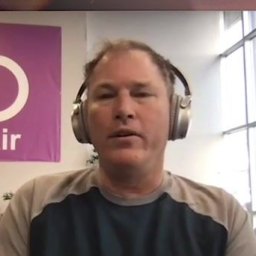 Adrian Dybwad
Founder & CEO, PurpleAir
-
 Michael Flagg
Principal Air Quality Specialist, Bay Area Air Quality Management District
-
 Sean Wihera
Business Development Director, Clarity Movement Co.
About this video
This video delves into a significant environmental health initiative spearheaded by the Environmental Protection Agency (EPA), focusing on the integration of low-cost air sensors, like those produced by PurpleAir, with traditional, government-regulated air quality monitoring devices. The pilot project is a response to the increasing prevalence of PurpleAir sensors in reporting air quality and smoke concentrations from wildfires, addressing concerns about the accuracy and reliability of these sensors.
Adrian Dybwad, the Founder and CEO of PurpleAir, offers insights into the design and functionality of their sensors, explaining how they provide accessible air quality data to the public. However, the lack of verification for their accuracy has prompted the EPA to launch this pilot project. Michael Flagg, the Principal Air Quality Specialist at the Bay Area Quality Management District, and Sean Wihera, the Business Development Director at Clarity Movement Co., also contribute their expertise, discussing the technical and practical aspects of integrating different types of air quality monitoring systems.
The video highlights the potential benefits of this collaboration for environmental scientists, air quality specialists, public health professionals, and policymakers. By combining data from PurpleAir's sensors with information from traditional monitoring systems, the project aims to improve the overall accuracy and reliability of air quality reports. This is especially critical for residents in areas frequently affected by wildfires and poor air quality, as it will enable them to make more informed decisions about their health and safety.
The initiative also represents a broader effort to incorporate innovative technologies into environmental monitoring and public health strategies.
This video is highly recommended for city managers, environmental and public health professionals, policymakers, and anyone interested in air quality and environmental monitoring technologies. It offers a detailed look at how low cost sensor technology can be integrated with traditional monitoring methods to improve data accuracy and public health responses.
Read the transcript machine-generated
More in Environmental Monitoring
See all 4:25
The Tech Behind Tsunami Alerts: How AI and Sensors Save Lives
 4:32
Exposomes: Where Smart Cities, AI, and the Scientific Community Meet
 7:24
The Evolution of Smart Cities and Utilities in the US
 5:50
Cleveland Turns to Air Quality Sensors to Tackle High Asthma Rates
 7:15
How AI-Enabled Cameras and Predictive Analytics Helped Fight LA Fires
 6:13
Austin Energy Steps Up Wildfire Prevention with Vision AI
Latest news in environmental monitoring
All news- UK National Parks Launch Wildfire Resilience Programme In Cairngorms29 Oct 2026
- Victoria Adds 11 AI Bushfire Cameras To Seven-Unit Plantation Network In A$3.8M Programme29 Oct 2026
- Korea National Park Service Builds Bandal Lens AI To Identify 17 Mammal Species From 1,300 Cameras20 Oct 2026
- UK Space Agency Opens £2M Satellite Grant Call For Environmental Intelligence And Emissions Monitoring20 Oct 2026
Kurrant advisory
Planning a environmental monitoring project? Talk to Kurrant.
Behind these interviews is Kurrant's advisory team, working with utilities, cities and the companies that serve them.
- Strategy AdvisoryKurrant is actively involved in resolving the challenges that cities, utilities and industry players are facing.
- M&A AdvisorySmart city and utility expertise for successful deals, turning insights into strategic gains.
- Engineering & ProcurementBetter engineering and procurement decisions, by identifying and developing digital and IoT solutions across use cases.
Or write to us: contact@kurrant.com
Send us a message