in Barcelona
 3 to 5 Nov 2026

The Korea National Park Service (KNPS), which operates under South Korea’s Ministry of Climate, Energy and Environment, has developed Bandal Lens AI, a system that claims to automatically recognise 17 mammal species in national park imagery with reported accuracy above 90%. The system analyses images from more than 1,300 automated wildlife cameras installed across the country’s national parks, which capture approximately 4.7 million images a year, and the ministry says it cuts the analysis of 100,000 images from 208 days of staff time to eight hours.
From 208 Days To Eight Hours
The ministry’s own comparison is a reduction of roughly 99% in analysis time for a 100,000-image batch. The extrapolation from that rate to the full annual volume of 4.7 million images gives 47 batches, which would require 9,776 staff days if analysed manually and about 376 hours of processing with the new system.
The annual volume is equivalent to about 12,877 images a day and roughly 3,615 images per camera per year, based on the 1,300 cameras cited, so the bottleneck the system addresses is the sheer number of frames that each need a species label before any ecological question can be asked of them.
What The System Recognises
Bandal Lens AI identifies 17 mammal species, including Asiatic black bears, gorals and foxes. The species list covers animals that park managers track for population monitoring, and the reported accuracy exceeds 90%, a figure supplied by the ministry and KNPS rather than from an independent evaluation.
The 17-species scope matters for interpretation. A classifier trained for a defined set of mammals produces counts and presence records for those animals, and the staff time released from manual sorting can be directed to species and habitat management work.
Open Release Through Hugging Face And GitHub
KNPS plans to improve the system and to make the AI model publicly available through Hugging Face and GitHub, allowing research institutions and conservation organisations in South Korea and abroad to use it for wildlife image analysis. The release turns a national park tool into shared infrastructure for any group holding a camera-trap archive.
Public release also changes how the accuracy claim can be tested, because outside institutions can run the model against their own labelled images and publish results that do not depend on the agency’s reporting.
Camera-Trap Automation Elsewhere
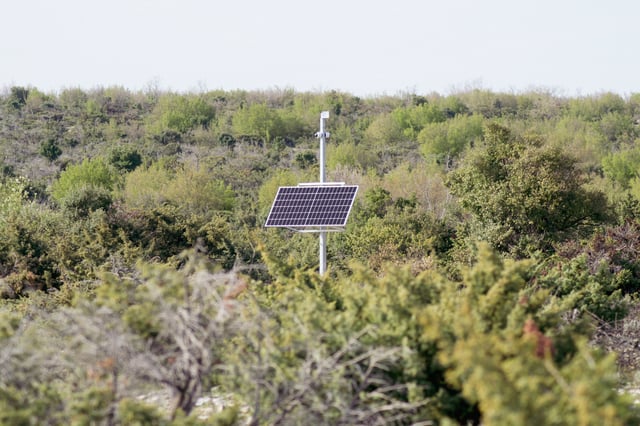
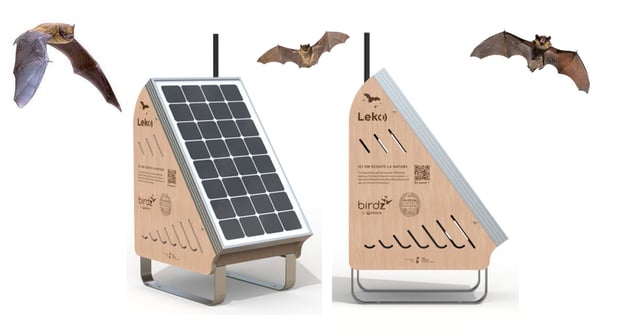
Automated species identification is being built into other biodiversity programmes. Microsoft’s AI for Good Lab unveiled SPARROW, a solar-powered tool with low-energy edge GPUs that processes data from camera traps, acoustic monitors and other sensors in remote areas, and the Madrid City Council installed 15 acoustic sensors in August 2026 to track birds and bats in real time.
The Korean system differs in that it processes imagery already gathered by a fixed fleet of 1,300 cameras and is intended for release as an open model, whereas SPARROW is a field-deployed hardware and software package and the Madrid network tracks sound rather than images.
The Benchmark For The Public Release
The public release on Hugging Face and GitHub will let research institutions run the model on their own camera archives, and the accuracy above 90% reported for the 17 Korean mammal species is the benchmark against which those independent results will be measured.