 in Barcelona
 3 to 5 Nov 2026
beach days are upon us but you may not want to swim here here and definitely not here it's no secret that city waters have become polluted by wastewater stormwater runoff and trash efforts to change that have been ongoing for years particularly in the EU where we've seen large scale urban wastewater projects a report released in June, found that 85 % of the more than 21 ,000 bathing sites in the EU have excellent water quality. So the question is, could the Seine River in Paris be next? So the objective in Paris is to be able to swim in the rivers, in the Seine and Marne, for the Olympic Games of 2024, so two years for now. Nicolas Cardot, along with researchers part of the EU funded project, Digital Water City. are among the innovators behind that objective. The initiative, born out of the EU's Horizon 2020 project that came with a 5 million euro budget, has tested around 18 digital solutions in five European cities. Berlin, Paris, Copenhagen, Sofia, and Milan. The solutions all aim to boost the management of water systems in those cities through the collection of data. provides more information into the state of water quality and the infrastructure let's look at paris as an example as we mentioned earlier the city is on a mission to make its waterways safe for swimming the sand being the ultimate objective but this isn't something that will happen overnight and it really will take constant monitoring just look at the swimming facilities along the canal saint martin as an example the city opened the waterway to swimming in 2017. but continues to close it to the public because of bacteria levels. Traditional methods of water inspection took days to analyze because researchers sent that collection to the labs, but a sensor solution by Fluidian aims to change that. What we are doing there in Paris is to try to have sensors that are doing the job for us, so we don't need to take samples anymore, bring them to the lab, and have all these uncertainties. chain but we will have the results directly in situ measured by the sensor the system sits on a remote boat that moves around the river inside the boat is an optical sensor that measures the amount of bacteria present along with several vials the solution sends the data to a cloud using a cellular network and those findings are then presented on a web platform researchers are also feeding the data into a computer model that will predict water quality on a daily basis in this information is finally used by the bashing water management to know about water quality and to decide to open or close the different bashing sites. Cities like Paris are particularly vulnerable to these sort of polluted waterways because of their old sewer systems. They collect rainwater runoff, domestic sewage, and industrial wastewater into one pipe. Under normal conditions, the pipes send the water to a sewage plant for treatment but during heavy rainfall the volume of wastewater can exceed the capacity of the system causing untreated water to discharge directly into a river or stream for that reason an alert system like the one by fluidian is especially helpful here another solution that could be of value is being tested in sofia bulgaria the problem is that in most cities we have this kind of overflow but we don't know where and when they have happen because monitoring is expensive. The standard flow monitoring is pretty complex, pretty expensive. So we don't do it necessarily for each location. And also in many cities, there is no obligation to do this kind of monitoring. So what we are trying to do is to deploy a new technique, which is based on very low cost temperature sensors that we install on the crest of the overflow. And it's very simple. Normally we measure air temperature when there is no overflow. When there is an overflow, we don't measure air anymore, we measure water. And simply by analyzing very precisely the difference of temperature we have in real time, we are able to identify quite precisely the beginning and the duration of the event. And the interesting thing is that we don't do that in one location, we can do that in all the sewer overflow, distributed into the city, and know in real time, then on the dashboard, where and when the sewer... network is overflowing into the environment and use this information of course to manage better the infrastructures and avoid this kind of of events data of course is the big theme here as researchers really strive to bring more transparency into the way our water systems operate but how we share that data is the challenge in a city if you want to achieve full interoperability you need to speak the same language you need to be able to characterize what is a street, what is a building, what is a car, with the same attributes in a standard way. For that reason, the Digital Water City project has built its solutions on the FeeWare platform. This is an open source platform developed by the European Commission back in 2011 as a public-private partnership with city players. The main benefit of the technology centers around its ability to drive more innovation and collaboration among multiple people. players and therefore speeding up the time to development and they because fiber is based on standards and it's driving also as well the definition of standards they are capable of first of all be able to capture the opportunity of importing the solutions that have worked for the cities but at the same time be able to protect their their investment uh so the two main challenges we address is first the development of data models mainly it's how we represent this kind of information how we structure this kind of information so that we don't have to start from scratch when we go in a new city we try to define some data models in advance that allow very easily then a bit as a plug and play to be able to deploy the digital solutions and the second point is the development of data platforms this is something that not interesting only for the water infrastructures but also for smart city more in general because that's the way that we can connect water infrastructures with other infrastructures and smart city domain so we try to combine layer of information not only from the water sector but also from other domain and see which kind of benefits it can bring for for the cities digital water city kicked off in June 2019 it ran for about 42 months Researchers say the next step in scaling some of these solutions really centers around government policy and regulation. For more coverage on how those policies unfold and the development of these digital water solutions, be sure to follow along right here on Current Insights.
Originals Environmental Monitoring
Could Smart Solutions Make City River Swimming Safe?
Environmental MonitoringWater quality monitoring
In this video
-
 Nicolas Caradot
Lead Project Coordinator, Digital Water.City
-
 Juanjo Hierro
CTO, FIWARE Foundation
About this video
In this video, we explore a pressing environmental issue: the pollution of city rivers. Across the globe, urban waterways are often contaminated by various pollutants, including wastewater, stormwater runoff, and debris. This widespread problem not only affects the quality of water but also poses significant risks to wildlife and public health.
Highlighting the European Union's response to this challenge, the video focuses on its efforts through large-scale urban wastewater treatment projects. Notably, the EU's 2020 Horizon initiative has been at the forefront of addressing river pollution. This ambitious program aims to transform the way cities manage their wastewater, ensuring cleaner, safer waterways for future generations.
We delve into the specifics of these initiatives with two experts in the field: Nicolas Caradot from Digital Water City and Juanjo Hierro from FIWARE. Both bring a wealth of knowledge and experience, shedding light on the latest technologies and strategies being implemented to tackle river pollution.
A particularly intriguing question we address is the possibility of swimming in urban rivers, which once seemed far-fetched. With the Seine River as a case study, our discussion revolves around the practicality and safety of such an idea in the near future. This reflects a broader vision of not just cleaning up rivers but also restoring them to a state where they are safe and enjoyable for public use. We provide you with a comprehensive overview of current efforts and future possibilities in urban water management.
Read the transcript machine-generated
More in Environmental Monitoring
See all 4:25
The Tech Behind Tsunami Alerts: How AI and Sensors Save Lives
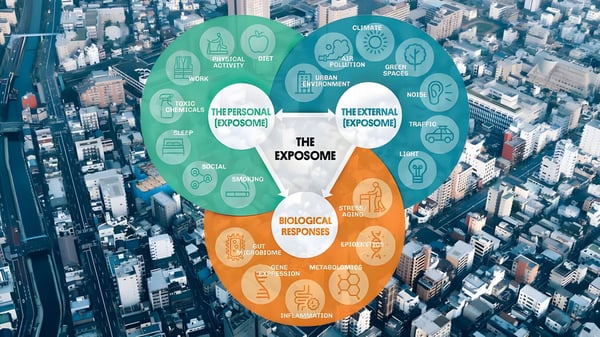 4:32
Exposomes: Where Smart Cities, AI, and the Scientific Community Meet
 7:24
The Evolution of Smart Cities and Utilities in the US
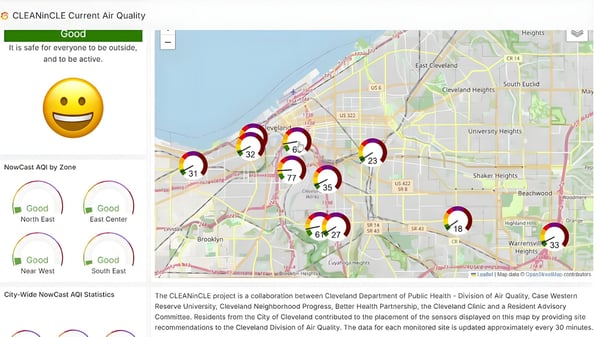 5:50
Cleveland Turns to Air Quality Sensors to Tackle High Asthma Rates
 7:15
How AI-Enabled Cameras and Predictive Analytics Helped Fight LA Fires
 6:13
Austin Energy Steps Up Wildfire Prevention with Vision AI
Latest news in environmental monitoring
All news- UK National Parks Launch Wildfire Resilience Programme In Cairngorms29 Oct 2026
- Victoria Adds 11 AI Bushfire Cameras To Seven-Unit Plantation Network In A$3.8M Programme29 Oct 2026
- Korea National Park Service Builds Bandal Lens AI To Identify 17 Mammal Species From 1,300 Cameras20 Oct 2026
- UK Space Agency Opens £2M Satellite Grant Call For Environmental Intelligence And Emissions Monitoring20 Oct 2026
Kurrant advisory
Planning a environmental monitoring project? Talk to Kurrant.
Behind these interviews is Kurrant's advisory team, working with utilities, cities and the companies that serve them.
- Strategy AdvisoryKurrant is actively involved in resolving the challenges that cities, utilities and industry players are facing.
- M&A AdvisorySmart city and utility expertise for successful deals, turning insights into strategic gains.
- Engineering & ProcurementBetter engineering and procurement decisions, by identifying and developing digital and IoT solutions across use cases.
Or write to us: contact@kurrant.com
Send us a message