 in Barcelona
 3 to 5 Nov 2026
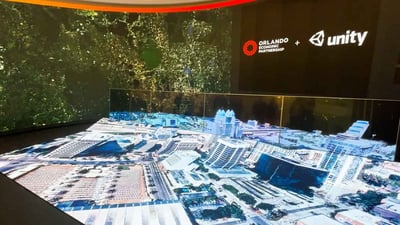
Some years back, we were covering whether the digital representation of cities known as digital twins were hype or reality. Fast forward two years and cities and utilities have bet on this technology to sort out some of their issues. The Orlando region's digital twin, which was launched to attract investment and development; electric or water utilities like Global Omnium, using them to understand their network. Singapore creating a digital representation of the nation and even its trees to understand irrigation needs. Use cases are endless. The City of Raleigh is also on this digital twin A-list. As the city grows and resident concerns arise around mobility and development, the municipality started using a digital twin for better urban planning and management. Context matters, scale matters, relative scale matters. So just being able to understand, as I mentioned, development being kind of a key concern of our citizens, being able to understand and visualize what the city looks like today and what the city potentially could look like tomorrow, helps inform, I think some conversations. So just visualizing data, in a quickly or very dynamic city like Raleigh is very valuable. The downtown area's digital twin, with about five square miles, is photorealistic, with the rest of the city a 146 square miles, being geographically realistic. For the city, it is essential to visualize the data they gather through their different methods, including IoT. The idea started around a decade ago with the goal to visualize urban changes, but the development of what it is today began in 2020. The city developed along with Esri the model thanks to lidar technology and data from third parties. Their first real use case in terms of the digital twin acting as the principal platform, as an input, came in 2021 with a NOAA-funded project that saw the installation and integration into the twin of heat sensors to understand heat islands and make informed decisions to curb their effects. The 3D model was shared throughout departments, which in turn allowed for more use cases to be identified. We partnered with a research organization called MITRE, who is doing some really interesting work around microclimate modeling. It really created some synergy around better understanding and predicting what heat islands look like in the city. And we were using our digital twin as a data input into their microclimate modeling that had the ability to account for the updrafts and downdrafts that different building form and vertical structures had on the super high resolution micro climate models. There were some derivative projects that came out of this because those kinds of initiatives had access to this data, namely related to tree equity, street tree equity. So using this data to inform how we prioritized and planted trees and two is this other project called the Cool Streets project, which was about, spraying titanium dioxide on streets to increase the reflectivity of those streets. The digital twin’s AI generates the future scenarios, taking into account all the data inside of it. So if, for example, they're looking to construct a building, it will simulate how it can affect urban heat dynamics. For the cool roads initiative, titanium dioxide is expensive, so understanding where to spray it was of importance as to not waste product. Having the digital twin gave them another layer to make more informed decisions. They also use the digital twin for their Green Stormwater Infrastructure project focused on stormwater management. For this project, the city has river and rain gauges which alert to flooding and send data to a platform, data that is then integrated into the solution. The idea is to use the digital twin as a data set. In the city, that digital twin will be a platform that folks can use to share data and visualize data. And then the third one is, is to use it as an input into, we talked about AI, in my opinion, these models, these inference models or, physics based models are just going to continue to proliferate around the city, and then they're going to start to become, more commonplace to use, to drive how we run operations. And so I envisioned a digital twin being an input into some or many of these models. Like the Orlando region’s digital twin, which is used to visualize data associated with investment, at the moment, Raleigh's twin is mostly used to share and visualize data, except for the heat island project, which acts as the main platform for it. They're looking for more opportunities for the digital representation to be used as a source of data, rather than a visualization platform. The city has hundreds of sensors, whether cameras for traffic or mobility counters, the gauges... These all have their own platforms that will trigger alerts when needed and create dashboards, some of which can be integrated with the technology. The real transformation and potential of digital twins will be released when processes are completely automatic. As we've explored the smart city industry in the past years, digital twins have an incredible potential for city planning and curbing the many challenges cities have, in part thanks to the emergence of AI. Their use cases are endless. Visualizing, predicting, simulating, gathering... In every vertical and every aspect of a city. Digital twins can even serve as hypervisors for operations, becoming that one place where all data is integrated and all aspects of the city come to life digitally, making it a true twin of a city. However, what is lacking in many cases is that real time and automatic integration as well as simulation. Being able to see the streets live from the digital twin thanks to traffic cameras, for example, or seeing how full a drain is thanks to the sensor being connected to the twin and the twin simulating. Getting alerts when rain starts because the simulation has predicted an issue. Basically being like Dr Manhattan from Watchmen, seeing the past, present and future, and alerting of events. With AI, that scenario grows closer and I personally can't wait to see it.
Raleigh’s Digital Twin, Another Example of Tech’s Endless Opportunities
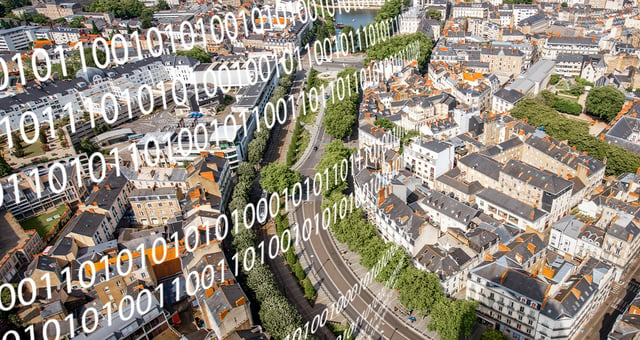
The US city of Raleigh has joined the growing list of municipalities, utilities and even countries using digital twins to face urban challenges. The North Carolina city is using this technology for better planning, but also, to understand heat islands and make more informed decisions when trying to curb their effects.
In this video we interview Jim Alberque, GIS and Emerging Technology Director at the city of Raleigh, to discuss their digital twin, use cases like that of heat islands or the cool roads project, as well as the potential these digital representations have.
View transcript auto-generated







Similar Picks

📰 Latest News
🎬 Kurrant Originals
🎥 Recent Event Coverage
Featured Case Studies
Real client work behind the news. Strategy, M&A and engineering projects we've delivered for cities and utilities.
Stay in the Loop
Get smart cities and utilities insights delivered your way. Choose your channel
Join our WhatsApp Channel