 in Barcelona
 3 to 5 Nov 2026
low -cost air quality sensors continue to gain traction at the local level but questions about their accuracy have limited their value to policy makers and scientists a team at the university of utah now wants to change that and so what we really tried to do was to say okay now can we guarantee that the data coming from those low-cost sensors is actually accurate so for that we had to go through very intense of course the scientific method to make sure that the sensors do correlate with more expensive instruments if they do not how do you apply data science on top of it to correct the data back and put it back to where it should be so we have several methodologies for you know real -time calibration outlier removals all that kind of thing that's what we have to do so method until this point when we started working into this field where people were collecting data but without guaranteeing that this data was actually representing what was actually happening so how do you do science if you don't trust your data pierre emmanuel gallardin is a principal investigator with the university of utah's outdoor air quality project from which the tetrad sensor network was born the 225 dollar solution detects part pollution, temperature, humidity, and oxidation levels in the air and reports that data to a central server. Carrie Kelly, another principal investigator on the project, broke down the sensor capabilities during a recent event. We have onboard data storage. We have a Texas Instrument microcontroller. We have a GPS with the backup battery to give us location. We have temperature and a little oxidizing and reducing gas-based sensors. So far, that's not too different from the other low-cost sensors on the market, like PurpleAir and Clarity. But the big difference, the researchers say, lies in the software. So what we had to develop were actually automated calibration techniques, where we use machine learning to actually learn in real time what our ideal calibration should be for the sensors. The software then presents the data with a 15 minute delay in a way that's similar to a heat map with a gradation of colors indicating what type of air quality neighborhoods have experienced. There exists plenty of situations you can connect to other low-cost sensor networks and see, well, you have a green map and you have one absolutely red dot right in the middle. Why? Is there something actually happening? there, right? Is there a microclimate condition? Is that a sensor defect? And our solution addresses all of that, guaranteeing the complete sanitization of the data. Over 100 sensors were initially deployed in Salt Lake City, Utah. Our sensors on the east side of the network detected a dramatic increase in particulate matter levels and a decrease in air quality two to three hours before the state began to report it. And the project has since expanded to several other U .S. cities under a $250 ,000 grant by U .S. Ignite. Kansas City, Missouri is among the new test beds. The city will receive $20 ,000 over the next three years to deploy and maintain about 50 sensors. So far, around half have been deployed. We chose to put them on in residential areas. So we're actually putting them on houses of, you know, people that want to be involved. As a way, as I said, part of that also helps us grow interest. in and people understand this project and do that and and we decided to target a specific area in our town and and it is along the street that's that's been considered really a red line district we also then co -located one of ours at a epa sensor which is also in this corridor that we chose because we use that co -location area we pull the data from the epa to really create a back drain system to get a better quality as i said that that's the part of this project that was a little bit, you know, more cutting edge technology is you take these sensors that you really do machine learning and everything else to factor in data that you're getting from a higher quality area to be able to get better results. It's only been a few months since the test began, but Kansas City says it's already seen the value. You know, for Kansas City, we're normally in, you know, I will say a ballpark of 20 range, which is considered good air. quality you know when the wire wildfires swept through most of our sensors jumped to over 100 i'm reading on it so we saw a five -time change and you know the particles that were in the air through that event and those findings were pretty consistent with what the epa sensors picked up as well however kansas city says it will never completely rely on these sensors but use it to supplement its findings from its other air quality equipment and residents are using it to justify their long -held complaints. Listen to this. There is a commercial factory near one and we keep getting very strong spikes on the readings so we haven't you know you know we haven't changed anything yet but we're kind of monitor is that we need a little bit longer term collecting the data but that has been a case where this particular neighborhood thought there was an issue and our data seems to be supporting them in that at this point. Now, in addition to the Wi -Fi option, there's also a power over Ethernet connectivity that cities can invest in for better cybersecurity. But they also say that a LoRaWAN solution is on the way. You know, air quality is a global challenge, right? We all need to be part of it. We all need to learn from the situation and adapt eventually our behavior. This is what we are, that's where we believe the... future is going to be as a matter of fact we have a new nsf funded project where we are studying behavioral change which coming from new sensors you know on the side of the road you have those signs telling you when you're speeding turns out that it works because of the peer pressure older people see that you are speeding right and that makes you go slower and we're evaluating the effect of similar mechanisms for people to uh you know shut off their engines while waiting at uh you know at the art hospitals or uh waiting at schools right in ideal free zones so to be able to enhance some some or influence some positive behavior to um to communities researchers are continuing to deploy this solution they say there is around 250 sensors deployed under their commercial network which is a tetroid sensor network and this includes international deployments like Palestine and in Europe and there's also another 150 deployed within their academic network. So it's clear these researchers are on a mission to democratize the measurement of air pollution and we'll keep you updated on how that unfolds. For more coverage like this, be sure to stick with Current Insights. If you have a question on this story, hit the button below.
Originals Environmental Monitoring
Kansas City Deploys Low-Cost Air Quality Sensors
Air quality monitoringEnvironmental MonitoringKansas City
In this video
-
 Pierre Emmanuel Gaillardon
Associate Professor, The University of Utah
-
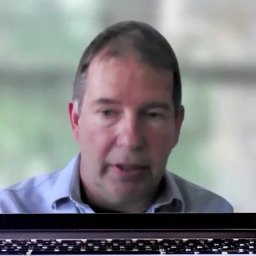 Jim Starcev
Program Manager, Kansas City Digital Drive
About this video
This video presents an insightful examination of the increasing use of low-cost air quality sensors in urban environments, while addressing concerns about their accuracy. It specifically focuses on Kansas City, Missouri's initiative, led by the non-profit Kansas City Digital Drive, which involves deploying The University of Utah's Tetrad Sensors. These affordable sensors are positioned near the more expensive and traditionally trusted EPA sensors, allowing for a direct comparison of their performance and accuracy.
Jim Starcev, the program manager of Kansas City Digital Drive, shares on-the-field observations and experiences with the deployment of these sensors. His insights offer a practical view of how these low-cost devices perform in a real-world urban setting. This comparison is crucial in understanding the viability and reliability of these sensors compared to their more established counterparts.
A key aspect discussed in the video is the role of software in enhancing the accuracy of data collected by these sensors. Pierre Emmanuel Gaillardon from the University of Utah elaborates on this, emphasizing the significance of a unique machine learning algorithm used to calibrate the sensor data. This algorithm is a pivotal component that potentially bridges the gap between the affordability of low-cost sensors and the precision typically associated with more expensive alternatives.
The content is particularly relevant for urban planners, environmental scientists, and technology specialists interested in air quality monitoring and smart city technologies. It provides a nuanced view of the advancements in sensor technology, highlighting both the opportunities and challenges in integrating these low-cost solutions into urban air quality monitoring systems.
Viewers seeking insights into the practical application and effectiveness of emerging air quality sensors in urban environments will find the video informative. It not only discusses the technical aspects of sensor deployment but also delves into the broader implications of using advanced software algorithms to enhance sensor accuracy. The video serves as a valuable resource for those looking to understand the evolving landscape of urban environmental monitoring and the potential of low-cost technologies to contribute significantly in this field.
Read the transcript machine-generated
More in Environmental Monitoring
See all 4:25
The Tech Behind Tsunami Alerts: How AI and Sensors Save Lives
 4:32
Exposomes: Where Smart Cities, AI, and the Scientific Community Meet
 7:24
The Evolution of Smart Cities and Utilities in the US
 5:50
Cleveland Turns to Air Quality Sensors to Tackle High Asthma Rates
 7:15
How AI-Enabled Cameras and Predictive Analytics Helped Fight LA Fires
 6:13
Austin Energy Steps Up Wildfire Prevention with Vision AI
Latest news in environmental monitoring
All news- UK National Parks Launch Wildfire Resilience Programme In Cairngorms29 Oct 2026
- Victoria Adds 11 AI Bushfire Cameras To Seven-Unit Plantation Network In A$3.8M Programme29 Oct 2026
- Korea National Park Service Builds Bandal Lens AI To Identify 17 Mammal Species From 1,300 Cameras20 Oct 2026
- UK Space Agency Opens £2M Satellite Grant Call For Environmental Intelligence And Emissions Monitoring20 Oct 2026
Kurrant advisory
Planning a environmental monitoring project? Talk to Kurrant.
Behind these interviews is Kurrant's advisory team, working with utilities, cities and the companies that serve them.
- Strategy AdvisoryKurrant is actively involved in resolving the challenges that cities, utilities and industry players are facing.
- M&A AdvisorySmart city and utility expertise for successful deals, turning insights into strategic gains.
- Engineering & ProcurementBetter engineering and procurement decisions, by identifying and developing digital and IoT solutions across use cases.
Or write to us: contact@kurrant.com
Send us a message