 in Barcelona
 3 to 5 Nov 2026
Lots of talk about autonomous cars, but what about autonomous boats? When we started in 2015, autonomy was already a thing on the road, right? Many car manufacturers were already investing effort and resources into this. But autonomy on the water was still a relatively new concept, let alone autonomy on urban waters. He's the project coordinator of... A project that got its start out of the AMS Institute in 2015 with the help of researchers from MIT in Boston. The Electric Autonomous Vessel looks to unlock the potential of urban waterways. It's now gearing up to commercialize with the vision to transform a number of city services. So we have a passenger boat, she's called Lucy, and we have a logistical boat and her name is Crystal. It fundamentally changes. changes the way the city operates when it comes to waste management. It even promises to monitor the water quality while doing that. But a number of challenges need to be addressed first. You are not allowed to sail without a skipper in most worldwide. Although this is rapidly changing. Let's take a look at the technology bringing this solution to life. It all runs off a 4G, 5G network. The drivetrain of our rowboats is fully electric, so we have a large battery that's in the center of the boat, in the keel, the lowest part, also for stability purposes, and then we have four electric pot thrusters, so that's engines, boat engines, and that allows us to move in any direction at any time. But the real exciting part of rowboats is in the perception technology, so the sensors that we deploy to perceive the... environment and for that we mostly rely on lidar technology so that's a laser light that's scanning the environment creates a 3d point cloud of the environment and we combine that with camera images that provides enough information to detect all the relevant objects and other boats in and around the vessel the main processor the vessel is an onboard computer by Intel that combines and processes all the data. The sensors feed information about the environment into this computer, which then influences the movement of the boat's thrusters. It runs a robotic software using a control algorithm that's also been trained by the collected data. So when a passenger gets on board and inserts his destination, the rowboat will localize itself using that algorithm. The boat needs to know exactly where she is, because if you don't know where you are, you don't know what path to take, right? So we have RTK GPS on board. It's different from your GPS that you have on your cell phone. It's way more precise. It's like centimeter precise localization. And we also have an IMU, which is like a digital compass. So far, robo. is able to autonomously steer and latch itself to docking stations the latching system consists of two pairs of robotic arms that will securely grab onto the stationary poles of a dock or the sides of another rowboat and cameras will guide the boat based off the qr codes on the docking station lately lidar has gained attention among trans offenders for its ability to capture the environment at a much higher detail in cameras operating very efficiently in the dark too Robo currently uses one LiDAR sensor and two cameras, but could that change? It's also a matter of costs in a sense that a LiDAR is nowadays usually more expensive than a camera. So for some applications you really need to consider how much investment can be justified for this application, right? Robo is now ready to graduate from a test project to a pilot in Amsterdam. canals, which is why this team of researchers is evolving into a full -fledged company with a plan to eventually sell its sensor kit as a service. So any ship owner or marine contractor who has a fleet of vessels can hire us to implement a gradual increase of intelligence to their existing fleets or to their new -built vessels. So you can have support systems on boats that, for example, provide additional safety because when a boat has a skipper on it, it's still very difficult to get a total view of all the objects and all the other boats in direct vicinity. Actually, we will move towards the situation that the skipper is no longer required to be on board of the vessel. And for example, you would have a shore control center with... a low number of people being able to operate a high number of vessels and this is exactly how we see the future for this technology moving towards because in cities who take waterborne logistics seriously you have to draw one conclusion and that's that you can't use very large vessels in the city you need small medium -sized boats right but a The team declined to share any details related to the cost of that sensor kit or even the cost associated with the development of rowboat. But it underscores a type of successes born out of public -private partnerships, something Amsterdam prioritizes through its AMS Institute. This is an organization that combines the talents of city reps, research groups and private organizations to streamline new innovation. And that's why Amsterdam involves the Ames Institute in nearly all of its city projects, dedicating 10% of a project scope to new innovation. 10 % because in 90 % we have to make speed because otherwise the city will collapse. So you have to make a certain amount of speed. But in 10 % we take the time and we overthink and we innovate together. So what do you think? Well, an autonomous vessel soon come to a city near you. Stay with Current Insights as we continue to explore this technology, especially as it explores new use cases like waste collection.
Self-Driving Roboat Could Soon Transform Vessels Everywhere
In this video
-
 Kenneth Heijns
Managing Director, AMS Institute
-
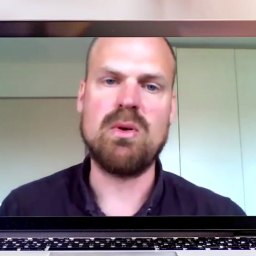 Ynse Deinema
AMS Institute
-
 Sacha Stolp
Dir. of Innovation, Dept. of Engineering, City of Amsterdam
About this video
This video features Ynse Deinema and Kenneth Heijns from the AMS Institute discussing the progress and future prospects of the Roboat project. This initiative, a collaboration between the AMS Institute in Amsterdam and MIT in Boston, began in 2015 with the ambitious goal of developing an autonomous, electric vessel capable of transporting people and goods. After five years of research and development, the team is now ready to transition their sensor technology from research to commercial application.
Deinema highlights the sophisticated sensor technology employed in Roboat, which includes Lidar, cameras, and an Inertial Measurement Unit (IMU). This technology is designed to enhance existing vessels with advanced autonomous capabilities, bringing a new level of intelligence to maritime navigation in urban environments.
However, the journey towards full implementation of this technology faces regulatory hurdles. Current legislation mandates the presence of a skipper on most vessels in city waters, presenting a significant challenge to the deployment of fully autonomous boats. This unchanged legislation is a key topic in the video, as it forms a critical roadblock in the path of urban maritime innovation.
Throughout the discussion, Deinema offers insights into how the Roboat project is navigating these regulatory challenges, and the potential implications for the future of urban waterways. The interview is particularly relevant for those interested in maritime technology, urban planning, and the integration of autonomous systems in transportation. It provides a comprehensive overview of the state of autonomous maritime technology, the challenges of aligning innovation with regulation, and the potential impact of such technologies on urban transport and logistics.
This video is recommended for professionals and enthusiasts in the fields of maritime technology, urban planning, and autonomous systems. It offers a glimpse into the cutting-edge developments in autonomous maritime transportation and the complexities of integrating these technologies within existing legal frameworks.
Read the transcript machine-generated
More in Mobility
See all 4:11
From Cameras to Insights: VisionAI Transforms Motorway Operations
 6:29
VisionAI Helps Boost Security During 2024 Olympic Games
 8:19
Curbing Noise Pollution with AI-Enabled Solution
 7:29
Brussels’ Smart City Strategy – Part 2
 7:59
Smart Parking Landscape Changes with New Players, Enforcement
 8:13
Mobility Data: New Paradigm for Smart Cities
Latest news in mobility
All news- Natal Starts Installing Adaptive Traffic Signals On Avenida Prudente De Morais21 Nov 2026
- Slovak Road Administration Renews Vaisala Road Weather Station Maintenance20 Nov 2026
- SFMTA Picks Hayden AI To Replace Muni Bus Lane Cameras On 212 Buses20 Nov 2026
- STASY Awards Dotsoft €1.09M Contract For Smart Parking At Four Athens Metro Stations20 Nov 2026
Kurrant advisory
Planning a mobility project? Talk to Kurrant.
Behind these interviews is Kurrant's advisory team, working with utilities, cities and the companies that serve them.
- Strategy AdvisoryKurrant is actively involved in resolving the challenges that cities, utilities and industry players are facing.
- M&A AdvisorySmart city and utility expertise for successful deals, turning insights into strategic gains.
- Engineering & ProcurementBetter engineering and procurement decisions, by identifying and developing digital and IoT solutions across use cases.
Or write to us: contact@kurrant.com
Send us a message