 in Barcelona
 3 to 5 Nov 2026
Summertime and the living. It's easy, right? Well, depends on who you're asking. It's easy for beachgoers who are looking to enjoy the good weather, but it's a lot of work for city employees in beach cities and towns who need to make sure they keep beaches safe and clean. for visitors and locals. To do just that and adapt to demands based on data, the Spanish city of Las Palmas de Gran Canaria is betting on smart city solutions and has sensorized its Las Canteras beach, which on the weekends has some 70 ,000 users on average per day in a suite kilometers. Además de sensorizar la playa y sus accesos, duchas, lavapiés, ruidos, movimientos de la movimientos del mar corrientes marinas todos esos datos los agrupa en una única plataforma y nos permite gestionar pues flujos de personas predecir cuál va a ser el comportamiento del mar a medio y largo plazo puedes tomar decisiones que sean las más adecuadas para tratar de paliar los efectos de la subida del nivel del mar puedes controlar los ruidos los consumos de agua el volumen de llenado de las papeleras para el The project was dubbed Smart Beach and is part of a larger project that the Spanish city is embarked in, the LPA Blue Intelligence, which has a funding of 8 million euros to help the city digitize some of its verticals and gather data to improve services. urban areas and what it does is that it has sensors in containers to optimize the routes of the cars. There is another one that has to do with this mobility that we talked about with parking, with parking, with parking, parking, parking in the Azules. We have in Las Palmas four thousand parking places of parking. You can see the app and you know where it is. There is another one that has to do with the Pago con distintos tipos de tarjetas en la guagua o autobuses. Las distintas funciones de los ayuntamientos son muy amplias, pero al final todas en este caso convergen en una única plataforma. For Blue Intelligence, the city teamed up with Minsight, an Indra Group company specialized in innovation and digital transformation projects. For Smart Beach, the partners divided the project into two phases. The first base, the first base, the first base, Days inside the Blue Intelligence Initiative saw the city deploy 39 optical and on -edge sensors on different entries to the beach to monitor how many people access it. They also installed fill level sensors in the bins and flow meters on the showers, which send data to the platform on how full the bins are and how much water is being used. Noise sensors are also in place, so if a noise surpasses certain level for over 15 minutes, authorities. are alerted so they can act. The second phase has a bigger focus on environmental issues. going to be the current, and in the second case, are cameras, which with these cameras then they have behind a computer of artificial intelligence, which is the image, in total are five stations, each one has two or three cameras, which is it, they have three cameras. Those five stations that I have mentioned, are three for the beach of the Canteras, which with only three stations, we are able to cover all the surface of the beach, and the other cameras, and the other two cameras. The whole Smart Beach project, which had a total cost of around 800 ,000 euros, 300 ,000 from Blue Intelligent for the first phase, and around 500 ,000 from another funding for the second, was connected through LoRa. Only one gateway was needed to connect all the devices to the platform, as they calculated that, even though in theory the gateway should cover 20 kilometers, it covers between 5 and 7. They installed the gateway on a point that was by... 2 .2 kilometers away from the beach. The sensors which were mounted on already existing street furniture are all battery operated, but the five stations on the beach also have solar panels. The platform used is key as it is helping get rid of the siloed system. we have started working with security, we also have to work with culture, in fact, that is something great, because we don't talk about opinions, but about data, and that is a cultural change in the management of the Ayuntamiento and of the public. We need to get out of the silos to go to the common spaces. OneSight is a platform of interoperability that includes various products, We have everything that is oriented to big data, for large volumes of data. We also allow, through an API, to connect with all these devices. Then we also have a system of flow of ETL, which is what we allow, once we receive these data, all the processing that we do with them for the collaboration of the different KPIs. We also have the OneSight, the OneSight platform, which is a business intelligence tool. which is the one that allows us to create all these command panels in which we put all types of graphics. We can also put maps of maps, where we have all the maps of the beach and on top we have painted all the sectors defined, all the sensors are placed, also give alerts that you want to define about this, alerts of current. The platform sends alerts to workers about future tides or when the bins are full, for example, or if there is a leak in one of the showers, something that already proved useful during the announcement. stage of the project. A leak was found in one of the showers when they recorded the use of 20 ,000 litres in one day, when normally it's around 9 ,000. The city was able to remotely close the water flow and send a repair team. Although we don't know exactly the amount of savings, finding leaks early means the city can save not only resources but also money.
Smart City Technology Enters Beach Arena
Las PalmasMobilityPeople counting
In this video
-
 Andrés Caballero Quintana
Head of the Technical Unit of Ciudad del Mar, Las Palmas City Hall
-
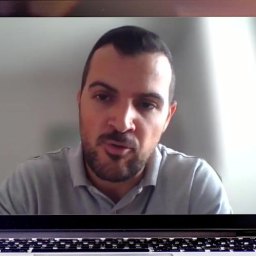 Alejandro Talavera Rodríguez
Senior Smart City Technology Consultant, Minsait
About this video
We journey to Spain to delve into the innovative Smart Beach project in Las Palmas de Gran Canaria. This project marks a significant step in urban digital transformation, focusing on Las Canteras Beach, a popular destination in the city. The beach has been equipped with a comprehensive sensor network, designed to enhance the quality of services while also promoting resource conservation.
Our exploration begins with an in-depth look at how Las Canteras Beach has been transformed into a smart beach. We examine the types of sensors installed, their functions, and the overall impact they have on beach management and visitor experience. The sensors play a crucial role in gathering data that is essential for efficient beach maintenance and management, leading to an improved environment for both locals and tourists.
The video features exclusive interviews with key figures behind this project. Andrés Caballero Quintana, the Head of the Technical Unit of Ciudad del Mar at Las Palmas City Hall, provides insights into the strategic planning and execution of the Smart Beach project. Alejandro Talavera Rodríguez, a Senior Smart City Technology Consultant at Minsait, discusses the technical aspects, focusing on the types of sensors used, connectivity solutions, and the platform that integrates all the data for analysis and decision-making.
Additionally, we explore how this project is a part of a larger initiative to digitize various aspects of the city's operations. These efforts aim to make Las Palmas more efficient, sustainable, and responsive to the needs of its citizens and visitors. The integration of smart technologies in urban management is a forward-thinking approach that sets a precedent for other cities aiming to become smarter and more sustainable.
Through this video, viewers will gain a comprehensive understanding of how technology can be effectively utilized to enhance urban environments. The insights from the interviews provide valuable perspectives on the challenges, solutions, and benefits of such projects. We also delve into how the data collected from these smart solutions aids in better decision-making, leading to more effective management and planning for the future.
Join us in uncovering the details of Las Palmas de Gran Canaria's Smart Beach project, a pioneering initiative that showcases the potential of smart technology in urban development.
Read the transcript machine-generated
More in Mobility
See all 4:11
From Cameras to Insights: VisionAI Transforms Motorway Operations
 6:29
VisionAI Helps Boost Security During 2024 Olympic Games
 8:19
Curbing Noise Pollution with AI-Enabled Solution
 7:29
Brussels’ Smart City Strategy – Part 2
 7:59
Smart Parking Landscape Changes with New Players, Enforcement
 8:13
Mobility Data: New Paradigm for Smart Cities
Latest news in mobility
All news- USDOT Selects UCLA, University Of Michigan And Derq For $5.5M Intersection Safety Phase One25 Oct 2026
- MBTA Begins Hayden AI Bus Lane And Bus Stop Camera Enforcement On Routes SL4 And SL525 Oct 2026
- Los Angeles Council Approves 50 DASH Bus Enforcement Cameras In $3.43M Hayden AI Contract24 Oct 2026
- Allstate’s Arity To Acquire INRIX Assets To Merge Driving And Traffic Data20 Oct 2026
Kurrant advisory
Planning a mobility project? Talk to Kurrant.
Behind these interviews is Kurrant's advisory team, working with utilities, cities and the companies that serve them.
- Strategy AdvisoryKurrant is actively involved in resolving the challenges that cities, utilities and industry players are facing.
- M&A AdvisorySmart city and utility expertise for successful deals, turning insights into strategic gains.
- Engineering & ProcurementBetter engineering and procurement decisions, by identifying and developing digital and IoT solutions across use cases.
Or write to us: contact@kurrant.com
Send us a message