 in Barcelona
 3 to 5 Nov 2026
One of the main aspects of smart cities when it comes to smart services and utilities are platforms and mobility is not different. I am joined by Rita Sousa, director of the Transport Authority of the city of Cascais in Portugal and Paulo Ferreira dos Santos, CEO of UbiRider. We're going to talk about mobility as a service. So first of all, Rita, what is Mobility as a Service, also known as MAPS? For me, I think Mobility as a Service, we have the concept of mobility and that gives more things than transporting from point A to point B. We have a service subject, we know how time we need to go there, create a lot of service in the same application. So we want that mobility is more than dislocation. So we have a service aggregated from the dislocations, I think, in the short scene. Paulo, as a solution provider who deploys mass solutions in various cities, do you see mass the same way Rita does or do you approach it more from a technology perspective? aspect? There is a technological aspect and there is a user experience or if you want a design aspect that are really important to make mobility accessible as you go to the supermarket or you go to a shop or to a restaurant. So there are a huge design problem to be solved and of course technology helps to bring the level of simpleness. or seamlessness that is necessary to assess the service. What I believe is that this is not just a thing for the riders, for the consumers, because there is a huge infrastructure problem, very old infrastructure, very old technologies that make it difficult to create integration between transportation and mobility. So we have some differences regarding other mobility as a service companies that we are working for the city and for the providers or for the operators, helping them to become more modern, more digital in a way that we can use that digital points to simplify the process for the consumers. The city of Qashqai is turned to UbiRiders platform PIC, which combines all forms of into one app where residents plan and book trips providing the city with data on the flow of mobility across the city which helps it helps you better manage transportation we covered this project at the beginning at current insights almost a year ago what is the status of the project did you achieve what you expected how are citizens residents reacting to it yes we are very satisfied with the project we are the people are receiving very well because the partner with will be right permits charge the past card for mobility for one month it's more easier its facilities so we want that experience for people in mobility is easier is great so we have to take them apps or other technologies that they can use frequently and easier. So we would rather bring that to Cascais. We are very satisfied and I think we'll go on next year. Let's see the future and reserves to us. In terms of solution and technology Paulo what is your return on experience from from this project anything you learned that made you change or adapt your solution for maybe other cities or yeah so cities are very complex customers because there are tenders there are a lot of stakeholders involved When you think mobility is no more just mobility, so people, there is a political side that is really interested in mobility because they want to reduce the cars or they want to reduce the pollution. So there are very, very complex aspects to be dealt. I don't believe we can work with all the cities. I was saying this to Rita in the beginning. Cascais is quite special because... On the leadership and on the middle and on the lower levels of people that work, they are engaged in digital, in becoming more digital, in simplifying the things. They are very focused on the citizen, and that makes it ideal to work with a company like us. There are another thing that Cascais has that I admire. They have tried... things they have failed and they have tried in a different way so they somehow they are behaving like a startup and and and and this is quite interesting so I think we were very lucky that we could partner each other and there's been really a teamwork because they have also and not all the city says so my designers talk with the Cascais designers my developers talk with software people from and this facilitates a lot to integrate very often we go to cascades with one point of view or they have their own point of view and we can we have been quite smart in looking for great consensus for both and and that is a case i don't know if we are going to pick other cities like that but more than coming to cascades or going to cascades to see our platform. It is necessary to go there to see how the people there work and partner with companies without any kind of preconception that is really good for us. Rita, what does it take in terms of governance to deploy such a project and who were the main stakeholders in it? The governance of Cascades works like this. like Paul says, for the citizens. Our main problem, no, but what we want is to serve the citizens. We want them living well, they have all conditions to live, education, wealthiness, mobility. So we want a great experience, so we need to talk with the stakeholders of EIT, other stakeholders to bring what we want and because Mobility is an organic project, it is always a change and we have to work and see what we failed, what we have to do new, so it's only work in new solutions with stakeholders we we match our points of view and sometimes we have a new idea. It's not the idea we had. We create a new idea, a new development. So I think Cascais and our governance, the focus is people, what people need. And now we go straight ahead to catch what they want, what they need for live a day and a life in Cascais. And Paulo, UbiRider is a young company. You started it in 2018, how did you have the idea to develop a mobility -as -a -service solution when the concept still wasn't clear to everyone? Yeah, it is an idea that crossed my mind maybe 15 years ago, for 15 years around, so I had another startup before this and my marketing manager was a Dutch guy living in Amsterdam that ate cars. So I said, Paolo, I will never have a car. So I think I crossed all Europe in public transportation. And it was really annoying arriving to, sometimes in the same country, sometimes moving from one city to another that is three or four or five kilometers away. And it was really complex to know what ticket to buy, pay the ticket. pay the ticket and knowing how to go from one point to another. So this was an idea that was crossing my mind until expecting that the state of art of technology could make it possible to work everywhere. Because it was the point, it was having an app that could work everywhere. Arriving in... 2018, I saw that almost all the ingredients or components were available, except maybe the payments, but expecting that the regulation of open banking that happened in January 2019 would solve the problem. And it was the case. So, because we have now the level of technology that allows us to work on the cloud to create interior probability of information, interior probability of payments and the interior probability of communication. So you can plan, the first one to help you to plan, the second one to help you to pay and the third to guide you with smart notifications during the trip until you arrive to the final destination. So if you if I know that I'm going to pick a train and the train is delayed two hours, so why shall I go to the station when I can stay here? talking with you or something, or having a coffee. Did you thank your friend for giving you the idea of UbiRider? He didn't give me the idea, he provoked me to create. No quite, yes, but for making something click in your mind. I thank him after creating UbiRider, I was in Amsterdam and we have a nice dinner, and I remember him about our trips. Why did you choose UbiRider? solution. Did you compare it to other solutions deployed in other cities before making the choice? As Paulo already said, we don't have afraid to fail in Cascais. We try the solutions that appear to end and then we make the public concourse or another systems of concentrations but we don't have afraid to fail in Cascais. We try a solution. If the solution doesn't satisfy our objective, we go find another one that can bring what we want. We want our desires satisfied. That's what we want. So today we are working with UbiRider. I hope it's for long, but I don't know the future. So if they respond to what we want, because it's a long way, we have to... to go there is always something we want more we don't like these we want that way so it's a long way we have to work but we are going find what the what the market has and what they what we need so that's why we work with will be right right now it's going well they didn't have a lot of choice No, because for a good reason for UbiRider, because you have at this moment in mobility as a service, companies that work for the rider and they have apps and sell services and so on. But they don't share information with the cities or with the providers. Or you have companies that work for the cities and for the operators, but doing a kind of white label. apps, what sometimes lack an amazing user experience. That is the problem. Anyone can do an app. An app that all the people want, very few can do it. And it is the point. Sometimes cities say, I want my app. But after, if they don't have users, what is the point of having an app? So, and we don't do white label. We work on our own app. And because we know how difficult it is to attract users and to retain them, but we share all the information with the city and this is new for them, so they can know what they are selling, how people are using their network and getting a lot of valuable insights that help them to redesign the network if it is necessary. the stops the lines to provide a better a better service and after users or they complain or they say good things or they say good things also these insights are really really important because most of the times what we have seen is that cities and operators they don't solve problems not because they don't want it or because they are lazy they are not aware about that and and we give them this visibility about the problems that are opportunities to solve. For example, if a stop is not used so frequently as expect, opens a way of investigating why. Sometimes it's because it's in a dark place or a dirty place, or because it's not covered when it is raining, and sometimes are very easy things to be solved, but can be solved if they are aware about them. And what was asked us, it was, look, I want an app for the users and for the riders, but we want to have information and good data to integrate with other things. And there are not a lot of startups or companies doing mobility as a service at the same level for the providers and for the users. Yes, it's a unique way to approach the matter because you're listening to both the city and... the citizen. since the very first moment we have worked with providers and cities in mind and riders in the other side and luckily we we could do it because it's a huge differentiation nowadays and with all this data how do you how how do you ensure data protection how we we don't share we don't share any individual information for something in the payment side we work with a bank so we don't own the information from the payments. Even if you are thinking that you are putting the credit card in my app, in fact, you are doing directly in the database of the choir, not ours. In terms of the data of the riders, we are very strict on the contract or on the privacy policy that we sign with our riders. We don't share any individual. information and we don't do any kind of advertisement so the two things that are most of the problems the rest is we we do everything in the cloud and in the clouds is much more you have much more powerful cybersecurity tools that you can have in a individual server and Rita after your experience would you recommend other cities to mass solutions yes I think it's a good way for governments of data from our citizens from the how they work and project better from the future I think it's very important to have to have a mess and right now we have with we do rather and another say causes we had mess for work what advice would you give them what advice would you give those cities when deploying mass solutions I don't know maybe find the great app yes not the app but using the date that the the apps bring to us right now we don't have support to use all the date that apps and other systems brings to governance that's the big problems we need to solve We don't have dates and what we are doing with that, we have to know. So using the dates, the math gives to us, I think is true. And what are the plans for Cash Guys in terms of mobility, any new projects, and are you looking to expand the project you already have? Yes, we are trying to expand, not for the users, but the back office already, as Paolo We want to have the information about the bus stops, passengers for the drivers, so we are working in that way and that's how it works. Let me compliment one thing that is also a novelty in Cascais. So all the cities want to have their own app. The problem is that if you have an app that's... serves just one city, maybe you don't serve a big number of users, because people live outside of the city and work in the city, or they travel between the cities. What we brought is extending the mobility platform of Cascais to not serve the citizens in their geographical area, but everywhere. So, if you use our app from Cascais, you can use it here in Barcelona. or in Valencia or everywhere and this is a major value because for example a lot of people that lives in Cascais they work in Lisbon so they don't need to jump from one app to another app for the train we don't want to travel like that so and this is a differentiation that we are bringing and we are in an early stage from all the ideas that exist between us Uber rider for Cascais and Cascais for Uber rider to do together a lot of process because this expansion of keeping the branding of the city, managing the relationship with the citizen, but serving them outside is really, really important because they can know how the people get in the city, how they move to also think there is a need of a park or electrical vehicle charger there so you can start manipulating is a strong word but to help people to leave the car home at least sometimes and another thing that is quite interesting is we are starting working not like all the cities for just for the recurrent travels but also for the occasional because if you want to steal people that are driving cars to the public transportation You need to make it simple, not for the ones that know everything about public transportation, but for the ones that sometimes they leave the car at home and they can go and ride a bus or ride a train. So all these concepts, all these ideas, we are implementing at this moment in Cascais, and we are in the middle of doing even more things together. Now, as a city resident, it sounds like mass is just the future of Mogul. So thank you so much for answering all my questions and hopefully next year at next year's expo we can be here again and we can talk about how the project is going. Thank you so much. Thank you. We accept your promise. Thank you.
What is MaaS and Who Are the Main Stakeholders?
In this video
-
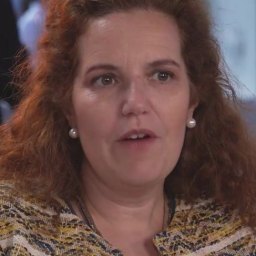 Rita Batalha da Sousa
Director of the Transport Authority, City of Cascais
-
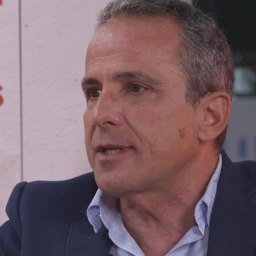 Paulo Ferreira dos Santos
CEO, Ubirider
About this video
In this insightful video, we delve into the evolving landscape of smart cities, with a particular focus on the role of platforms in enhancing smart services and utilities. Filmed at the Smart City Expo World Congressin Barcelona, this panel discussion illuminates the crucial aspect of mobility within the smart city framework.
The video features guests Rita Batalha da Sousa, the Director of the Transport Authority for the City of Cascais in Portugal, and Paulo Ferreira dos Santos, CEO of Ubirider. Both bring a wealth of knowledge and experience to the table, offering valuable insights into the concept of Mobility as a Service (MaaS). Their discussion explores how MaaS is transforming urban mobility, making it more efficient, accessible, and integrated.
Rita Batalha da Sousa shares her experiences and the challenges faced in implementing smart mobility solutions in Cascais, providing a real-world perspective on the practicalities of enhancing urban transport. On the other hand, Paulo Ferreira dos Santos discusses the innovative approaches adopted by Ubirider in the field of MaaS, highlighting the potential of technology in reshaping how we think about and use urban transport.
Whether you are a city planner, a technology enthusiast, or simply someone interested in the future of urban living, this video offers a comprehensive and balanced view of the challenges and opportunities in smart city mobility. Join us for a thought-provoking session that provides a deeper understanding of how cities are evolving and adapting to meet the mobility needs of their residents.
Read the transcript machine-generated
More in Mobility
See all 4:11
From Cameras to Insights: VisionAI Transforms Motorway Operations
 6:29
VisionAI Helps Boost Security During 2024 Olympic Games
 8:19
Curbing Noise Pollution with AI-Enabled Solution
 7:29
Brussels’ Smart City Strategy – Part 2
 7:59
Smart Parking Landscape Changes with New Players, Enforcement
 8:13
Mobility Data: New Paradigm for Smart Cities
Latest news in mobility
All news- USDOT Selects UCLA, University Of Michigan And Derq For $5.5M Intersection Safety Phase One25 Oct 2026
- MBTA Begins Hayden AI Bus Lane And Bus Stop Camera Enforcement On Routes SL4 And SL525 Oct 2026
- Los Angeles Council Approves 50 DASH Bus Enforcement Cameras In $3.43M Hayden AI Contract24 Oct 2026
- Allstate’s Arity To Acquire INRIX Assets To Merge Driving And Traffic Data20 Oct 2026
Kurrant advisory
Planning a mobility project? Talk to Kurrant.
Behind these interviews is Kurrant's advisory team, working with utilities, cities and the companies that serve them.
- Strategy AdvisoryKurrant is actively involved in resolving the challenges that cities, utilities and industry players are facing.
- M&A AdvisorySmart city and utility expertise for successful deals, turning insights into strategic gains.
- Engineering & ProcurementBetter engineering and procurement decisions, by identifying and developing digital and IoT solutions across use cases.
Or write to us: contact@kurrant.com
Send us a message