 in Barcelona
 3 to 5 Nov 2026
the smart parking market over the past several years has been changing very rapidly it started with in -ground sensors that can monitor vehicle occupancy in each spot you put one sensor in each parking lot parking spot and you are able to know when the car arrives and when the car leaves today many cities rely on a combination of sensors and software installed on light poles ability to oversee multiple parking spots and then we have guidance systems that get people directly to the spot either through signage that's in the city or through an app or you know directly integrated with their car and other cities like copenhagen are finding they don't need cameras or sensors at all we can predict what might be happening or openings might go and we don't maybe don't have to censor it at all but as fast as these solutions are being developed market trends are changing too as cities push to reduce the number of cars on their streets and consumers adopt shared even autonomous vehicles. So what does this mean for the future of smart parking? Let's take a look. Smart parking began with a simple goal, reduce traffic congestion by making it easier for drivers to park. I think the great thing about parking as opposed to other. more complicated like being a smart city is that parking usually is in one department that owns it they can deploy a really concretely measurable beneficial solution that we know the residents and visitors want they want more convenient parking they want to pay mobile II they want to find a spot quickly parking is also a massive moneymaker for a city typically the second or third highest revenue source so it's a no-brainer that a city would technology to rake that in. But when we look at the figures, smart parking actually has the lowest penetration rate for a smart city application. That's because the technology is more niche in the market than initially envisioned. The initial anticipation was that every on -street spot, every garage spot, every spot everywhere would have one and that's how you would know if the car was there or not. What we're seeing now is using these kinds of sensors for instance in truck stops and trying to let truckers know what kind of availability there is for parking at certain rest areas so they don't pull off unnecessarily which wastes time waste money it's a safety hazard and that's an area that we've seen take off and i know a lot of vendors that we've spoken to say the same thing the the trend that we are seeing is that they are better understanding uh how to use the technology depending on their situation the chief commercial officer at Herbiotica, a Spanish company that launched its solutions in Barcelona back in 2008. Barcelona initially used in -ground sensors to direct drivers to spaces in busy shopping districts, but today Herbiotica's technology is used to do the opposite. Instead of making it easier for drivers to enter the city, Barcelona has deployed Herbiotica's technology near public transportation, where drivers can ditch their cars and use public transportation to finish the journey. Ground sensors are placed in-ground sensors. reserved parking spots like those for handicap or electric vehicle charging and at the entrance and exit of the areas to determine the number of unoccupied spaces it's how barcelona is bringing its low emission zones to life these are areas where cars are banned certain type of cars will not be allowed to enter the city center okay and when the pollution will be very high only the electrical ones will be allowed to enter okay so we will need to inform people where they can let the car and then take the public transport. In-ground sensors also come with a hefty price tag, costing $200 to $400 per sensor to install. Another reason, cities may be rethinking the large-scale deployment of this technology and instead lean on a combination of software and hardware. So there's definitely a market, rather, and it's definitely growing, but the areas in which it's growing are changing pretty dramatically. as software becomes much more capable of giving us answers that we need at a lower price point than physical sensors. Unlike a ground sensor, a software solution can monitor much wider areas at a fraction of the cost. Some are just as accurate in their analysis as ground sensors and don't include downsides like this. They got covered with snow or a snowplow came by and ripped it off the road or they just repaved their street. and all of a sudden their ground sensors are underground. And so this is a totally different solution. Clever City uses optical sensors installed in cameras that sit over the street, for example, on lampposts. They're powered with AI and analyze the streets with edge computing. They offer 99% accuracy for up to six on-street parking bays and 200 off-street. The data then gets sent to the cloud and drivers are notified of a free space through the LED display. One of the cool things about it is that this network of sensors all around the world is constantly learning. So as we learn something in a sensor in Dubai, one of our sensors sitting in Germany or in Moscow can then get that updated information about what we've learned. And so the whole system is getting better and better and better all the time. Other vendors like Parkery specialize in a cloud computing software and can be used with any camera. We take images coming from... any cameras. We analyze them in the cloud to deliver real-time information on parking occupancy and parking duration. So if a city for example has already a set of cameras for video surveillance, they can just literally plug and play your solution without the need of any additional hardware. Similar to Clever City, the results are 99% accurate with similar coverage areas. The solution is usually provided as a service for a few dollars a month per parking bay. I really do believe that the cameras are the future in terms of smart parking. But others say a predictive algorithm is the way to go. These solutions analyze parking trends and provide updates on where parking is typically available based on that history. They don't require cameras or sensors, making them a strong alternative for cities where there are few lampposts and lots of trees. In 2018, Copenhagen was only able to receive about 80 to 85 percent accuracy with this solution, but they saw much lower investment costs. And now we're seeing a market shift. These solutions are causing the industry to consolidate specifically among vendors specializing in ground sensors. Our feeling is that there are still many players, majority of them very small, some of them with few installations, and that will consolidate to three to five companies. One of the latest acquisitions was seen in June of 2020 when Herbiotica acquired World Sensing's fast park solution. Fast Park sensors use magnetic and infrared detection to transmit occupancy information to the cloud. And according to Mark, the acquisition is already paying off. We have already delivered something like 800 sensors and this was a nice opportunity because it's a product that is complementary to our product range today thanks to having double detection, magnetic and infrared, and communicating with LoRa, which is a requirement certain countries. And in the other hand, we have had a very complementary commercial footprint. Some countries where we are strong, they were not present and vice versa. Where they were present, we were not. It all comes as the market grapples with the rise of autonomous vehicles, which some research suggests could decimate the parking industry. Researchers say autonomous vehicles will have no need to park. Instead, they expect the cars to cruise around. to avoid the parking costs. But for Herbiotica, smart parking isn't going anywhere. The rise of autonomous vehicles simply underscores a trend of being smart about where you place the technology. Once you go outside the inner center, then you still need the car. Because it will be difficult to have enough means of transportation that will be cost-effective to bring people to the city. So to recap, smart parking is expected to grow, but not in the way initially conceived. No longer are cities deploying thousands of sensors in the ground. Instead, they're leaning on predictive algorithms to provide citywide updates, and they use ground sensors or cameras to address specific concerns in areas where accuracy is key. As a result, the industry is consolidating among ground sensor vendors, and experts predict that only a few major power players will remain. that's a story on smart parking be sure to send us your questions with the button below and for all future updates be sure to stick with current insights
What’s The Future Of Smart Parking?
In this video
-
 Grant Samms
Research Analyst, Smart Cities Tracker, Guidehouse Insights
-
 Marc Boher Genis
Chief Commercial Officer, Urbiotica
-
 Ruthbea Yesner
VP, Government Insights, IDC
-
 David Parker
CEO, Cleverciti
-
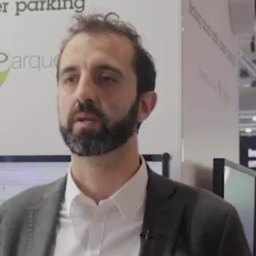 Andrea Fossati
CEO & Co-Founder, Parquery
About this video
The smart parking market is experiencing a significant consolidation, particularly among vendors who are experts in ground sensor technologies. This development is thoroughly explored in this video where industry leaders and experts weigh in on the emerging technologies and their respective advantages and disadvantages.
The discussion features Grant Samms, Research Analyst specializing in Smart Cities Tracker at Guidehouse Insights; Marc Boher Genis, Chief Commercial Officer at Urbiotica; David Parker, CEO of Cleverciti; Ruthbea Yesner, VP of Government Insights at IDC; and Andrea Fossati, CEO and Co-Founder of Parquery.
This episode is essential viewing for professionals and enthusiasts in the smart city and IoT sectors, as well as urban planners, government officials, and anyone interested in the evolving landscape of urban technology and its impact on daily life.
Read the transcript machine-generated
More in Mobility
See all 4:11
From Cameras to Insights: VisionAI Transforms Motorway Operations
 6:29
VisionAI Helps Boost Security During 2024 Olympic Games
 8:19
Curbing Noise Pollution with AI-Enabled Solution
 7:29
Brussels’ Smart City Strategy – Part 2
 7:59
Smart Parking Landscape Changes with New Players, Enforcement
 8:13
Mobility Data: New Paradigm for Smart Cities
Latest news in mobility
All news- USDOT Selects UCLA, University Of Michigan And Derq For $5.5M Intersection Safety Phase One25 Oct 2026
- MBTA Begins Hayden AI Bus Lane And Bus Stop Camera Enforcement On Routes SL4 And SL525 Oct 2026
- Los Angeles Council Approves 50 DASH Bus Enforcement Cameras In $3.43M Hayden AI Contract24 Oct 2026
- Allstate’s Arity To Acquire INRIX Assets To Merge Driving And Traffic Data20 Oct 2026
Kurrant advisory
Planning a mobility project? Talk to Kurrant.
Behind these interviews is Kurrant's advisory team, working with utilities, cities and the companies that serve them.
- Strategy AdvisoryKurrant is actively involved in resolving the challenges that cities, utilities and industry players are facing.
- M&A AdvisorySmart city and utility expertise for successful deals, turning insights into strategic gains.
- Engineering & ProcurementBetter engineering and procurement decisions, by identifying and developing digital and IoT solutions across use cases.
Or write to us: contact@kurrant.com
Send us a message