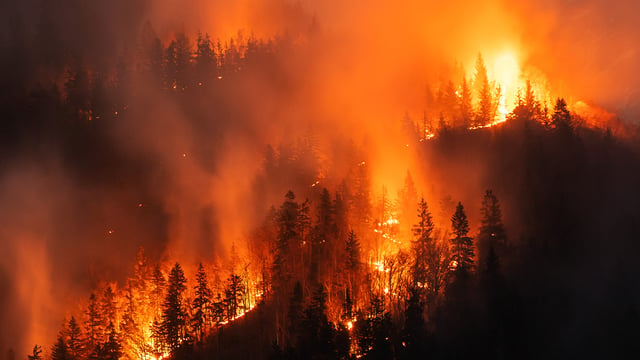
A coalition of a national telecoms operator, a regional council, and a German environmental technology firm has completed the installation of an ultra-early wildfire detection network at the Waitangi Endowment Forest in Northland, marking the first deployment of its kind anywhere in New Zealand. The system, built around 250 solar-powered sensors spread across the entire forest, is designed to detect the chemical signature of a smouldering fire before any visible smoke or flame appears, giving emergency services and land managers a critical lead time to act.
A Nationally Significant Forest Faces a Growing Risk
The Waitangi Endowment Forest carries deep significance in New Zealand. It was created by the Waitangi Endowment Act 1932-33 and gifted to the nation, and today sits adjacent to the Waitangi Treaty Grounds, one of the country’s most visited cultural sites. The forest is managed by the Department of Conservation on behalf of the Waitangi National Trust Board and is home to native wildlife including the North Island Brown Kiwi. It also houses the Waitangi Mountain Bike Park, which draws hundreds of visitors each week.
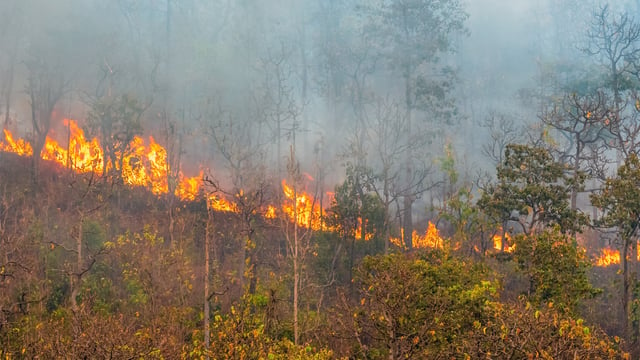
The threat of wildfire in New Zealand has been intensifying. As the country faces a new era of fire risk, demonstrated by major outbreaks affecting Tongariro and recent incidents in Northland and Canterbury, the search for faster and smarter detection systems has become more critical. The combination of ecological value, community infrastructure, and visitor traffic made Waitangi Forest a priority site for upgraded protection.
Three Partners, One Deployment
The project is a collaboration between Spark New Zealand, Far North District Council (FNDC), and Berlin-based Dryad Networks. Each partner carries a defined role. Spark, through its subsidiary Adroit, deployed and configured the system, connecting it to the internet and ensuring smooth operation. FNDC installed the sensors in the forest and matched funding provided through Round 7 of the Tourism Infrastructure Fund, administered by the Ministry of Business, Innovation and Employment. Inside Government NZ
The Department of Conservation has authorized the installation for a period of 15 years, providing long-term operational continuity for the network.
How the Silvanet System Works
Dryad’s Silvanet platform is a wireless environmental sensor network based on LoRaWAN, the leading open standard for long-range radio IoT networks, providing a complete solution for early wildfire detection as well as forest health and growth monitoring.
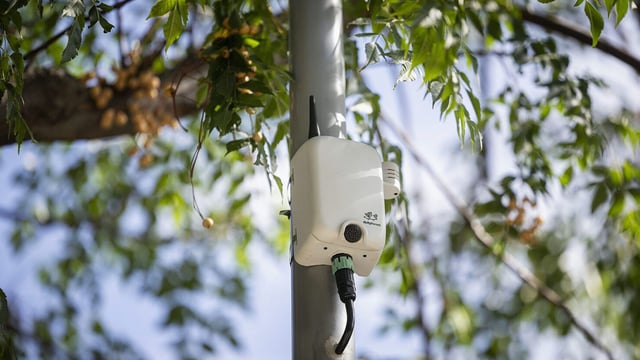
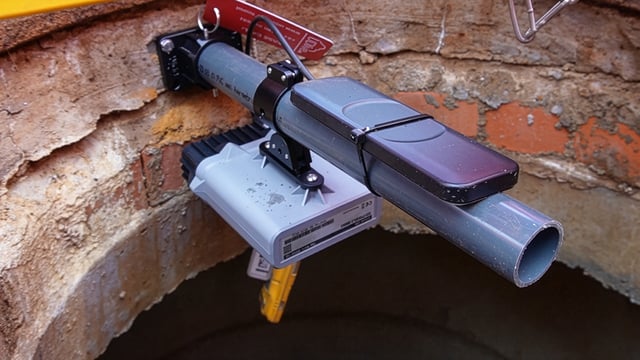
The Silvanet Wildfire Sensor combines ultra-low-power air quality monitoring with precise gas and particle sensing capabilities. Its built-in artificial intelligence fuses data from VOC, carbon monoxide, and particle sensors to distinguish the unique signature of a wildfire from other environmental factors, targeting high-performance detection while eliminating false positives.
Crucially, sensors are attached directly to trees and are capable of detecting a smouldering fire within a radius of up to 115 metres. The solar-powered devices recharge using ambient forest light, harvesting enough energy during daylight hours to sustain overnight operation.
The Waitangi deployment goes a step further than standard configuration. The system will be trained on the specific flora, soil type, and vegetation of the forest, including native species such as mānuka, so that it learns local smoke signatures rather than relying on generalized baseline data. This site-specific calibration is intended to reduce false alerts and improve detection accuracy over time.
Localised AI and the “Smart Forest” Concept
By extending Spark’s IoT networks into the forest, the initiative advances the concept of a “smart forest,” using connected sensors and intelligent monitoring to protect and sustain New Zealand’s natural heritage. The 250-sensor deployment covers the entire park, and the data collected will serve dual purposes: fire detection and ongoing monitoring of forest health and growth.
Once the system is fully bedded in, the project partners plan to walk the forest with managers, owners, iwi representatives, and industry stakeholders to demonstrate the technology and gather feedback. Future integration with Fire and Emergency New Zealand (FENZ) systems is also under consideration, which would allow alerts to flow directly into the national emergency response framework.
“By partnering with Spark and Dryad, we are taking proactive steps to ensure its preservation against the threat of wildfires. By training the AI to detect fire specifically from our local flora – this localises the technology and makes it more accurate,” said Charlie Billington, Group Manager for Corporate Services at Far North District Council, in the project announcement.
Dryad’s Pacific Expansion and Global Footprint
The Waitangi deployment is part of a broader push by Dryad into the Asia-Pacific region. Other deployments are already operating in Italy, Germany, Thailand, Canada, and the United States, where public agencies, utilities, and forestry companies use Silvanet to protect critical infrastructure and natural reserves.
Spark is acting as both systems integrator and reseller for Dryad’s technology across New Zealand, a commercial arrangement that positions the telecoms group to offer wildfire detection as part of its broader IoT portfolio. Adroit, the Spark subsidiary handling technical integration, has positioned wildfire detection as a natural extension of its existing environmental monitoring work across water, air, soil, and flood risk domains.
By 2030, Dryad’s stated ambition is to prevent 3.9 million hectares of forest from burning, thereby keeping an estimated 1.7 billion metric tons of carbon dioxide out of the atmosphere. Wildfires are widely cited as responsible for up to 20 percent of global CO2 emissions annually, a figure that underscores the climate case for early-stage detection investment beyond the immediate safety rationale.
What Comes Next
The network requires a 14-day calibration period after deployment before the sensors begin generating reliable alerts. Once operational and stable, the system will be further refined to recognize specific combustion signatures from native flora. Planning is already underway for community and stakeholder engagement sessions in early 2025 to present findings and build local understanding of the technology.
The broader question for New Zealand land managers, councils, and conservation bodies is whether the Waitangi model is replicable. With Spark now holding distribution rights nationally and co-funding mechanisms available through central government infrastructure funds, the structural conditions for wider rollout appear to be in place.