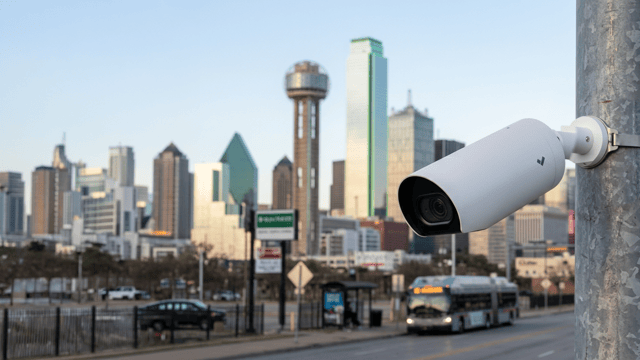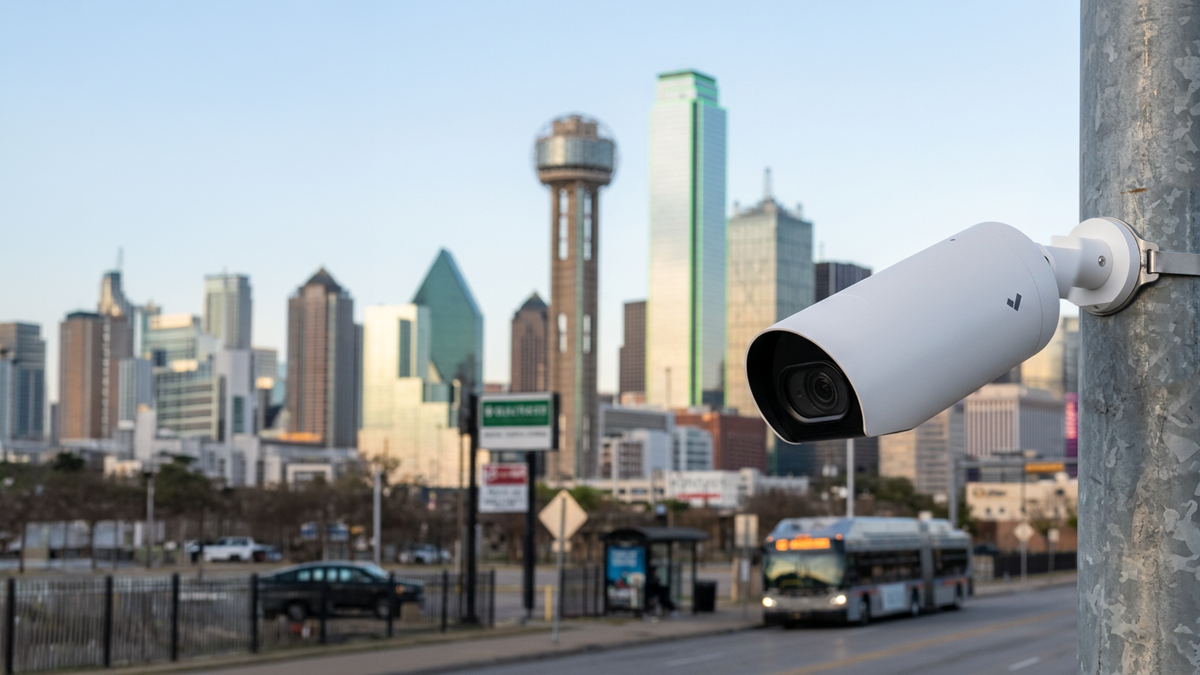
The Dallas Police Department is set to receive $1 million for Verkada AI-powered surveillance cameras under City Manager Kimberly Bizor Tolbert’s proposed fiscal-year budget, presented to the Dallas City Council at a briefing in mid-August 2026. The allocation builds on a $4.6 million purchasing agreement approved on Feb. 25, 2026, that is replacing the department’s aging CCTV fleet across intersections, headquarters, a training facility and all seven substations. Roughly 431 Verkada cameras are already active, with about 125 net additions expected to bring the department’s total CCTV presence to 1,207 devices. Department officials say the cameras ship with facial recognition capability but that Dallas will not switch it on.
Why A Distributor Contract, Not A Vendor Contract, Carried The Deal
The council did not contract with Verkada directly. It approved a purchasing agreement with STS360, a North Texas security technology distributor that already maintained the department’s legacy CCTV inventory.
That structure is common in municipal physical-security procurement, where integrators hold the service relationship and the manufacturer supplies hardware and cloud licensing. It also means the underlying platform terms, including analytics features, reach the city through a reseller rather than a direct vendor negotiation.
The agreement bundles hardware replacement with access to Verkada’s cloud-based video management and analytics platform, shifting Dallas from on-premises video retention toward a subscription model. Pan-tilt-zoom units in the deployment typically retain footage for up to 180 days under the company’s published specifications.
The Line DPD Says It Is Drawing Between Attribute Search And Face Search
Officers can query the system in plain language for vehicle attributes such as make and colour, and a department spokesperson confirmed that searches can also be run on clothing, gender, appearance and carried items including backpacks or hats. That is object and attribute recognition rather than biometric identification, but the functional gap narrows in practice.
Reinhart said activating facial recognition on the Verkada system would require review by the council’s public safety committee and a full council vote, and that any such change would appear in an audit log. No binding ordinance currently prevents activation.
Dallas Already Runs Facial Recognition, Just On A Different Stack
The commitment applies to the camera network, not to the department as a whole. Dallas has operated Clearview AI investigative facial recognition since October 2024 under a policy restricting searches to serious offences, with supervisor approval and peer review by trained analysts.
In December 2025 the department told the Community Police Oversight Board it had run 156 searches contributing to 25 arrests, and proposed extending the tool to Class B misdemeanours. Read together, the two programmes mean Dallas is separating biometric identification from live network video rather than rejecting biometrics.
That distinction matters for oversight design, because the audit trails, approval chains and retention rules governing Clearview do not automatically extend to the Verkada estate.
Data Custody Is The Architectural Difference From Flock
DPD operates more than 600 Flock automatic licence plate readers and, according to a Dallas Morning News analysis cited by the Observer, ran more than 800,000 searches of that network in 2025. Twenty-five Flock cameras have been vandalised since March.
Reinhart said the Verkada deployment cannot be pooled automatically with other agencies, including federal ones, and that sharing footage requires a manual approval process. The STS360 agreement stipulates that the city retains full control of the data.
Data custody has become the decisive procurement variable in Texas. Brownsville built its own AI vision stack on private 5G specifically to keep analytics on-premises and avoid third-party sharing exposure, and its CIO has publicly ruled out facial recognition.
The Vendor’s Regulatory History Became A Council Bargaining Chip
Three members voted against the February agreement: Lorie Blair, Zarin Gracey and Deputy Mayor Pro Tem Maxie Johnson. Johnson objected to the compressed timeline and to what he described as reputational baggage attached to the vendor.
That reference points to a 2024 enforcement action. Under a stipulated order announced by the Federal Trade Commission, Verkada paid a $2.95 million penalty for CAN-SPAM violations and agreed to implement a comprehensive information security programme with third-party audits, following breaches between December 2020 and March 2021 that exposed more than 150,000 live customer cameras.
DPD told the council it had run a multi-department security risk assessment before bringing the item forward, and stated in a memo that the company now operates under an FTC-mandated security programme with periodic audits. The department said the vulnerable system had been eliminated.
World Cup Deadlines Compressed The Review Window
Officials urged approval so intersection cameras could be replaced before the 2026 FIFA World Cup, with the transition beginning in March and prioritising areas near tournament events. Reinhart said the coverage supported monitoring of crowds around team arrivals and departures at hotels.
Tournament-driven procurement has been a regional pattern rather than a Dallas anomaly. Houston approved $350,000 for AI traffic detection cameras along a stadium access corridor in May 2026, its second AI camera purchase in short order, also over objections about mass surveillance.
Event deadlines compress the deliberation window that oversight bodies normally use, which is precisely the complaint Johnson raised before the vote.
Market Context: A $5.8 Billion Challenger Moving Into Public Sector Accounts
Verkada announced a CapitalG-led investment valuing it at $5.8 billion in December 2025, up $1.3 billion from its February 2025 Series E, after surpassing $1 billion in annualised bookings. The company reports more than two million devices deployed across 171 countries and over 30,000 customer organisations.
Its public sector footprint includes Dallas ISD, the SMU police department, the New York Police Department and the city of San Antonio. Municipal video is a growth vector for a vendor built primarily on enterprise accounts, and city contracts carry different disclosure and retention obligations than corporate ones.
The company said in written responses that its facial recognition cannot identify individuals against third-party databases, and pointed to features including face blur, person-of-interest-only search and configurable privacy regions. A separate Verkada guest management product misidentified a Phoenix parent as a registered sex offender in July 2026, and the school district later apologised.
The Oversight Gap Advocates Say Procurement Rules Cannot Close
Nick Hudson, senior policy manager for justice system and carceral reform at the ACLU of Texas, argues that acquisition processes leave residents and sometimes elected officials with little visibility into what is being bought. His position is that the absence of a binding public commitment leaves activation a policy decision rather than a legal barrier.
The concern is grounded in documented misuse elsewhere. Reporting on Flock networks has identified dozens of officers charged with or accused of misusing camera systems for personal surveillance, and Detroit police were barred from using facial recognition for arrests after the 2020 wrongful arrest of Robert Williams.
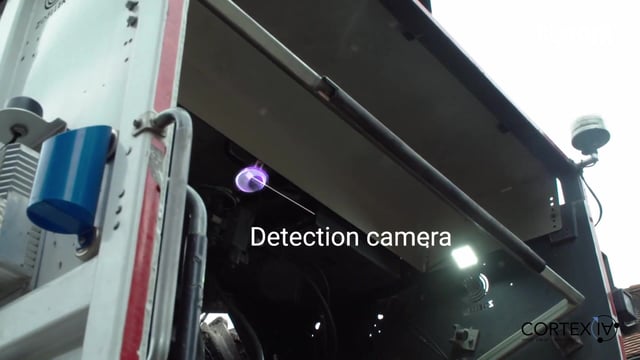
Dallas has expanded municipal AI vision on multiple fronts simultaneously, including a $2.6 million contract for AI cameras on waste collection trucks approved in late 2025, which uses facial and plate blurring as a default safeguard. For utilities, transport agencies and city technology leaders watching the sector, the Dallas case illustrates the emerging governance question: capability now arrives bundled by default, and the meaningful control point is configuration policy rather than purchase approval.