in Barcelona
 3 to 5 Nov 2026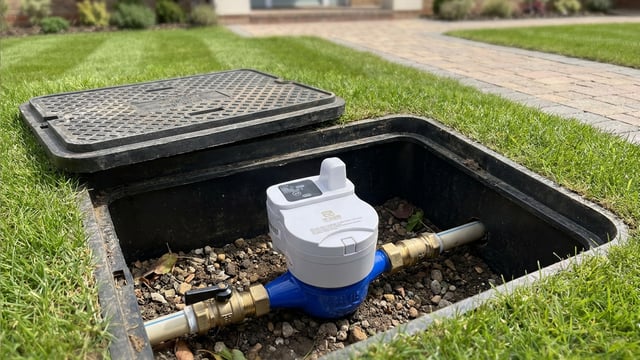
The City Council of Columbia, Missouri, the Boone County seat of 130,851 residents by the latest US Census Bureau estimate, voted on 21 September 2026 to proceed with an Advanced Metering Infrastructure program for its electric and water utilities. City staff costed the program at $41.8 million up front plus about $640,925 a year in recurring charges, with installation of new electric and water meters scheduled to begin in spring 2027.
The program is being delivered by Ameresco, the Framingham, Massachusetts energy services company the city selected in March 2025. Pre-vote council materials described funding through up to $39.8 million in special obligation bonds, according to reporting carried by KBIA on the day of the meeting.
A 1996 Meter Reading System Reaches The End Of Its Useful Life
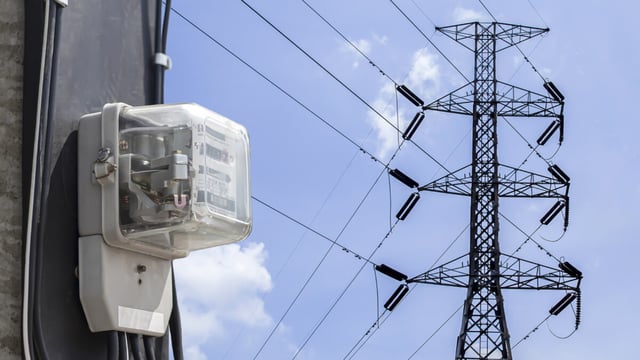
Columbia Water & Light, the city-owned utility, has read residential meters since 1996 with an automatic meter reading system in which a handheld device collects a radio signal from the street once a month. The City of Columbia’s electric meter page states plainly that the city does not currently have smart meters.
Track tenders like this
New smart city and utility tenders across Europe, flagged daily with an AI summary.
That one-way, monthly model means the utility cannot see a customer outage until the customer reports it and cannot flag a household water leak until the next billing cycle. City engineering staff cited both limitations when the proposal was first presented to the council in June, as ABC17 News reported.
The Water and Light Advisory Board listed aging equipment, meter failures, limited data access and operational inefficiency as the drivers for replacement, according to KOMU 8. The station described the replacement units as solid-state meters that record hourly consumption for display through an online customer portal.
106,739 Endpoints Across Two Utilities
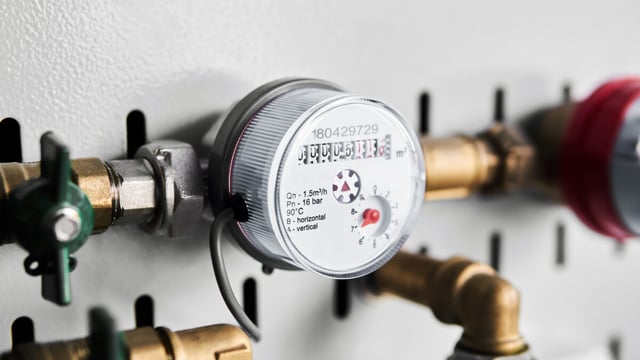
The scope presented in June covers replacement of 53,992 electric meters and replacement or retrofit of 52,747 water meters, a combined 106,739 endpoints. It also includes a citywide communications network, a data collector layer, meter data management software and integration with the city’s existing billing and customer portal systems.
At the June figures, the one-time cost was approximately $42.1 million, of which $41.97 million was a turnkey contract with Ameresco that also bundled software integration and three years of measurement and verification services, according to ABC17 News. On those numbers the turnkey price works out to roughly $393 per endpoint before financing costs, a Kurrantly calculation rather than a city figure.
Electric meter replacement is expected to take about 18 months, while water meter installation could run two to three years. The longer water schedule reflects the field labour involved, since meter pits, lids and service connections must often be surveyed and repaired before a new register or endpoint can be fitted.
Kurrantly covered the proposal in June, when the final council decision was pencilled in for September. The approved figure of $41.8 million is slightly below the $42.1 million presented at that stage.
Ameresco’s Role As Energy Services Contractor
Ameresco came to the metering project through a broader energy services arrangement. The city chose the company in March 2025, and the agreement was amended in August 2025 to add evaluation and development of an Advanced Metering Infrastructure solution for both the electric and water utilities, according to ABC17 News.
During that development phase Ameresco audited the city’s metering systems, reviewed meter databases, carried out field surveys and assessed current operations before recommending a scope. A July 2025 Ameresco presentation to the council set out an investment grade audit covering meter testing, savings models and technology evaluation workshops.
Neither the city nor Ameresco has publicly named the meter manufacturer, the radio network technology or the head-end and meter data management software to be deployed, which leaves open which of the established metering suppliers will sit underneath the Ameresco contract.
The approach mirrors a pattern in Ameresco’s municipal work, in which the company acts as turnkey integrator and selects hardware on the utility’s behalf, as in the Texas water metering contracts with Baytown and Shenandoah worth more than $5 million combined.
The Savings Case Rests On Staff Projections
City staff projected that savings and additional revenue would total $71 million over 15 years, a figure drawn from reduced meter reading labour, fewer truck rolls, faster leak and outage response and more complete revenue capture from meters that currently under-register. These are city projections and have not been independently audited.
Against that, the recurring software charge of $640,925 cited in September would total about $11.9 million over 15 years if it escalates at the 3% annual rate staff described in June. Added to the $41.8 million capital cost, that places the gross outlay near $53.7 million before bond interest, a Kurrantly calculation.
Debt service would be spread over 10 years, with annual payments rising gradually to about $5 million, according to the June presentation. Ameresco representatives acknowledged at that meeting that some customers could see higher bills if their existing meters have been under-reading.
Utilities spokesperson Jason West told the Columbia Missourian after the vote that customers should not expect bill increases from the new meters and might see savings in about three years. He added that meter readers would be reassigned to other city work rather than laid off.
The Missourian also reported that interval data could eventually support time-of-use pricing. That would shift the program from an operational efficiency project into a rate design question that the council has not yet taken up.
A Late Adopter In A Mature Market
Columbia is entering a market where the technology is well established: US electric utilities had about 119 million advanced metering installations in 2022, roughly 72% of all electric meters, according to the US Energy Information Administration.
That maturity lowers technology risk but raises a different procurement question for a combined electric and water utility. The network, endpoints and data platform chosen now will need to serve both utilities for a service life of 15 to 20 years, yet the city has not disclosed whether the chosen architecture is proprietary to one meter supplier or open to multiple vendors.
The figure that will determine whether the $71 million projection holds is the share of it that depends on recovering revenue from under-registering water meters. That component is the least predictable, the most politically sensitive when bills rise, and the one the city has not broken out separately in public materials.