Chicago-based grid hardware developer Switched Source announced on 13 October 2026 that it has raised more than $17,000,000 to expand manufacturing of Phase-EQ, a pad-mounted power flow control unit that rebalances the three phases of a utility distribution circuit, in a round led by Cubit Capital with participation from ABB, Emerald Technology Ventures, Red Cedar Ventures, Southern States, Southwire Company and other strategic investors.
The company did not disclose a valuation or the split between the lead and the strategic participants, so the round can be measured only by what it is meant to fund: larger production and testing capacity, a wider utility solution portfolio, and new manufacturing, quality and supply chain roles at its Chicago headquarters.
A Device Aimed At The Load Growth That Distribution Circuits Were Not Built For
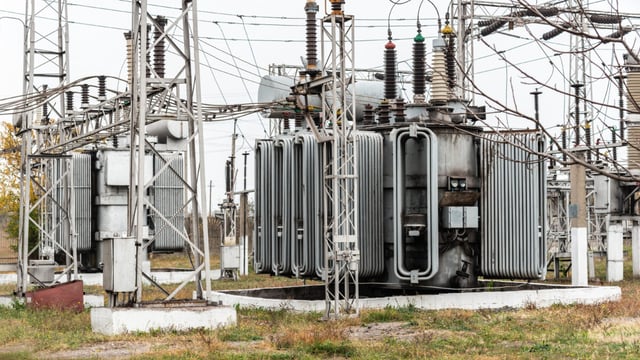
Phase-EQ is installed in the same way as a pad-mounted transformer and continuously moves power between phases, which the company says stabilizes voltage and releases load-serving capacity on feeders that would otherwise need reconductoring or a new substation. Switched Source states that each deployment can bring 100 to 200 additional homes online without new infrastructure, a figure that depends on the loading and imbalance of the individual circuit and has not been independently audited.
Building in this space?
Kurrant Ventures backs start-ups digitalising cities and utilities, and opens doors to the operators that buy from them.
- Latitudo 40
- GoodVision
- Meersens
- Cortexia
The pitch is aimed at distribution planners facing volatile new demand from EV charging and heat pumps, where single-phase additions skew circuits unevenly long before the thermal limit of the conductor is reached. The company reports lead times of 14 to 20 weeks from purchase order to site activation, against one to three years for many conventional distribution upgrades, which is the central commercial argument in a market where upgrade queues have lengthened.
Field Evidence Is Largely Company-Reported
According to the company, Phase-EQ has accumulated 150,000 run hours across twelve utilities and has delivered increases of 10% to 25% in load-serving capacity in field data. Both figures come from the company’s own release, which does not name the twelve utilities, the circuit types sampled, or the baseline against which the percentage gains were measured.
Public documentation from New York gives a more detailed picture. A June 2026 case study prepared for the New York State Energy Research and Development Authority records $1,000,000 in NYSERDA funding for a beta test of one unit in the Village of Sherburne and roughly $1,000,000 more for a scale-up with National Grid in Clifton Park, where field tests recorded between 500 kW and 2,500 kW of unlocked capacity, averaging about 1,200 kW.
The same report states that National Grid examined 972 of its 2,000 circuits and flagged 185, or 19%, as potential beneficiaries, and that its May 2024 rate case included $14,250,000 to deploy 30 further devices between fiscal 2025 and fiscal 2029. Sites had been identified for 12 of those 30 units, and the report treats its benefit-cost figures as modelled best-case estimates rather than measured results.
Manufacturing Scale Is The Binding Constraint
In March 2025 Switched Source announced a $5,000,000 investment in a 20,000-square-foot facility in the Chicago area, which it said would raise production capacity by 150% and allow delivery of at least 50 Phase-EQ units per year. At the stated range of 100 to 200 homes per unit, that output would correspond to between 5,000 and 10,000 homes of added serving capacity annually, before allowing for the wide variation in circuit conditions.
The new round arrives with a larger order book to serve. The March 2025 release described a five-year, $99,000,000 project funded under the U.S. Department of Energy Grid Resilience and Innovation Partnerships programme to deploy units across Florida for storm restoration, and the October 2026 release describes the same programme as covering the Southeast, where the units rebalance power as feeders are reconfigured after outages.
Strategic Investors Point To Channel And Supply Chain
The presence of ABB, a global supplier of electrification equipment, and Southwire Company, a maker of power cable and electrical products, alongside Southern States, suggests that the round is partly about routes to market and component supply, since each sells into the investor-owned, cooperative and municipal utilities that Switched Source targets.
Strategic participation of this kind does not by itself confirm technical performance, and the release attributes its endorsements to investors rather than to utility customers. The NYSERDA report is the only independent public document reviewed for this article, and it describes eight confirmed customers across more than 10 states, a base that is small relative to the 12 utilities cited in the funding announcement.