in Barcelona
 3 to 5 Nov 2026
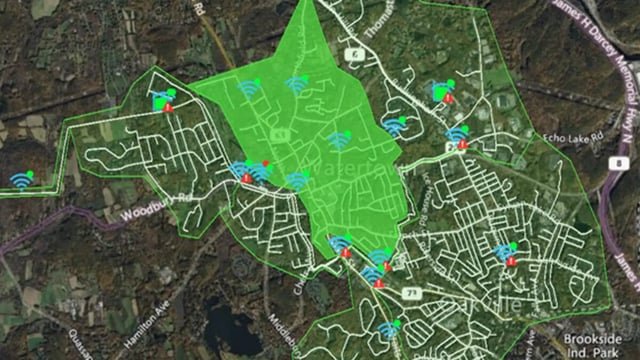
The Freeland Municipal Authority, a water utility in Luzerne County, Pennsylvania, that serves about 3,900 residents through 2,100 service connections, has deployed a $225,033 digital twin that combines 74 acoustic leak loggers, 15 advanced metering infrastructure meters and the Bentley Systems OpenFlows WaterSight platform, according to a WaterWorld Top Projects report published on 2 November 2026. A $203,500 grant from the Susquehanna River Basin Commission covered 90.4 percent of the cost and left the authority with a local share of $21,533, while the stated purpose is to cut non-revenue water, the volume a utility treats and pumps but never bills, by locating leaks faster in an ageing distribution network.
At roughly $107 per service connection and $58 per resident, the programme is a small-scale test of whether a utility with 2,100 connections can run a hydraulic modelling platform alongside live field instrumentation. Those per-unit figures are calculated by Kurrantly from the reported project cost and service numbers, and the grant share means that the authority’s own outlay per connection is about $10.25.
Why 74 Loggers Cover a 2,100-Connection System
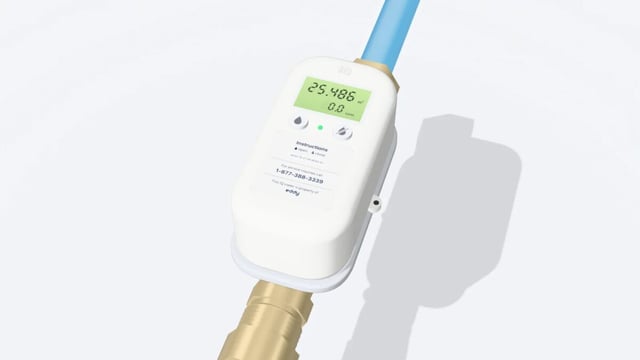
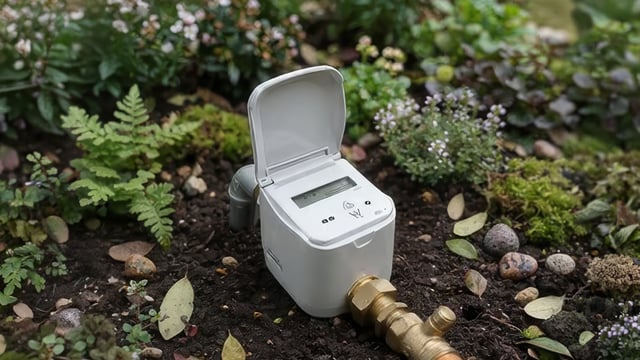
The field layer rests on 74 acoustic leak loggers, which equals one device for every 28 service connections, and these listen for the noise that escaping water produces on pipes and valves. Their readings are combined in WaterSight with the authority’s existing SCADA system, other operational data sources and a hydraulic model, so that staff see pressure, flow and acoustic anomalies in a single view rather than reconciling them across separate tools.
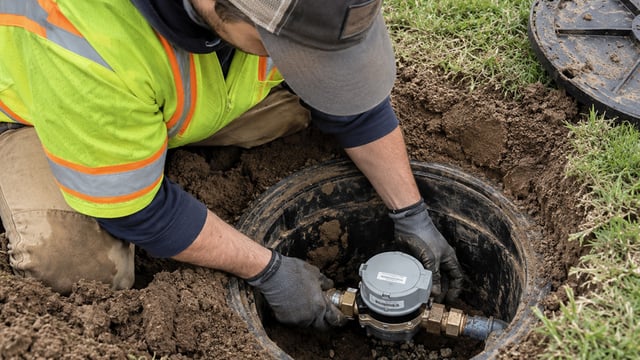
The 15 AMI meters add consumption data at the customer end, although they represent 0.71 percent of the 2,100 connections, a ratio that defines the current reach of customer-side measurement in the model. The authority is expanding both its instrumentation and its AMI deployment, according to WaterWorld, which means the metering share is expected to rise from that starting point.
A Middleware Layer Bridged Legacy SCADA Formats
Some of the authority’s SCADA data formats could not be read directly by WaterSight, so the project team added a middleware solution that translates the legacy data into a structure the platform accepts.
Acoustic readings created a second difficulty, because traffic noise and nearby mechanical equipment interfered with some of the loggers. Authority staff, the engineering firm HRG and the equipment manufacturer spent several months relocating and calibrating the devices, and HRG’s project record lists extensive calibration and validation of the data among the delivered work, alongside the purchase of the leak loggers and smart meters.
HRG and Bentley Set Up a Regional Template
The project was delivered with HRG, the engineering and consulting firm that helped secure the grant, and Freeland served as the proof of concept for an alliance that HRG and Bentley Systems announced on 13 May 2025 to implement WaterSight across water systems in the mid-Atlantic United States. Melissa Rohland, Director of Strategic Programs at HRG, acts as the liaison between HRG project teams and software providers, and HRG now provides monthly support that covers logger performance validation, analytics review, system health monitoring and the identification of operational trends.
Bentley describes the implementation as a phased approach it calls crawl, walk, run: the first stage connects existing data, the second adds trend analysis and predictive alerts, and the third supports capital planning, what-if simulation and optimised operations. The authority has historically relied on outside contractors for leak detection, an arrangement that Dave Kavitski, chairman of the authority, said required it to bring in companies that specialise in the work.
Cost Control Is the Operating Constraint
HRG obtained the $203,500 grant that pays for the purchase of the leak loggers and smart meters, and the remaining $21,533 is the only part of the $225,033 that falls directly on the authority’s own budget, which limits the authority’s direct commitment to 9.6 percent of the programme.
The authority is funded only by its ratepayers, which explains the emphasis on a staged build and a grant-financed capital cost. Ryan Smith, Technical Manager at the Freeland Municipal Authority, put the position plainly in a Bentley case study: “We’re only funded by our ratepayers, so we’re all about saving money where we can.”
WaterWorld reports that staff now spend less time, labour, fuel, chemicals and energy on locating leaks, and that the freed capacity is being redirected to water quality work, emerging PFAS regulation and infrastructure planning. The platform is also intended to support well-level monitoring, drought performance evaluation and the prioritisation of capital projects, which extends the platform beyond leak detection into long-term asset management.
What Will Decide the Return
The benchmark that matters for a utility of this size is the reduction in non-revenue water measured against the pre-project baseline. The next test is the expansion of AMI beyond 15 meters toward the 2,100 connections, because customer-side consumption data is what allows the model to separate apparent losses from physical leaks and to show how much of the $225,033 is recovered in billed water.