in Barcelona
 3 to 5 Nov 2026
Eddy Smart Home Solutions Ltd. (TSXV: EDY), a Toronto-based water leak detection company, announced on 3 November 2026 that it will supply monitored water detection to communities managed by FirstService Residential in the United States and Canada under a master services agreement signed on 7 January 2026. Eddy currently monitors 30 FirstService Residential communities, and the company reported 145,127 in-building devices installed across its operations as of 30 June 2026, an increase of 24,323 units, or about 20%, from the 120,804 devices it had on 30 June 2025.
A master services agreement that starts at 30 communities
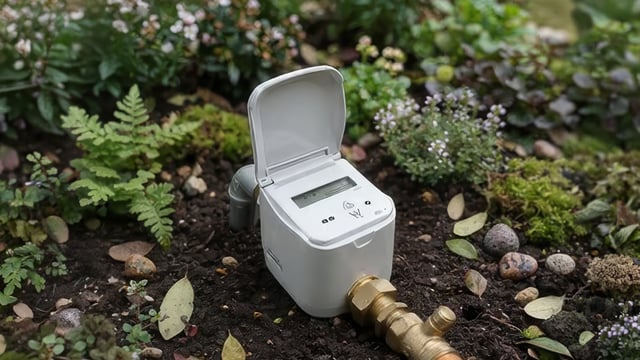
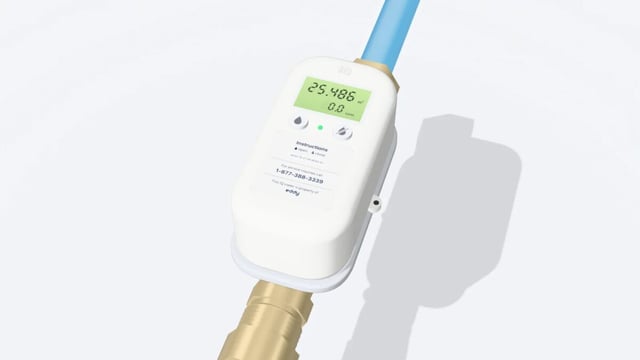
FirstService Residential is a subsidiary of FirstService Corporation (NASDAQ and TSX: FSV) and manages residential associations across the United States and Canada. The agreement gives boards and property managers in its portfolio access to Eddy’s wireless three-in-one sensors, which measure water, temperature and humidity at points such as domestic water risers, heat exchangers and leak-prone appliances, and to automated shutoff valves that respond to thresholds set by the building.
FirstService describes the water detection offer on its own website as available to all properties it manages in the United States and Canada, and says it is administered through FS Insurance Brokers, which the page presents as part of FirstService Financial. The 30 communities now monitored are therefore the starting base of an agreement that is open to the whole portfolio, and the number of communities added in the ten months since signing is the clearest measure of how quickly boards are adopting it.
The insurance arithmetic behind the offer
Eddy frames the programme around association budgets under pressure from insurance costs. It cites ICE Mortgage Technology data showing that property insurance premiums rose 70% between 2019 and 2025, a LendingTree finding that 82% of association members saw fees rise over the past three years with 44% describing the increases as significant, and a Verisk figure of an 8% increase in interior water damage claim severity between 2019 and 2023.
From its own 2026 State of Water Risk Report, Eddy states that 65% of leaks in multi-unit residential buildings started after business hours and that 2 AM was the single busiest hour for major leaks. The company uses those findings to support a monitoring centre that operates around the clock, which is the part of the service that distinguishes it from a stand-alone sensor sold to a building engineer who is not on site overnight.
What the monitored service includes
The system sends alerts by text and email, identifies the location of a detected event, and can close a shutoff valve automatically when readings cross a configured threshold. Eddy’s monitoring staff can also follow up with designated building contacts and produce a Leak Incident Report for each event, a document the company says a broker can present to an underwriter at renewal.
According to Eddy, premium savings of up to 20% have been documented across operator portfolios using managed water protection, and deductible reductions of up to 80% have been documented at individual properties. Both figures are supplied by the company, describe specific portfolios and properties, and are not results from the FirstService Residential communities now being connected.
Device base and what it implies for scale
Eddy describes itself as a provider of smart water metering products and monitoring services for commercial and multi-family residential properties, with customers that include commercial buildings, construction sites, hotels and resorts, data centres and health care facilities across Canada and the United States. Its 145,127 installed devices are spread across those segments, so the 30 FirstService Residential communities represent an early share of a base that has grown by roughly 24,000 devices in twelve months.
High-rise condominiums are the segment where the sensor count per building is highest, because each riser, heat exchanger and appliance connection is a monitoring point. A single large tower can therefore add more devices than several low-rise communities, which means the community count alone will understate or overstate the effect on the device total depending on the building mix.
Cory Silver, President of Eddy Solutions, said in the company’s 3 November 2026 press release: “Property managers are the first call when a building floods at 2 AM, and the last to get credit when nothing floods at all.”
What will indicate scale
Three observable quantities will show how far the agreement extends: the number of FirstService Residential communities moving from 30 to a larger count, the devices added to the 145,127 base as those communities install sensors, and whether the insurers writing association master policies grant the premium and deductible adjustments Eddy cites from other portfolios. Eddy’s results for the period ending 31 December 2026 will be the first to cover almost the whole of the first year since the 7 January 2026 signing, and they will show whether the 20% annual device growth continues once the FirstService Residential communities are installed.