in Barcelona
 3 to 5 Nov 2026
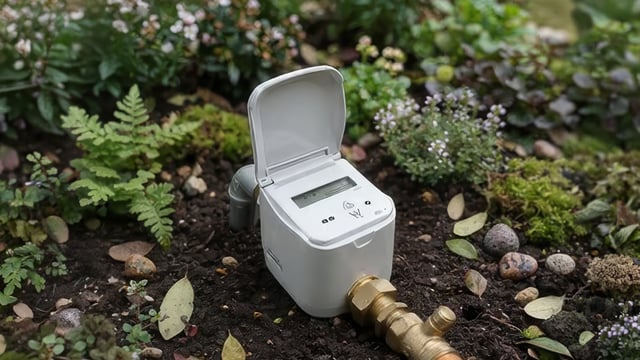
The TransmitWater consortium, led by Veolia with Aigües de Barcelona and the Cetaqua water technology centre, has completed a three-year public-private collaboration project that produced a decision-support platform predicting pipe breaks caused by pressure transients in drinking-water distribution networks, according to project results published on 30 October 2026 by TecnoAqua. The platform was tested in four case studies in Barcelona, L’Eliana and Tavernes in the province of Valencia, and Soutomaior in the province of Pontevedra, using high-frequency pressure sensors that record up to 128 readings per second, according to the project’s results.
Funding And Project Structure
TransmitWater is a Proyecto de Colaboración Público-Privada, a format in which Spain’s Ministry of Science, Innovation and Universities and EU Next Generation funds co-finance business-led research, and Cetaqua lists the project under code CPP2022-009697. Cetaqua’s project page names Aquatec, the Veolia group’s Spanish water operator, as project leader, alongside Cetaqua and Aigües de Barcelona, which operates the drinking-water system of Barcelona’s metropolitan area.
The sensors were first installed at several points of the Barcelona network and at the outlets of pumping stations, according to TecnoAqua’s December 2024 report on the project’s launch, which described instruments recording up to 120 readings per second, a figure that differs from the 128 readings per second given in the 2026 results. Both reports state a three-year project duration.
How The Platform Identifies Risk
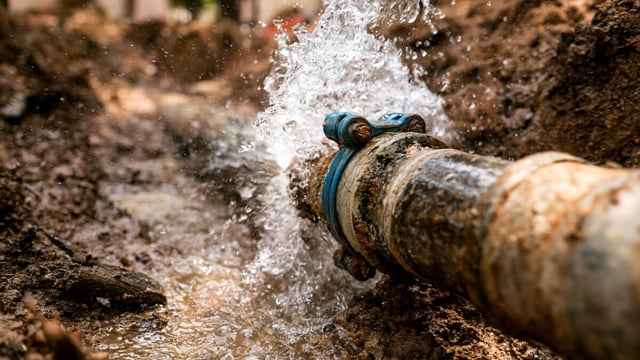
The tool addresses mechanical fatigue, the process by which repeated sudden pressure variations, which occur routinely in the operation of water networks, weaken pipes until they fail months or years later. It combines the high-frequency sensor data, machine learning and each operator’s own network data to generate maps of transient-related break risk, which allow utilities to rank the sectors of their distribution networks that need attention first.
According to the project results, the platform identifies the most exposed pipe sections with a precision of up to 50%, and it estimates how risk would change once specific mitigation measures are applied. Franco Crivello, project manager at Cetaqua, said at the project’s launch that operators would obtain the information needed to know which network sections show greater mechanical fatigue, a statement TecnoAqua reported in Spanish in December 2024.
Three Sources Of Transients And Nine Mitigation Measures
The project identified three main generators of pressure transients: pressure-reducing valves, pumping equipment and large water consumers. Users can simulate nine mitigation measures aimed at those three sources and compare the resulting risk before committing to operational changes.
The estimated reductions in water losses from breaks, assuming appropriate mitigation, are up to 25% for failures linked to pressure-reducing valves, up to 30% for failures linked to pumping and up to 9% for failures linked to large consumers. These percentages are project estimates from the consortium, and TecnoAqua reported that the outcome of any measure depends on the hydraulic and environmental conditions of the network and on the pipe material.
Market Context In Spanish Water Digitalisation
Spain’s water utilities have been digitalising networks with public support under the national recovery programme, and Veolia was reported to have secured €76 million in grants across 17 projects under the water digitalisation strategic project, as Kurrant reported in November 2025. Those programmes concentrate on smart metering, leak detection and network sectorisation, whereas TransmitWater addresses a different failure mechanism, the dynamic pressure behaviour of the network, which conventional flow and pressure monitoring sampled at low frequency does not capture.
The three transient sources named by the project map onto equipment that every large distribution network operates: pressure-reducing valves that regulate zone pressures, pump stations that start and stop, and industrial or commercial users that draw large volumes quickly. Utilities can therefore test the platform’s risk ranking against their own maintenance records on those assets, which is the comparison the four case-study networks have now carried out.
Benchmarks For Utilities Assessing The Tool
The 50% precision figure is the number a utility’s asset manager would compare against current break-prediction methods based on pipe age, material and historical failures. The loss-reduction figures of up to 25%, 30% and 9% are ceilings under favourable conditions according to the consortium, which means the 9% figure for large consumers marks the least tractable of the three sources.
The four case studies span a large metropolitan network in Barcelona, two municipal systems in the Valencia area, L’Eliana and Tavernes, and a small Galician network in Soutomaior, giving the consortium a range of network sizes against which to report results.
TecnoAqua also reported that a sensor-based digital tool for near real-time detection of contaminants, to be combined with a decision-support system, is planned for demonstration as a complement to the TransmitWater solution, and the results of that demonstration will show whether the high-frequency sensing installed for transient analysis can be extended to water-quality monitoring on the same networks.