Kansas City Water has been around for over a century, and as needs evolve and original infrastructure ages, the municipality’s public utility is renewing its network and slowly incorporating smart technology to improve their management of drinking water, wastewater and stormwater. They began their smart journey in 2010 with the Smart Sewer Project after a consent decree with the country's EPA mandated Kansas City to curb wastewater overflows into the environment. To reduce pollution, the utility started deploying new infrastructure along with some smart devices like the hundreds of flow and level sensors in their wastewater system. But more recently, KC Water decided to focus some smart efforts on leaks, main pipe leakage more specifically, relying on a small piece of infrastructure to do that. Fire hydrants. It was in-house when I took over leak investigations. It was suggested that we bring in some type of, automated correlated system to test pilot to see if it would be useful throughout the city. My group receives around 20 to 30 water main break calls a day. That could be anywhere from service leaks at a domestic residence to service leaks at a commercial residence to distribution mains to transmission mains, to fire hydrants, to valves leaks. I mean, it's just something we were just trying to look for a way to be proactive instead of reactive. Some two and a half years ago, KC Water piloted 50 Orbis Smartcaps for five months, and after the successful results, they extended the project with another 250 devices. The units were deployed in three high profile areas, shopping areas for example, the biggest one being in a 35 by 40 block location. The Smartcaps are screwed onto the fire hydrant’s outlet and pinpoints leaks due to multi-sensor monitoring, especially acoustic sensors. (They) correlate the water system once per night, and they listen for sound and they take the data and they calculate distance and they give possible non surfacing leaks. They actually correlate from the hydrant to the hydrant branch down the water mains themselves. We installed them in an area where we had newly replaced water main connected to existing cast iron water main. And we were able to identify a number of leaks on the old cast iron that was connected to the new, ductile iron water main. Smartcaps are placed around 300 to 600ft from one another. That's the distance between the fire hydrants in the city. The devices listen for leaks between each cap. KC Water deployed 280 but bought 300, keeping 20 in storage just in case something happens. Because they're on the surface, damage could be quite normal, but surprisingly, only one has been damaged in these two and a half years, a snowplough hit it. The devices rely on cellular connectivity to send the data gathered, including an audio recording. Data is analyzed and displayed on Orbis’ cloud-based platform. So we go in, we check it and the caps themselves send us back data. We have a gridded out map within the website itself showing each cap and it works with our own GIS that we've loaded into the system. It will drop markers on our GIS map itself, indicating where it thinks it has a problem, but then we can go in deeper and access each cap individually, and it will provide measurements from the cap itself. Decibels of sound. We're able to actually pull audio files and listen to what the cap hears itself. The platform doesn't send alerts through email or text message. So staff have to check it daily to find warnings. With this solution, KC Water has found leaks on the hydrants, valves and mains. The price of each cap is $1,500, plus a monthly fee to use the platform and sizing adapters. Because the Kansas City fire hydrant nozzles are 4.5in and the small caps are 3.5. Since the installation, they have found over 60 subsurface leaks. I would say we've received a 100% return on investment at this point due to restoration costs alone. I mean, when we have a large water main break, even when we have a small water main break that tears up the road, we have to go in and we might only dig a four by six hole to make this water main break repair. But the bigger the hole is we have to restorate the whole entire length of the street. And then within so many feet north and south of the hole itself. So, I mean, in restoration costs alone, I already would feel like we've received a 100% return on investment of what we spent on these caps. In the past, the utility tried using loggers, but experienced issues due to the type of soil and weather, as they had to clean out valves too often, and the connections between loggers and valves weren't smooth enough. For the future, the KC Water leakage team might deploy more Smartcaps and are piloting pressure sensors also from Orbis, which they want to integrate into the Smartcaps platform. But the caps have a limit related to main sizes, and the city has many different ones. The caps are for 12 inch mains or smaller, which works well for their residential areas, but once they try to expand to other areas with 16 inch mains caps, they won't do the trick. So even though they aren't looking for a new project at the moment, they are bound to have to look for other types of solutions to find leaks in their bigger mains. Whether they rely on satellites to find leaks in main pipes or loggers or drones, One thing is certain the US utility has a track record of getting a good ROI from their smart projects.
Kansas City Water Turns Fire Hydrants Into Leak Finders
Kansas City Water has been around for over a century. And as needs evolve and original infrastructure ages, the municipality’s public utility is renewing its network and slowly incorporating smart technology to improve their management of drinking water, wastewater and stormwater. They began their smart journey in 2010 with the Smart Sewer Project after a consent decree with the country’s EPA, mandated Kansas City to curb wastewater overflows into the environment. To reduce pollution, the utility started deploying new infrastructure and some smart devices, like the hundreds of flow and level sensors in their wastewater system.
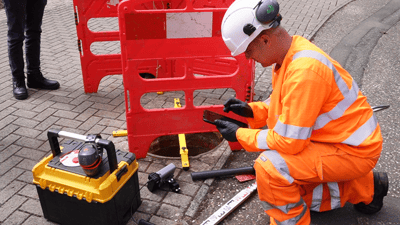
More recently, in the summer of 2022, KC Water decided to focus some smart efforts on main pipe leakage and started deploying Orbis Smartcaps on some of the city fire hydrants.
In this video, we interview Nicholas Wolf, Utility Superintendent for Leakage Investigations at KC Water, to discuss how the utility relies on Smartcaps on their fire hydrants to gather acoustic data and find leaks in their main pipes.
View transcript auto-generated










📰 Latest News
🎬 Kurrant Originals

🎥 Recent Event Coverage

Featured Case Studies
Real client work behind the news. Strategy, M&A and engineering projects we've delivered for cities and utilities.


Stay in the Loop
Get smart cities and utilities insights delivered your way. Choose your channel
Join our WhatsApp Channel