 in Barcelona
 3 to 5 Nov 2026
V2X, or vehicle -to -everything technology, is a wireless communication system that allows cars, vehicles, and maybe trains to talk to each other and talk to the infrastructure as well. It's a major automotive trend set to make our city smarter, ushering in a new level of safety, better road management, and mobility benefits. TTI has studied year -in, year -out that about 50 % of traffic congestion comes from non -recurring incidents. So translating that to normal English, that means about half of your traffic jams are because cars crash. So there's a longer-term play here. But how do we get there? For years now, the industry has debated the communication standards to scale V2X. Some pilots run off a modification of Wi-Fi known as DSRC. Others use CVS. V2X, a type of cellular radio technology. These standards are what enable a car to send and receive messages, but they're not without their downfalls. The problem of them using any spectrum is all these cars are going to be interfering with something else around. So will V2X ever become a reality? Let's dig in. In June, one of the latest V2X projects popped up in Peachtree Corners, Georgia. The test takes place. taking place in the city's Curiosity Lab Innovation Hub. Here's what you'll see today. Traffic signals updated in real time based on demand and congestion. And responders moving quickly on the roads in an emergency. So how is this possible? Let's take a look. The city outfitted a set of its vehicles with onboard units. These units communicate using a cellular network to other cars with similar technology. And they also talk to roadside journalists. units deployed on city infrastructure. The roadside units are connected to the city's fiber network. This enables operators to then react to traffic and deliver warnings to drivers and pedestrians in real time. Projects like this are fascinating because they combine all the connected vehicle applications into one powerful system. V2X is certainly a V2V, which is probably what got this started. But then there's V2I, or the vehicle's infrastructure, which is... important as well because that gets things moving because the first day first vehicle that has this equipment will have to have something to talk to and the probability of encountering another vehicle that has like technology in early days is low but if the infrastructure gets up and going that's good there's v2n but that's the cellular connectivity that you know and love right but that's necessary and it's hard to buy a car now without that v2n or that type of modem and transcend 4g and become a 5g modem soon enough and then there's importantly and aspirationally the v2p and when you bring it within the cellular family that is a real possibility because it's essentially the same technology in a handset that you would have in a car and that there is a possibility albeit without it there's engineering challenge but there's a possibility that they can start talking to each other and that differentiates cellular v2p Now, as we mentioned earlier, there's a big debate over the communication standards that will decide how V2X works. DSRC, which stands for Dedicated Short -Range Communication, is popular in Europe and Japan. Cellular V2X, on the other hand, is more commonly found in the United States and China. They're both radio technologies designed to operate on the same spectrum and capable of operating independently of a cellular network. But there are key... differences. Listen to this. So DSRC is a Wi -Fi protocol, CSMACA. What does that mean? That means that it listens before it talks. It's a very polite protocol, but you have to have the same protocol if you want to interact with it. CV2X uses an LTE protocol, which is one reason we call it cellular. It really wasn't marketing. I was in the room when we named it. It was a bunch of engineers. So we decided that, well, it uses a cellular. waveform. It's different because the protocol, polite but different, is that it looks for slots. It's a reservation like a restaurant. So you look for a resource and you find the slots. So there is a certain efficiency with CELOE V2X because it works on both time and time slots and frequency. So you have much more spectral efficiency. Now, spectral efficiency simply described as a way to have better performance. The other thing that it does that behaves differently is that if you're polite and you listen before you talk, if someone talks a lot, you'll never get a word in edgewise. So air access or radio access is more difficult with DSRC and their congestion conditions. And we've shown this with automakers and public fora. But CB2X, because there's a reservation, there's always a slot that has the least energy. So we look around for the least energy. energy and fit that and now that might kick out someone else who's in that slot what i mean is reduced distance if there's a lot of channel congestion would you rather have a message coming through to vehicles that are closer yes for safety or one that may never make it into the air now as the debate around standards heats up the large scale deployments of v2x are slowing down that's because as the name implies v2x requires all cars to be connected to each other and a lack of interconnection and interoperability is keeping that from happening. And if you take one step further, when you are just talking about autonomous vehicles, it's really a must to have communication between those vehicles. But there are efforts to address this. Hybrid V2X solutions have emerged that integrate DSRC and cellular V2X into the same heart. hardware and software platform. Consignia is one of the companies that supports both DSRC and CV2X interfaces. And basically, we have two options how we can get into the cars. We either buy a car, which is equipped with this technology. This is currently being rolled out. So manufacturers and automakers are currently deploying and starting all those manufacturing batches. will use this technology. And the other option we have for cars and moving objects is to retrofit this technology. And this is where our hardware platform comes into the picture. We can basically provide a box that you can install easily in your car and make it available for this communication. But there's another issue at play here, the cost of cities. Let's turn our attention. to georgia city reps didn't just outfit its vehicles with connectivity but its infrastructure and that requires a lot of money p street corners is investing four million dollars into this innovation hub to upgrade its infrastructure and buildings and it spent sixty six thousand dollars on the v2x communication network v2x advocates say the increased safety reduced congestion and better air quality are all reasons for cities to invest in the technology but when is the right time to do that. It's a question the state of Ohio is now asking after building out a project using DSRC equipment only to be told once it's completed that DSRC is no longer prioritized by the FCC. Instead in November the FCC chose to go with CV2X for V2X deployments. The state of Ohio is now filing a claim against the FCC. The state built about an $8 million fiber optics looped system that's connected to data centers at both. which would then connect to the towers, which would obviously then use radio frequency to connect to the vehicles. So we were well down the path, and we invested a significant amount of money. This would be the largest test facility in the country because it's 45 miles of limited access highway. It's a case that underscores the uncertainty that exists within the V2X market, and it also showcases the eagerness among cities to test it out. It's clear... V2X is heading our way, which means there are many more stories to tell. So be sure to stick with current insights as we continue to cover how the V2X market unfolds and the key players leading the way. And if you have a question on this story, be sure to hit the button below.
What’s Holding Back V2X Communication?
In this video
-
 Jim Misener
Sr. Dir., Product Management & Global C-V2X Ecosystem Lead, Qualcomm
-
 Doug Dawson
Owner & President, CCG Consulting
-
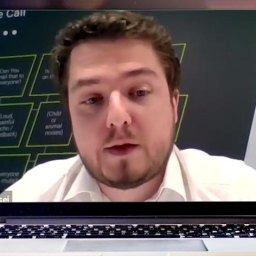 Máté Lipcsei
Product Manager, Commsignia
-
 Gregory Dunn
Partner, Specialized in Telecom & Utilities, Ice Miller LLP
About this video
This video provides a comprehensive exploration of the V2X (vehicle-to-everything) technology, a promising innovation poised to revolutionize road safety, traffic management, and overall driving experience. Despite its potential, the video addresses the market uncertainty hindering its widespread adoption, focusing on the pivotal debate between two key communication standards: DSRC (Dedicated Short-Range Communications) and C-V2X (Cellular Vehicle-to-Everything).
The video features insights from Mate Lipcsei, Product Manager at Commsignia, Jim Misener, Senior Director of Product Management & Global C-V2X Ecosystem Lead at Qualcomm, Doug Dawsome, Owner and President at CCG Consulting, and Gregory Dunn, Partner Specialized in Telecom & Utilities at Ice Miller LLP. Each expert brings a unique perspective to the discussion, shedding light on the technical, regulatory, and market dynamics influencing the adoption of V2X technology.
Key topics include the technical capabilities and differences between DSRC and C-V2X, their respective roles in enabling vehicles to communicate effectively with other vehicles, infrastructure, and road users, and the potential impacts on road safety and traffic efficiency. The video examines the current state of V2X deployment, the challenges of establishing a unified communication standard, and the implications for manufacturers, policymakers, and consumers.
The discussion also touches on the broader implications of V2X technology for smart city development and the future of autonomous vehicles.
This video is recommended for professionals in the automotive, telecommunications, and urban planning sectors, as well as policymakers and technology enthusiasts. It offers a deep dive into the critical technical and regulatory aspects of V2X technology, providing viewers with a clear understanding of the challenges and opportunities in advancing road safety and traffic management through innovative communication standards. The insights from industry experts make it a valuable resource for anyone interested in the evolving landscape of vehicle communication and smart transportation systems.
Read the transcript machine-generated
More in Mobility
See all 4:11
From Cameras to Insights: VisionAI Transforms Motorway Operations
 6:29
VisionAI Helps Boost Security During 2024 Olympic Games
 8:19
Curbing Noise Pollution with AI-Enabled Solution
 7:29
Brussels’ Smart City Strategy – Part 2
 7:59
Smart Parking Landscape Changes with New Players, Enforcement
 8:13
Mobility Data: New Paradigm for Smart Cities
Latest news in mobility
All news- USDOT Selects UCLA, University Of Michigan And Derq For $5.5M Intersection Safety Phase One25 Oct 2026
- MBTA Begins Hayden AI Bus Lane And Bus Stop Camera Enforcement On Routes SL4 And SL525 Oct 2026
- Los Angeles Council Approves 50 DASH Bus Enforcement Cameras In $3.43M Hayden AI Contract24 Oct 2026
- Allstate’s Arity To Acquire INRIX Assets To Merge Driving And Traffic Data20 Oct 2026
Kurrant advisory
Planning a mobility project? Talk to Kurrant.
Behind these interviews is Kurrant's advisory team, working with utilities, cities and the companies that serve them.
- Strategy AdvisoryKurrant is actively involved in resolving the challenges that cities, utilities and industry players are facing.
- M&A AdvisorySmart city and utility expertise for successful deals, turning insights into strategic gains.
- Engineering & ProcurementBetter engineering and procurement decisions, by identifying and developing digital and IoT solutions across use cases.
Or write to us: contact@kurrant.com
Send us a message