The World Bank Group has approved a US$119.2 million loan to help the Brazilian state of Santa Catarina reduce its exposure to floods and landslides and strengthen how it prepares for extreme weather. Announced on July 2, 2026, the operation is expected to benefit roughly 420,000 people across 54 municipalities, with priority given to low-income residents settled in high-risk areas. The loan is the World Bank’s contribution to a larger investment package and anchors the first phase of a state climate resilience program valued at about US$1 billion.
The US$119.2M Loan Is One Slice Of A US$149M Financing Package
The widely reported US$119.2 million figure is the World Bank’s own lending through the International Bank for Reconstruction and Development. According to the project appraisal documentation, the full operation is structured as a US$149 million Investment Project Financing package, with the government of Santa Catarina adding US$29.8 million in counterpart funding.
The project is registered by the Bank as Santa Catarina Climate Resilience (P508221) and was prepared with support from the Global Facility for Disaster Reduction and Recovery (GFDRR). Most secondary coverage described the initiative simply as a “US$119.2 million project,” which omits the state’s co-financing and the total public commitment behind it.
The Itajaí Valley Concentrates Both The State’s Jobs And Its Flood Risk
Santa Catarina is one of Brazil’s leading industrial and agricultural regions, with manufacturing, technology, and agribusiness at the core of its economy. The Itajaí Valley alone generates about one-third of the state’s jobs and hosts the Port of Itajaí, which the World Bank describes as the country’s second-largest container port and a key gateway for beef exports.
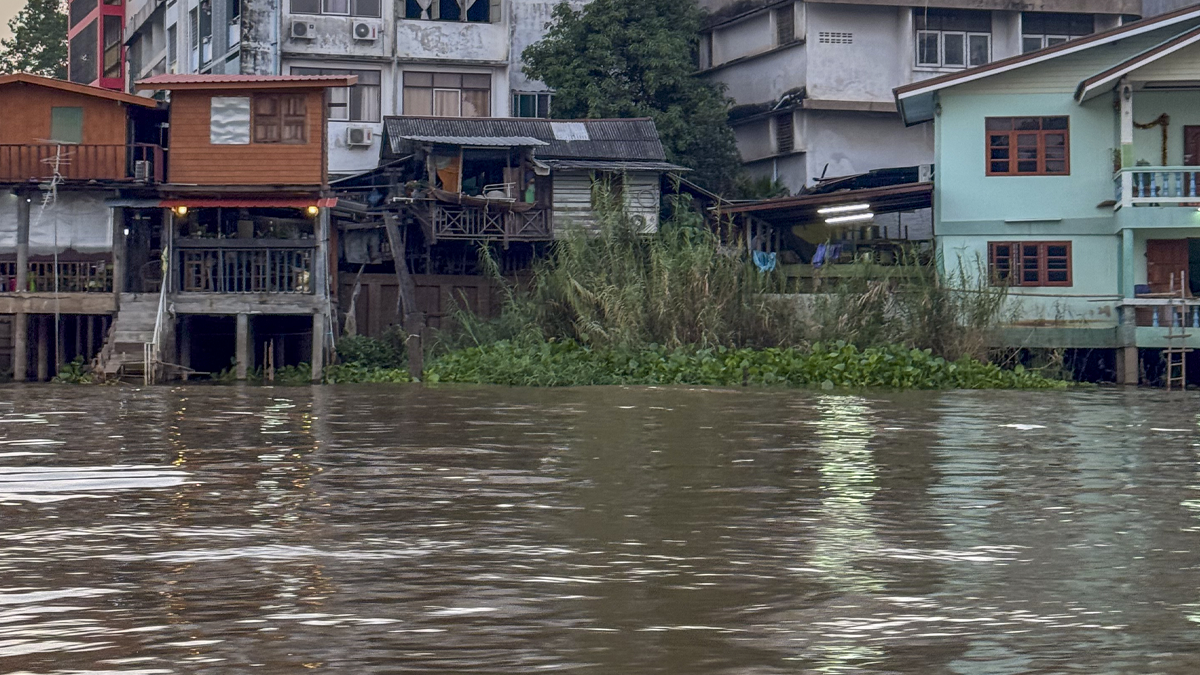
That same valley is among the most disaster-prone regions in Brazil. Between 1991 and 2023, floods and landslides caused more than US$7.2 billion in economic losses across the state, affected over 20 million people, and displaced roughly 1.3 million. The 2008 floods left the city of Itajaí about 90 percent underwater and forced vessels to divert to neighboring states, with lost port revenue estimated at US$35 million per day during the disruption.
Dredging, Embankments And Floodgates Anchor The Structural Works
Structural flood-control infrastructure in the Itajaí Valley sits at the center of the project. Planned works include river channel dredging, reinforcement of embankments, and floodgates along the Itajaí-Mirim River, complemented by support for a series of upstream flood-control dams tied to the broader state program.
Continued prosperity in the region, said Jorge Coarasa, World Bank Acting Country Director for Brazil, “will depend on sustainable strategies to adapt to growing flood risks,” in the institution’s July 2026 press release. No contractors, engineering firms, or equipment vendors have been named publicly, since procurement typically follows loan approval.
Early Warning Systems And Nature-Based Solutions Widen The Approach
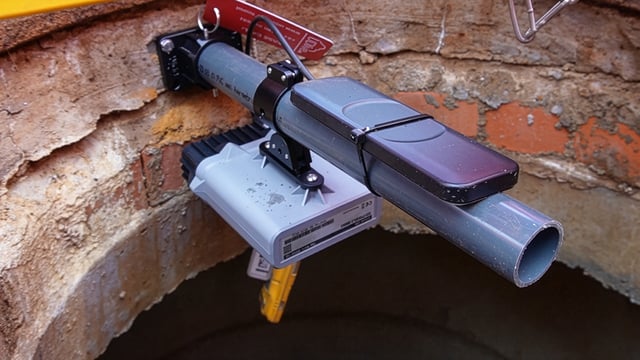
Beyond concrete and steel, the project expands early warning systems across the entire state and tightens coordination between climate monitoring services and municipal civil defense agencies to speed up responses when extreme weather strikes. It also funds tools to fold nature-based solutions into a flood-management tradition that has historically leaned on grey infrastructure.
The monitoring component reflects a wider shift among flood-exposed governments toward real-time detection. In the United States, Philadelphia recently deployed real-time flood sensors and gauges in its Eastwick neighborhood to give residents advance warning, illustrating how early-warning layers increasingly sit alongside structural defenses rather than replacing them.
“Proteção Levada A Sério” Sets The US$1 Billion Backdrop
The loan forms part of Santa Catarina’s multi-year climate resilience program, known in Portuguese as “Proteção Levada a Sério,” or Protection Taken Seriously, a commitment of roughly US$1 billion across the state. The World Bank operation functions as an early, replicable phase within that larger pipeline rather than a standalone intervention.
The framing matters for market watchers, because it signals a sustained procurement and works program in dredging, hydraulic engineering, dam construction, and hydrometeorological monitoring over several years, not a one-off tender.
The Bank Positions Santa Catarina As A Latin American Template
The World Bank has designed the project’s approach to be replicated in other river basins in Santa Catarina and to serve as a model for other flood-exposed states across Brazil and Latin America. That ambition aligns with the Bank’s broader portfolio: since 2019 its urban flood resilience support has reached more than 58 countries across 69 projects, with about US$4.4 billion committed.
With global economic losses from disasters hitting record highs and the Bank committing roughly US$10.93 billion to disaster-management operations in fiscal year 2025, the Santa Catarina loan is a comparatively modest but strategically framed test case for scaling combined grey and green flood defenses in middle-income economies.