 in Barcelona
 3 to 5 Nov 2026
DistribuTECH 2024
This event, renowned as the world's largest and most influential gathering for utilities and smart solution providers, is increasingly spotlighting smart city use cases and solutions. It's paving the way for exciting new opportunities within the smart city sector.
US Utilities & AI with Dave Basil - TerraGo
📖 Read Video Transcript
But it's really being able to control the deployment and management of those devices and making sure you're managing them within your business case.
So cost effectively.
And then number two, taking advantage of them and getting the data from them so you can really take advantage of them to see how to better your operations through the data you're collecting from these devices.
But it's really about not just continue to roll out new technologies about rolling out the right systems and processes to manage these technologies so you can stay on your business case and make sure you do it in a cost effectively.
Definitely the smart street lights has taken the lead all around the world and there are many other smart city projects going on with different types of devices.
The ones that I think have probably taken off the quickest one would be cameras and cameras would be video cameras could be used for many purposes, whether that's security or citizen safety or traffic management or for many things.
So cameras have a multi use capability so you can deploy the cameras along with the street lights or on separate separate poles and utilize that along with other types of sensors.
I've seen many roll out air quality sensors as well because of the issues with the environment.
So, you know, cameras and air quality sensors are two of the ones that I've seen that have been added.
Absolutely, we're actually leveraging it in many ways across the different phases of a lifecycle of managing assets from upfront auditing all the way through a maintenance and projecting different proactive and preventive maintenance suggestions, things like that.
But the most critical one right now on a geospatial context is really from an auditing perspective.
So most of the utilities and cities, they know generally where some of their assets are, some of their poles but they don't have really good internal data in their GIS system and others.
And a lot of times the only way to correct that is to go out and do a physical audit.
Physical audits cost a lot of money.
So we use an AI algorithm that we wrote, which is part of our auditing module that allows that basically analyzes imagery, could be free imagery or paper imagery, depending on how accurate we need to be with that information, depending on where it is in the country or the world.
And then we can identify how many poles they have, where the poles are, are they street light poles, and it gives them a leg up to understanding their actual infrastructure, you know, where everything is and how many they have, because a lot of them don't know how many poles they have to begin with.
So missing information like that when you start to do smart city programs is very, very costly.
So if you don't know how many you have or where they are, when you start deploying and maintaining these things, it cost you a lot more because you're rolling trucks all the time because you don't know where things are, the status of them are things.
So we've invested a lot actually, in AI for that purpose.
The utility and city space and smart city context.
It really requires patience.
There's a lot to learn.
There's a lot of shiny objects out there that they're looking at and trying to decide.
And, you know, it takes them a lot to understand a business case, to prove the business case to then place some orders, first select vendor.
So you have to understand that they're going through a very difficult process and a lot of it is either regulated or governmental.
So you have to understand that they have to go through this process.
So you have to be patient.
And it's really they want they want to learn and be educated.
So really helping them in a consultative way is the way we go to work with our prospects and our customers and really, you know, very high touch kind of intimate relationships where we're working with them and helping them and not just trying to sell them our latest and greatest software we're really a part of helping them advance the industry.
And that's that's what they want to see as well.
About DistribuTECH 2024
This event, renowned as the world's largest and most influential gathering for utilities and smart solution providers, is increasingly spotlighting smart city use cases and solutions. It's paving the way for exciting new opportunities within the smart city sector.
More DistribuTECH International editions

Latest Kurrantly News
All news UKRI Opens £15M Competition To Scale Interoperable Bidirectional EV Charging
 Galapagar Awards Veolia 15-Year Energy-Services Contract Covering 4,500 Streetlights
 Smart-Bin Billing Dispute in Florence Area Heads to Italy’s Court of Auditors and ARERA
 Signify Adds Smart Faults To Interact To Correlate Outdoor Lighting Network Anomalies
 Famagusta Approves €17.7M For 2027 Flood, Sewerage And Smart Meter Projects
 Chiyoda City Installs 22 Forcetec SmaGO Solar Compacting Bins In Akihabara
Latest Kurrant Originals
See all
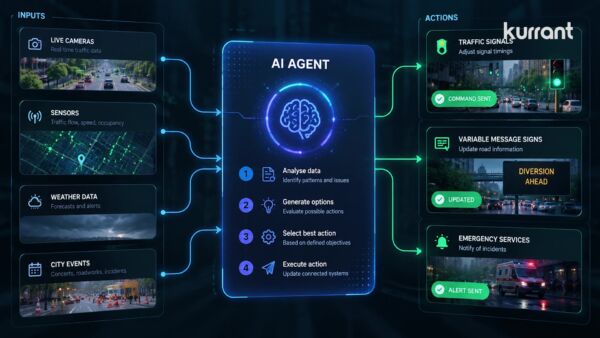
Kurrant advisory
Planning a smart city or utility project? Talk to Kurrant.
Behind these interviews is Kurrant's advisory team, working with utilities, cities and the companies that serve them.
- Strategy AdvisoryKurrant is actively involved in resolving the challenges that cities, utilities and industry players are facing.
- M&A AdvisorySmart city and utility expertise for successful deals, turning insights into strategic gains.
- Engineering & ProcurementBetter engineering and procurement decisions, by identifying and developing digital and IoT solutions across use cases.
Or write to us: contact@kurrant.com
Send us a message
© Kurrant. All Rights Reserved. · Editorial Standards · Cookie settings
This site is protected by reCAPTCHA and the Google Privacy Policy and Terms of Service apply.