in Barcelona
 3 to 5 Nov 2026
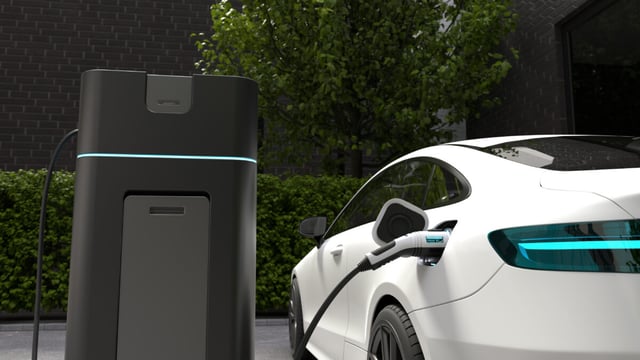
UK Research and Innovation opened a £15 million competition on 10 November 2026 to fund collaborative projects that demonstrate interoperable bidirectional electric vehicle charging at scale, with the stated aim of accelerating the supply of EV flexibility to the UK electricity system by 2030, and applications close at 11:00 UK time on 27 January 2027.
The competition, titled “Scaling interoperable V2X: bidirectional charging” and run by Innovate UK, will award grants of between £2 million and £7.5 million per project, with no single enterprise allowed to receive more than £3 million, and expects an indicative success rate of about 20%.
Funded From The Clean Energy Superpower Mission
The money comes from the UKRI R&D Missions Accelerator Programme under the Clean Energy Superpower Mission, which the competition brief says holds at least £500 million of government funding to 2030, and forms the V2X Scale-up Accelerator strand of the Consumer Led Flexibility Challenge.
That challenge was launched on 7 August 2025 with £4 million for its first year and a goal of shifting 2 GW of peak demand by 2030; the government’s July 2026 update to the Clean Flexibility Roadmap now describes the challenge as a £74 million programme targeting at least 2 GW of additional consumer-led peak flexibility.
At a market-engagement event on 17 September 2026, the Innovate UK Business Connect briefing indicated a budget of up to £18 million for this competition, which was set at £15 million when it opened, subject to the quality of applications received.
Consortium Rules Favour Utilities And Carmakers
Projects must be collaborations of at least three organisations led by a UK-registered business of any size or a research and technology organisation, and the brief asks for consortia that ideally combine distribution network operators and vehicle manufacturers with V2X solution providers.
At least one technical partner must be, or become, an active participant in the International Energy Agency’s Task 53 on electric vehicle interoperability, and teams must hold or have clear access to energy-system expertise, while non-funded partners, including organisations outside the UK, may join a consortium.
Projects must run between 18 and 31 months, start on the first day of a month no later than 1 June 2027 and finish by 31 December 2029, with applicants invited to interview on 2 March 2027, panels held from 22 to 24 March and funding decisions communicated on 2 April 2027.
ISO 15118-20 And Multiparty Interoperability
The technical scope is deliberately broad: any bidirectional solution qualifies, whether AC or DC, low or high power, wired or wireless, covering vehicle-to-grid, vehicle-to-home, vehicle-to-building, vehicle-to-vehicle and vehicle-to-load use cases, in front of or behind the meter, at domestic and non-domestic sites.
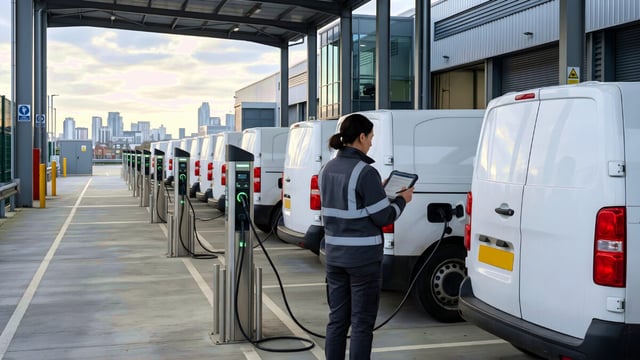
Eligible vehicles include on-road EVs and road-going agricultural and construction vehicles, with fleet operators named as end users, and every project must align with international standards “including ISO 15118-20”, evidence interoperability against V2X standards, monitor battery state of health and deliver a benefits realisation plan by month three.
Feasibility studies, small pilots, unidirectional charging, laboratory-only testing and existing commercial V2X operations are excluded, which pushes funding toward multi-vendor deployments that prove chargers, vehicles, aggregators and network operators can work together in the field.
Grant intensity follows the RD&I Streamlined Subsidy Scheme: industrial research is funded at up to 70% for micro and small companies, 60% for medium-sized firms and 50% for large ones, and experimental development at up to 45%, 35% and 25% respectively.
From £12.6 Million Of Trials To Scale-Up
The competition follows the V2X Innovation Programme run by the Department for Energy Security and Net Zero with Innovate UK, which committed up to £12.6 million across a 2022 first phase of more than £3.2 million and a 2023 second phase of up to £9.4 million.
Six second-phase projects shared £7.21 million, according to the government’s list of winners, including Otaski’s FLEXET project at £1.52 million, Kaasai’s electric heavy goods vehicle V2X work at £1.4 million and 3ti’s Papilio3 DC fast hub at £1.34 million.
Earlier domestic trials set the commercial benchmark that the new competition is trying to move: Project Sciurus, led by OVO with Nissan, Cenex, Indra and Kaluza, reported in 2021 that vehicle-to-grid saved participants up to £340 a year against £120 for smart charging, but that the bidirectional hardware cost about £3,700 more than a standard smart charger.
A Fleet Of Two Million Batteries
The addressable resource is growing quickly: the Society of Motor Manufacturers and Traders counted 1,797,809 battery electric cars in use at the end of 2025, almost 5% of the 36.68 million cars on UK roads, and cumulative registrations passed two million in April 2026.
The competition brief cites a National Energy System Operator projection of up to 41 GW of V2X flexibility by 2050 in some scenarios, set against the Clean Power 2030 Action Plan’s expectation that consumer-led flexibility rises from just over 2 GW in 2023 to almost 12 GW by 2030.
Regulation is moving in parallel: the Clean Flexibility Roadmap commits the government to consult by the end of 2026 on chargepoint communication standards for smart charging and V2X, to consider linking V2X capability to the zero emission vehicle mandate, and, under the Smart Secure Electricity Systems programme, to future-proof interoperability specifications for V2X in 2027.
Interoperability Is The Test
The funded projects will start delivering just as the government sets the communication standards they are meant to inform, so the consortia selected in April 2027 will in effect write the field evidence for the 2027 interoperability specifications.
The commercial measure of success will be whether multi-vendor deployments can narrow the £3,700 hardware premium recorded in Sciurus while preserving the household savings that made vehicle-to-grid attractive in trials, because that gap, rather than the technology itself, has kept bidirectional charging out of the mass market.