in Barcelona
 3 to 5 Nov 2026
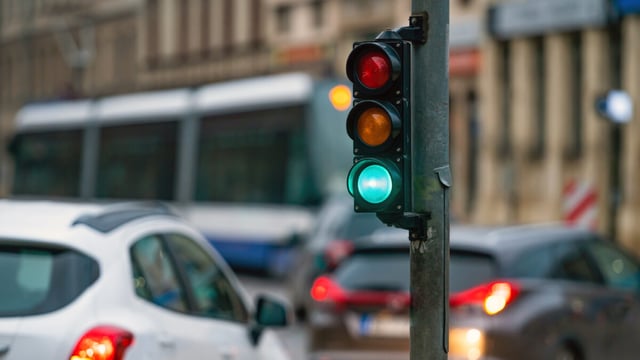
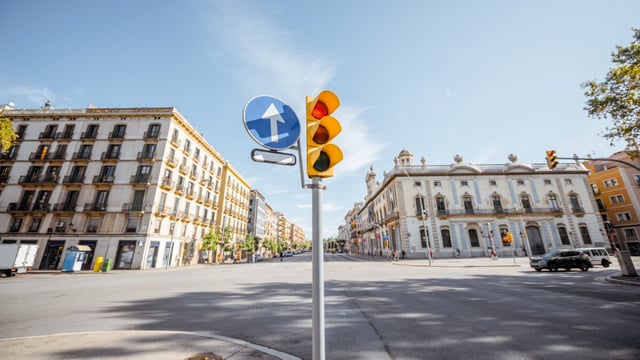
The Government of Mexico City has set aside 1 billion pesos (about €48 million) for the first phase of an adaptive traffic signal programme due to start in 2027. The signals will replace fixed cycles with timings set by detected vehicle volumes and give priority to Trolebús, Metrobús and Tren Ligero services, in a city of 9,209,944 residents at the centre of a metropolitan area of about 21.8 million.
Juan Pablo de Botton Falcón, the city’s Secretary of Administration and Finance, presented the signals at the México IA+ conference, held on 4 and 5 November 2026 at Expo Santa Fe, as one of the first measures in the city’s plan to become a smart city. Secretary of Mobility Héctor Ulises García Nieto set out the budget and phasing before the city’s Congress the same week, Chilango reported.
From Fixed Cycles To Load-Responsive Timing
The new controllers will stop running fixed green, amber and red cycles and will instead adjust phase lengths to the vehicle loads they detect at each intersection. The city projects travel-time reductions of 10% to 20%, according to Secretaría de Movilidad (SEMOVI) figures reported by Chilango and De Botton’s remarks reported by El Heraldo de México.
This project is heading to tender
New smart mobility tenders worldwide, flagged daily with an AI summary.
The signals will also give priority to public transport on trolleybus routes, Metrobús bus rapid transit corridors and the Tren Ligero light rail line, with the RTP municipal bus network to follow. Transit signal priority of this kind lets an approaching vehicle extend or advance a green phase.
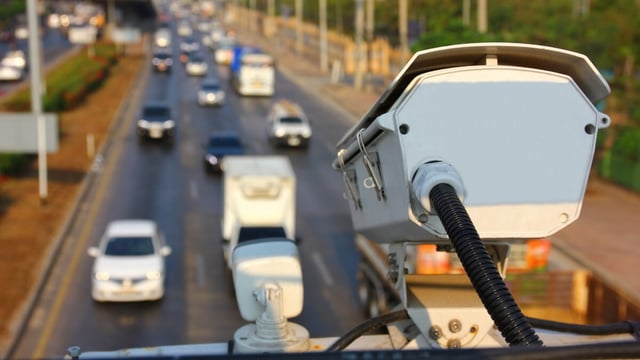
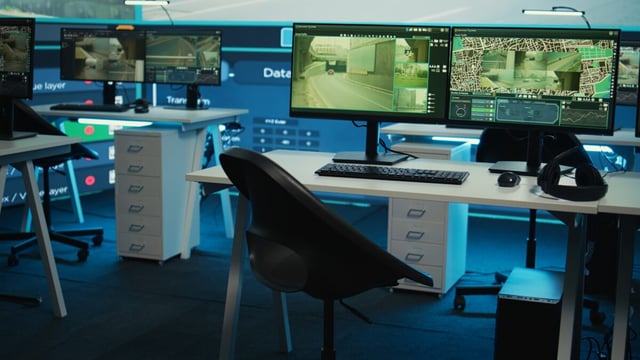
García Nieto told the city Congress, during its review of Head of Government Clara Brugada’s second annual report, that the programme will run in three phases. It involves SEMOVI, the Subsecretaría de Tránsito of the Secretaría de Seguridad Ciudadana, the C5 command centre and the Agencia Digital de Innovación Pública. The C5 already runs the city’s camera and emergency-response network, which gives the programme an existing control-room and video backbone to build on rather than a new operations centre.
He said the city currently depends on a single supplier that holds the patent on its signal communication systems. The city intends to develop its own technology so that it no longer relies on a third party for the network’s communications.
De Botton said results are expected next year because the planning is complex, Proceso reported from the same session.
Four Signal Subsystems And Some Electromechanical Controllers
Mexico City runs more than 30,000 signal heads at just over 3,000 intersections, of which about 1,350 were computer-controlled according to 2022 records, Motorpasión México reported. SEMOVI has said the network is split across four separate subsystems, some of them still electromechanical.
Brugada committed to modernising the signal network in her inauguration speech on 5 October 2024. The programme follows a 2015 pilot at five intersections that reported about three minutes less waiting per junction, according to Excélsior, and a 2016 plan under then mayor Miguel Ángel Mancera covering more than 3,000 intersections, as reported by Chilango.
Digital Twins To Model Metro Line 3 Works
De Botton said the city also uses digital twins to simulate the traffic impact of major works in near real time. He cited the renovation of Metro Line 3, which Brugada announced on 14 July 2026 for the Indios Verdes to Universidad route.
That project covers track repairs including subsidence fixes, electrical, electromechanical and fire systems, communications-based train control signalling, station rehabilitation and 45 new trains. It will cost about 40 billion pesos (€1.9 billion) under a public-private co-investment scheme, with works in night and weekend phases from 2027, according to Expansión.
Because the line will stay in service during the works, surface traffic modelling around its 21 stations feeds directly into how bus services and signal timings are planned on the surrounding road corridors.
The finance secretary added that the city has begun digitising its cadastre. It ran on an Oracle database that was not properly linked to its maps, and the clean-up is part of a broader effort to build the data foundation the traffic and planning tools require.
At the same session, Brenda Olivas, Senior Solutions Architect at NVIDIA, pointed to French rail operator SNCF, which uses digital twins for maintenance, train tracking and energy consumption. SNCF stations in Monaco-Monte-Carlo and Marseille cut energy use by 20% and downtime by 50%, according to an NVIDIA blog post.
How Adaptive Signals Have Performed Elsewhere
In Pittsburgh, the Surtrac adaptive system developed at Carnegie Mellon University cut travel times by 25% and idling by more than 40% in its pilot corridor, IEEE Spectrum reported. Los Angeles’ ATSAC system covers more than 4,900 signalised intersections and reduced travel time and delay by 32% to 43%, according to a 2013 Texas A&M study cited by LADOT.
In Latin America, Bogotá committed COP 173 billion (about €48 million) to intelligent signalling. It had more than 50 intersections on the new system by June 2019 and reported average travel-time savings of up to 30%.
Bangkok has reported travel-time reductions of up to 41% after scaling adaptive signals in 2026. Brno in the Czech Republic added a predictive digital twin from Yunex Traffic and Aimsun to its traffic centre in October 2026, pairing adaptive control with simulation in the way Mexico City describes.
With 1 billion pesos (€48 million) committed to a first phase in 2027 across a network of more than 3,000 intersections, the 10% to 20% target will be tested first on the corridors chosen for that phase. The deciding factor will be whether the city can bring four separate signal subsystems and a proprietary communications layer under one adaptive controller quickly enough for transit priority to work on the Metrobús and trolleybus routes that will also carry Line 3 passengers once its renovation begins.
Euro figures are converted at the ECB reference rate of 6 November 2026 (20.88 Mexican pesos per euro) and a market rate of about 3,610 Colombian pesos per euro.