in Barcelona
 3 to 5 Nov 2026
The City of Brno, the Czech Republic’s second-largest city with 402,739 residents and the seat of the South Moravian Region, is upgrading its municipal Traffic Information Centre with a predictive traffic model supplied by Yunex Traffic and its modelling subsidiary Aimsun, the companies announced on September 29 and 30, 2026. The first phase covers ten congested areas of the city, each typically containing six to eight signal-controlled intersections, and is designed to forecast traffic conditions up to 60 minutes ahead. Neither the city nor the vendors disclosed the contract value or a go-live date.
A Ten-Year-Old Control Room Gets A Forecasting Layer
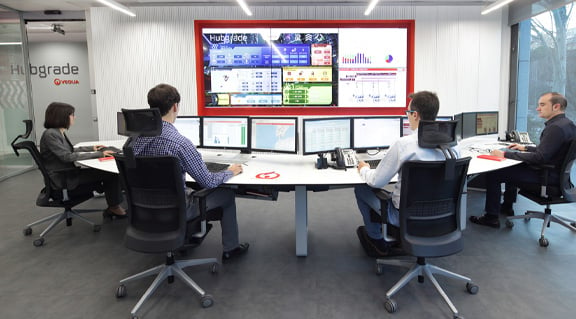
Brno’s Traffic Information Centre has operated since 2016, handling road closures, incidents, parking availability and the status of traffic signals across the city. The new system adds an expert module on top of Yunex Traffic’s Yutraffic Symphony management platform, which the centre already uses, rather than replacing the existing control software.
The city’s e-procurement portal lists a tender titled Rozvoj ITS v Brně, 4. etapa: Dopravní informační centrum Brno, or development of intelligent transport systems in Brno, stage four, but neither company has said whether the Yunex Traffic contract was awarded under that procedure or at what price. A third stage of the Traffic Information Centre was tendered separately in earlier years.
The module combines two Aimsun products. Aimsun Next holds a calibrated digital model of Brno’s road network for offline work, while Aimsun Live runs a real-time digital twin that compares current conditions with historical patterns and projects how traffic will develop over the following hour.
The platform draws on traffic detectors, variable message signs, video detection, parking services, weather stations, winter maintenance systems, retractable bollards and cooperative intelligent transport systems (C-ITS). It is intended to bring traffic, parking, public transport and road infrastructure data into one operator view. The inclusion of C-ITS feeds means the twin can in principle take in messages exchanged between vehicles and roadside units, although the release does not say how many such units operate in Brno or whether their data will be used in the first phase.
How The Incident Workflow Is Meant To Run
When live readings deviate from the expected pattern, the system flags a possible incident and simulates up to three predefined response plans. Operators can then compare projected outcomes before choosing a signal or routing intervention, according to the Yunex Traffic press release.
Offline, the same network model will be used to test signal timing changes and to assess the effect of planned and unplanned closures before they take place. Yunex Traffic said the contract also covers cleaning and analysis of historical data, model calibration and validation, operator training and long-term maintenance and support.
“The goal is to help operators make more informed decisions before congestion impacts the network,” said James Daniels, General Director of Aimsun Europe, in Aimsun’s September 2026 announcement.
The ten initial areas imply a first-phase footprint of roughly 60 to 80 signalised intersections, based on the six to eight per area cited by the vendors. The companies have not said how many of Brno’s signals sit outside those areas, or when the model would be extended to them.
A Supplier With Deep Roots In The City
Yunex Traffic, the Munich-headquartered traffic technology company, was carved out of Siemens Mobility and sold to Atlantia, now Mundys, for €950,000,000 in a deal completed on June 30, 2022. Aimsun, the Barcelona-based developer of traffic simulation software, now sits within the Yunex Traffic group.
The company runs a research and development centre in Brno and has a research partnership with the Brno University of Technology. That local presence gives the city an engineering base close to the system it is buying, but it also deepens reliance on a single supplier across both the control platform and the modelling layer.
Martin Němec, Managing Director of Yunex Traffic Czech Republic, framed the project in the company’s release as the next stage of earlier traffic management investments by the city. The aim, he said, is to link data, forecasts and control tools in support of centrally managed traffic across Brno, which positions the ten-area phase as the start of a citywide rollout rather than a time-limited pilot.
The Brno contract follows other recent Yunex Traffic wins in European city traffic control. In May 2026, Kurrant reported that Transport for Greater Manchester had selected the company’s Yutraffic FUSION adaptive signal control platform, which runs alongside its existing Stratos urban traffic management system.