The Municipalidad de La Serena, the municipal government of the Chilean coastal city of about 221,000 residents in the Coquimbo Region, plans to install a smart LED streetlight pilot along the central median of the Puertas del Mar boulevard before the end of 2026, with roughly USD 30,000 in funding contributed by the Government of Taiwan, according to a report published on 7 October 2026 by the local outlet El Serenense. The project was discussed in Santiago when Mayor Daniela Norambuena met Taiwanese officials during events marking Taiwan’s National Day, and it involves the Taipei Economic and Cultural Office in Chile and the luminaire manufacturer Leotek.
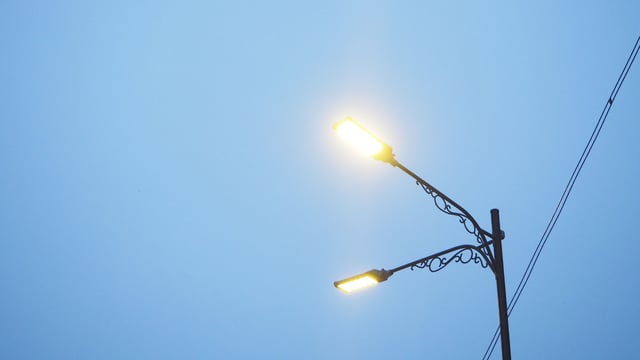
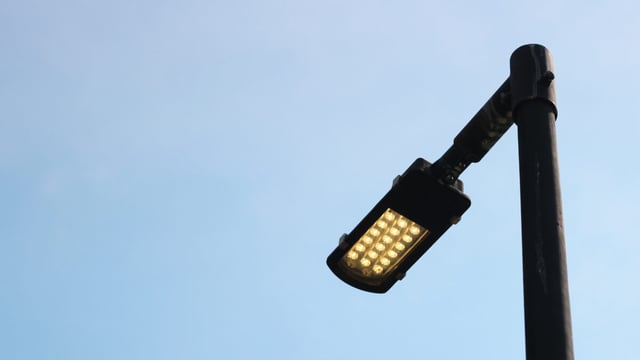
The pilot would replace existing high-pressure sodium luminaires with high-efficiency LED units connected to a remote management platform, and the mayor has described it as the first pilot of its kind in Chile. The municipality says it will commit no municipal resources to this initial stage, which makes the Taiwanese contribution the only declared source of funding.
What The Pilot Covers On The Ground
The works include the normalisation and restoration of the existing poles, with field painting and correct electrical and mechanical installation of each assembly. The scope names nine metal poles of 8 metres and further poles of 11 metres, although the source does not state how many of the taller structures are included, so the total number of light points in the pilot cannot be derived from public information.
Track tenders like this
New street lighting tenders across Europe, flagged daily with an AI summary.
Earthing systems and electrical protections are part of the package, which suggests that the existing installation requires remedial work before any new equipment can be connected. The USD 30,000 is described as an approximate figure covering implementation and field evaluation, and it is not itemised between luminaires, poles, the software platform and the evaluation period.
Remote Management And What It Would Measure
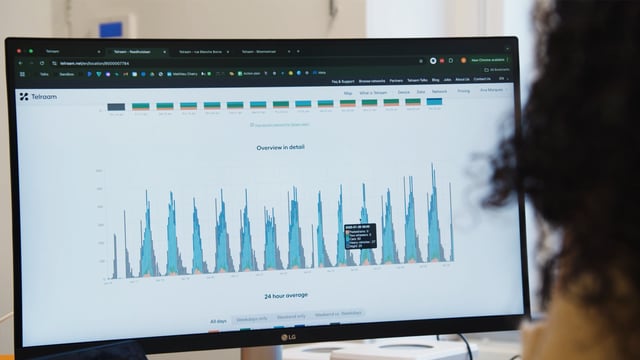
The central technical component is a telemanagement platform that would allow the operator to monitor each light point in real time, schedule switching, dim output, track energy use and detect faults or lost connections. The mayor summarised the capability as being able to switch lights on and off from a mobile phone.
The municipality expects the data to improve maintenance planning, shorten response times and avoid unnecessary inspection rounds. None of the published material names the communication protocol, the platform vendor or the controller hardware, and Leotek is identified only as the company involved in the project, so it is not clear whether the platform is the manufacturer’s own or a third-party product.
Dark-Sky Compliance In An Astronomy Region
The luminaires are specified to meet light pollution requirements set by the Ministry of the Environment, a constraint that carries weight in the Coquimbo Region because the sector is home to a concentration of astronomical observatories and the authorities describe the night sky as part of the regional heritage. In practice such rules limit upward light emission and often restrict colour temperature, so the pilot is also a test of whether a remotely dimmable LED system can satisfy those limits without reducing lighting quality for drivers and pedestrians.
The sodium lamps being removed are the type that produce a narrower spectrum, and replacing them with LEDs changes the spectral profile of the road, which is why the specification of the optics and the correlated colour temperature will matter as much as the headline energy saving.
Taiwan’s Position As A Lighting Supplier
Taiwan is a significant producer of LED components and luminaires, and a government-funded pilot gives a manufacturer a reference installation in a new municipal market. Leotek maintains a Latin American project portfolio, but the company has not published figures for this installation, and the funding model, in which a foreign government pays for the first stage, means the municipality has not yet tested a procurement price.
The report states that the municipality will evaluate the technology under real conditions before analysing a possible extension to other sectors of the commune. It does not give evaluation criteria, a pilot duration or a target for energy savings, all of which are the usual conditions that decide whether a pilot turns into a tender.
The Taiwanese side of the arrangement is also framed as a diplomatic exchange, since the meeting in Santiago took place around the commemoration of Taiwan’s National Day and the report presents the lighting project as an outcome of closer ties between La Serena and Taiwan, with the commune positioned as open to new technical solutions for public services.
Open Questions For The Evaluation
A pilot of this size can demonstrate remote control and compliance with sky protection rules, but it cannot by itself establish a lifecycle cost per light point, because a USD 30,000 grant covers a single boulevard median and excludes the cost of financing, maintenance contracts and software licences over a typical fifteen-year asset life. The decision that will matter for La Serena is therefore not whether the pilot works technically, but whether the municipality can obtain a comparable price per point, with open data access and a vendor-neutral management platform, when it has to pay for the next stage itself.