in Barcelona
 3 to 5 Nov 2026
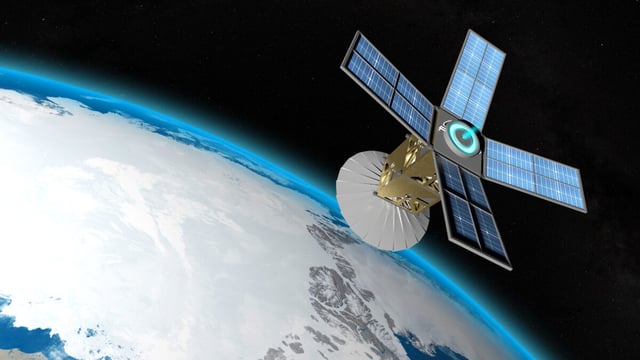
Marble Imaging, a Bremen start-up building very-high-resolution imaging satellites, announced on 9 November 2026 that Cherry Ventures, a Berlin early-stage venture capital firm, has led an extension of its seed round, Tech.eu reported. The extension brings total seed funding to €11.3 million, after a first €5.3 million tranche led by High-Tech Gründerfonds, a German seed investor, in December 2025.
Why: European Dependence On Foreign Imagery
Marble argues that European governments and their partners depend on non-European providers for very-high-resolution (VHR) satellite imagery. That leaves them exposed if a provider limits coverage of an area, and the company cites Ukraine and the Strait of Hormuz as examples.
Marble describes its project as Germany’s first commercial VHR constellation. Its target buyers are defence, civil security and critical infrastructure operators.
Building in this space?
Kurrant Ventures backs start-ups digitalising cities and utilities, and opens doors to the operators that buy from them.
- Latitudo 40
- GoodVision
- Meersens
- Cortexia
Investors are backing other German space companies on the same defence demand. Constellr, a German provider of satellite thermal data, raised a €37 million Series A on 10 February 2026, partly to bring its system to defence grade with sovereign data control, according to the company. Reflex Aerospace, a German maker of satellite platforms, raised a €50 million Series A in November 2025, with High-Tech Gründerfonds among its investors, Evertiq reported.
The First Satellite And The Constellation Plan
The first satellite, Marble Sat-1, is fully funded and has completed pre-flight testing. It is designed to capture imagery at up to 0.7 metre resolution in visible and near-infrared bands, plus short-wave infrared data.
The company says it already sells analytics for object detection, terrain and trafficability assessment, coastal asset monitoring and land cover classification. An automated analytics platform is in development.
Marble signed a €3 million anchor contract with the European Space Agency in 2025, Via Satellite reported at the time of the first seed tranche.
The timeline has moved since then. In December 2025, Marble planned to launch its first satellite in late 2026 and to operate up to 20 satellites by the end of 2028. It now plans 30 satellites by 2030, with the goal of providing data up to hourly.
What Happens Next
Marble Sat-1 is due to launch in early 2027. The new funding is set to go to building out the constellation toward the 2030 target.