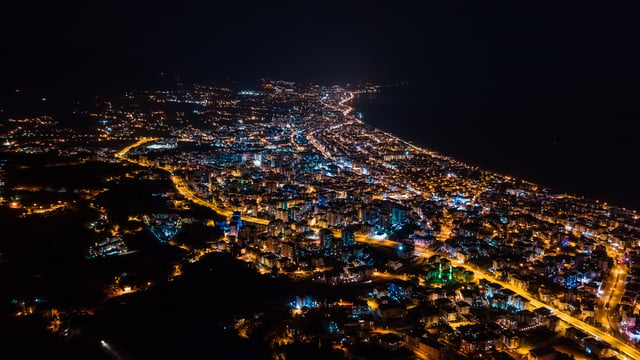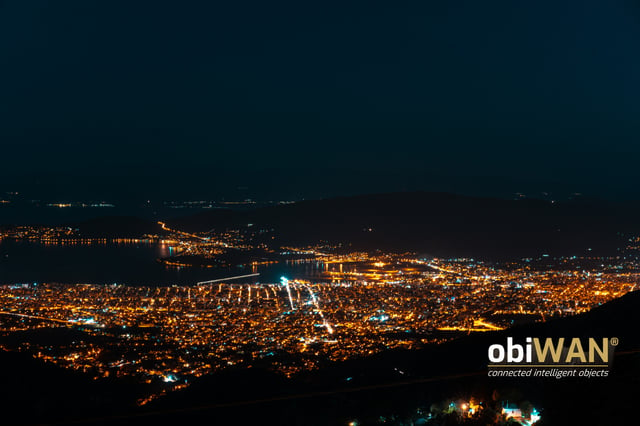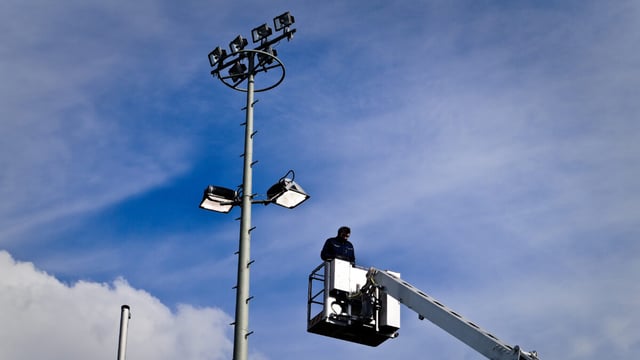
Edison Next, the energy services company of the Edison group, began replacing streetlights in the outer neighbourhoods of the Italian port city of Trieste as part of a programme covering 21,660 of the roughly 26,000 luminaires managed by the Comune di Trieste. According to figures the municipality and Edison Next presented in July, the works carry a private investment of €8,850,000 and are meant to cut annual network consumption from about 14 gigawatt-hours to about 4 gigawatt-hours, a reduction of roughly 71 percent.
The current phase covers 16,504 light points in peripheral districts. Once the suburbs are finished, the plan moves to the historic centre and to the architectural lighting of 14 monumental sites.
A Thirteen-Year Concession That Runs To 2037
Edison Next has managed Trieste’s public lighting service since 1 July 2024 under a public-private partnership lasting thirteen years, which places the end of the concession in mid-2037 and makes the replacement programme a front-loaded capital outlay recovered over the contract term. The city presented the project on 19 June 2024 with figures that differ from the current ones: more than 20,000 light points to convert, 400 new points, 15 sites with enhanced artistic lighting and an estimated saving of about 3,900 tonnes of carbon dioxide a year.
The Edison Next press release of 8 July 2026 now speaks of a reduction of more than 3,000 tonnes a year against the situation before 2024, and of about 650 new light points, of which roughly fifty are planned at critical road junctions, roundabouts and tunnel entrances on the periphery. The two sets of numbers are not necessarily contradictory, since the baselines and scope have shifted, but the contract documents that would reconcile them have not been published.
Kurrant reported the original award in 2024, when Trieste launched its smart city lighting project with Edison Next, at the time describing telecontrol on more than 19,000 points and 295 electrical panels updated for remote management.
Telecontrol On More Than 20,600 Fixtures
Beyond swapping old lamps for LED units, more than 20,600 of the new luminaires will carry a point-to-point telecontrol system, which lets the operator monitor and dim each lamp remotely and receive a fault report without a manual inspection round. Edison Next states the figure in its own release, and it has not been audited by the municipality or by an independent body.
Telecontrol at this density is usually the part of a lighting concession that determines whether maintenance costs fall in practice, because the saving comes from fewer night patrols and faster fault location rather than from the LED conversion alone. A network of 20,600 addressable points also generates operating data that the municipality, as contracting authority, would normally want to own, and the public material does not say who holds the data or on what terms it can be reused.
The Smart City Layer Already Delivered
The contract extends well beyond lighting. The 2024 plan described more than 200 video surveillance and licence plate reading systems, air quality monitoring units, weather stations, reserved smart parking bays for people with disabilities, electric vehicle charging points and 50 illuminated pedestrian crossings.
The traffic signal component is reported as complete, with 69 controllers replaced and 12 cameras, 28 radars, 60 inductive loops for traffic analysis and 38 devices for blind and partially sighted pedestrians installed. That work was finished before the lighting phase began, which means the city has already seen one part of the concession delivered, although the traffic figures are drawn from the local press account and not from an independent audit.