in Barcelona
 3 to 5 Nov 2026
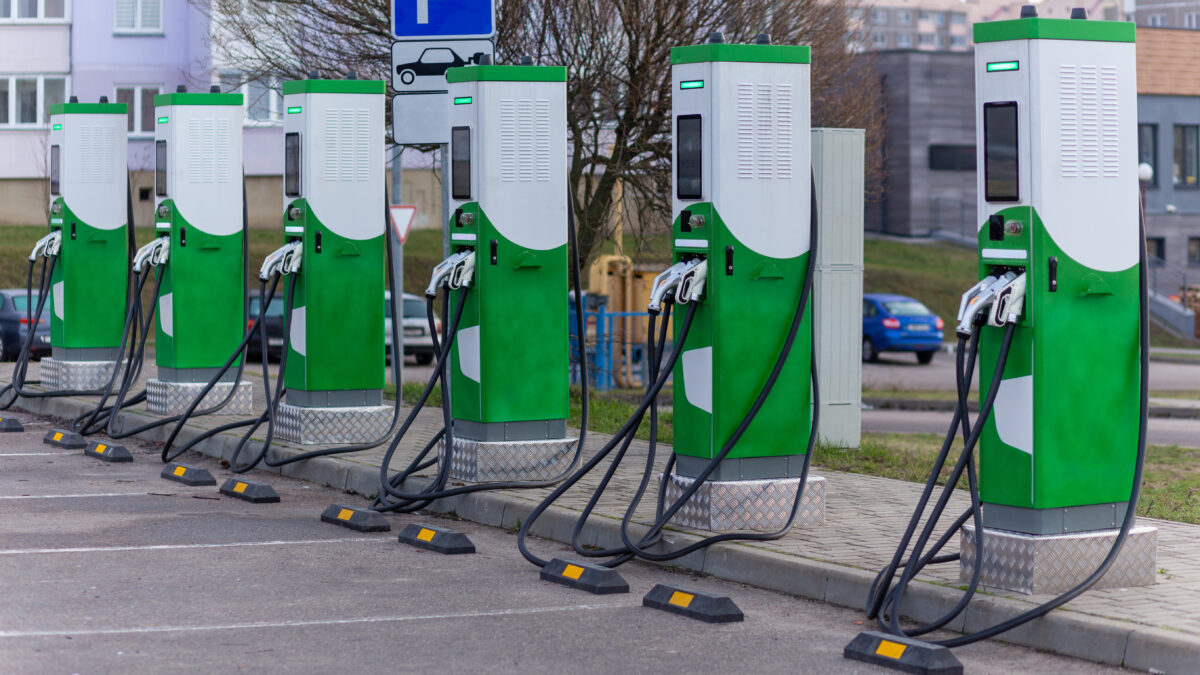
EZO, the electric vehicle charging operator headquartered in Ireland and majority owned by Rubicon Capital Management, reached financial close on a €150 million senior debt facility, reported on September 17, 2026, to fund the design, installation, operation and maintenance of more than 3,000 charge points across the United Kingdom and Ireland. The investment-grade, non-recourse facility has a seven-year tenor and is provided by a lender consortium that includes Aberdeen Investments and Standard Life, according to electrive, with revenue from the financed infrastructure ring-fenced to repay the debt.
The charge points will have a combined capacity above 100 MW and will be deployed mainly through long-term concessions with public-sector partners, a model in which public bodies hold the concession and EZO designs, installs and operates the chargers.
Concession Revenue Is The Collateral
Non-recourse means lenders can look only to the cash flows of the financed chargers and not to EZO’s wider balance sheet, which turns each concession into a stand-alone credit that must earn enough from electricity sales to service the debt. EZO estimates that the programme will generate more than €1 billion in electricity sales over 20 years, with part of the revenue shared with the public sector.
Building in this space?
Kurrant Ventures backs start-ups digitalising cities and utilities, and opens doors to the operators that buy from them.
- Latitudo 40
- GoodVision
- Meersens
- Cortexia
The tenor of seven years against a 20-year revenue estimate means the debt is repaid well before the concessions end, leaving the later years of cash flow free of senior lenders.
EZO’s chief executive, Ollie Chatten, and Conor Kelly, Chief Executive of Rubicon Capital Management, both describe the structure as unusual for the charging sector and expect it to become the preferred financing route for this type of infrastructure, according to electrive.
Two UK Awards Underpin The Pipeline
The financing follows a run of public contracts. In October 2025 EZO signed a 20-year, £300 million agreement to deploy chargers across northern Scotland, where the company says it operates more than 400 chargers and is developing about 1,000 more, according to electrive.
In June 2026 the Fourth Midlands EV Infrastructure Consortium, a partnership of Worcestershire, Leicestershire, Rutland and Warwickshire councils working with Midlands Connect, awarded EZO a 15-year contract valued at £176 million for 250 new public chargers, with a focus on rapid and ultra-rapid units and on areas that depend on on-street parking.
Together the two awards bring EZO’s stated UK contract value to £476 million, and the Midlands project is expected to serve more than two million residents.
Public Funding Sets The Pace Of Deployment
In the Midlands the UK government is funding the programme and the participating councils make no direct capital investment, while EZO delivers and operates the chargers under the 15-year contract. The Scottish agreement runs for 20 years, so the two awards together span concession periods of 15 to 20 years.
The Midlands specification directs the 250 chargers at streets that depend on on-street parking, where the operator assumes the utilisation risk on units that must be built before drivers use them.
Scale Against The Financing
The lender group, which includes Aberdeen Investments and Standard Life, is lending against a programme of more than 3,000 charge points, while EZO’s own figures show about 400 chargers operating in Scotland and a further 1,000 in development there as of June 2026.
The £476 million of contracted UK value, set against a facility of €150 million, shows the scale of revenue commitments behind the debt, although the contract values are EZO’s own stated totals and cover the full 15 to 20 year concession periods.
Divided across the 3,000 charge points the facility is intended to fund, the debt works out at €50,000 per charge point, a figure that reflects a mix of rapid, ultra-rapid and slower units and that covers installation as well as operation and maintenance over the life of the loan. Capacity of more than 100 MW across 3,000 points implies an average of about 33 kW per point, which is below the rating of a typical rapid charger and consistent with a portfolio weighted toward on-street units.
Those two ratios are the numbers that lenders and councils can use to compare EZO’s build cost and power mix with other concession operators, and they are derived here from the company’s announced totals rather than reported by EZO.
The first test is the pace at which the Scottish and Midlands sites move from contract award to energised charge points, since the seven-year debt clock and the revenue estimate both depend on how quickly the 3,000 charge points begin selling electricity.