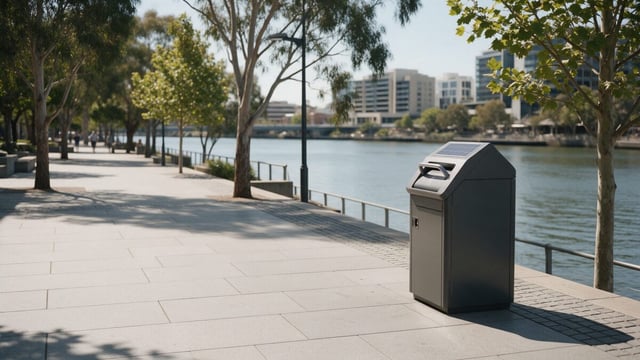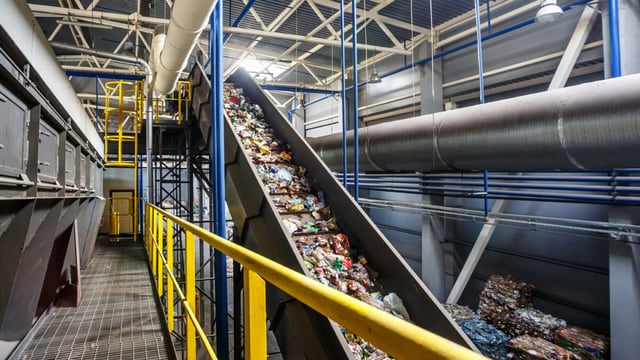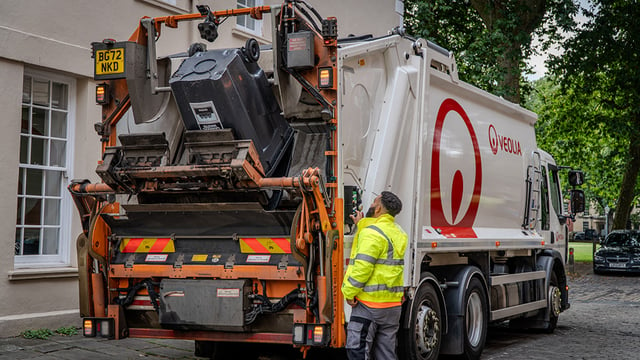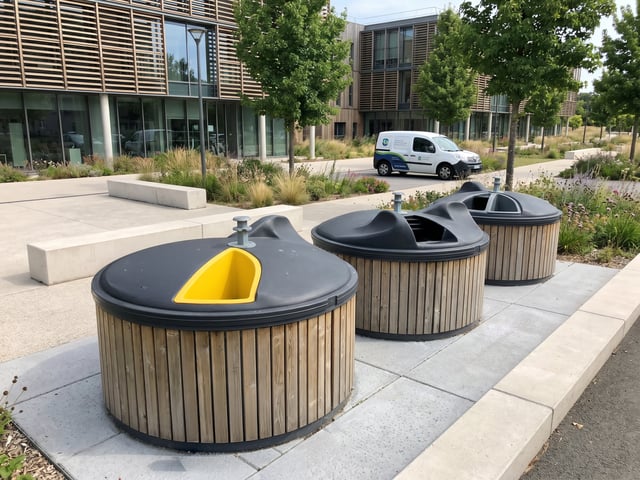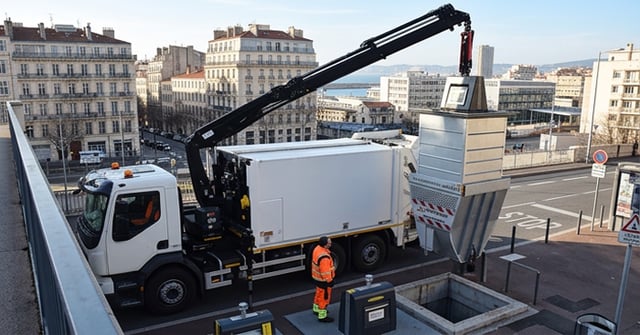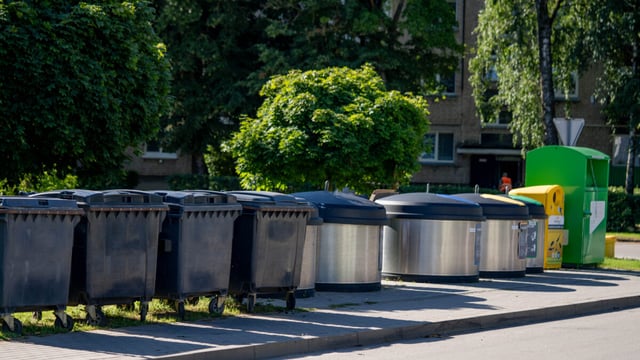
Iraq’s National Investment Commission announced on 7 October 2026 a smart waste collection scheme in Karbala Governorate that it describes as the first of its kind in the city, based on automated collection for residential complexes with underground storage and pneumatic suction, according to Iraqi News Agency reporting republished by Hathalyoum. Deputy Chairman Salar Mohammed said the model is planned to extend to all provinces in coordination with a Spanish company and provincial investment bodies, without giving a contract value, a unit count or a completion date.
The announcement follows the launch on 26 September 2026 of what Iraqi media called the country’s first automated waste collection system, which Al-Mada reported on 27 September as covering 17 residential areas and which Shafaq News placed in Karbala province, with Karbala’s governor among the partners named. Both reports credit a Spanish company called URD with technical support alongside Al-Maher Economic Group, while Iraqi News uses the name URD for the system itself and names no company.
An Unresolved Vendor Identity Behind The Spanish Partner
The three September and October reports disagree on what URD is, and none supplies a legal entity, a registered address or a contract. Shafaq describes a Spanish company that provided technical support, Iraqi News describes an automated pneumatic system with underground vacuum networks that carries the URD label, and Al-Mada lists URD as a technical partner next to Al-Maher Economic Group. Shafaq also links Al-Etimad (Al-Imaar) Economic Group to the project through its head, Maher Al-Zubaidi.
Following projects like this one?
New smart waste tenders across Europe, flagged daily with an AI summary.
No source says which party supplies the suction plant, who operates it after commissioning, or whether the Commission is acting as a licensor of private investment, its usual role, or as a procuring body. The Spanish embassy in Baghdad and the Ministry of Environment took part in the launch, which gives diplomatic backing but does not answer the commercial question.
What The Published Descriptions Do And Do Not Say About The System
The descriptions say the system is automated, moves waste underground from residential units to transfer stations, reduces collection vehicle movement through neighbourhoods and is intended to cut odours and pollution while supporting sorting and recycling. Officials said it would cost less than conventional collection, an assertion for which no comparison has been published.
The reports do not state the number of homes served in Karbala, the design tonnage, the length of pipework, the number of intake points, the capital cost or the party financing it. Iraqi News says the technology is aimed at newly planned smart cities and licensed residential developments, which is consistent with how pneumatic networks are normally built into a development at the planning stage and not retrofitted.
Paris Closed A €20 Million Network After A Decade
The closest cautionary benchmark is in France, where Kurrant reported that the Martin-Luther-King eco-district in Paris’s 17th arrondissement was ending its pneumatic waste collection after about a decade, with operations scheduled to stop on 19 May 2024. The City of Paris called the system costly and inefficient, and cited weak performance, sorting problems and an inability to take large items unless they were cut up beforehand, while the existing infrastructure had cost €20,000,000 and the contract held by Veolia expired at the same time.
The Paris case shows that the operating cost of suction plant and the sorting limits of a single-inlet network can outweigh the street-level benefits, which are the benefits Karbala’s officials cite.
Konza Shows What A New-Build Reference Looks Like
A comparable new-build disclosure exists in Kenya, where Kurrant reported an €8,000,000 Envac system at Konza Technopolis set to serve over 30,000 residents and handle up to 40 tonnes of waste a day through 100 disposal points. Those are projected figures from the project announcement, but they supply the unit cost, capacity and intake-point count that the Karbala announcement lacks.
Karbala adds a further variable, because it is a pilgrimage city whose population rises during religious observances, and the sources do not say whether the design accounts for seasonal peaks.
The Baghdad Waste-To-Energy Programme Sets The Scale
The same statement placed the scheme alongside a waste-to-energy project in Baghdad, where a Chinese company is collecting and burning waste to generate electricity, beginning in the Rusafa and Karkh districts. The Commission granted the company a power-generation licence in the Nahrawan area and allocated a site in Karkh, with the contract signed in coordination with the ministries of Electricity, Environment, and Construction and Housing, and with the Baghdad municipality.
Officials cited Baghdad’s output of more than 9,000 tonnes of waste a day, a volume that makes a residential collection scheme a small fraction of national tonnage even if it succeeds.
What will decide whether the model reaches every province is whether a tariff or municipal payment covers the operating cost that ended the Paris network, and none of the published material says who pays it or what the unnamed Spanish partner is contractually obliged to deliver.