in Barcelona
 3 to 5 Nov 2026
SIEL-Territoire d’énergie Loire (SIEL-TE), the mixed syndicate that serves 323 member communes in the Loire department of France’s Auvergne-Rhône-Alpes region, announced in a press release dated 21 October 2026 that its ROC42 low-power radio network now carries data from 25,000 sensors, on a network launched in 2018 and measured against a target of more than 150,000 connected objects by 2031. The installed base includes more than 15,000 connected water meters, 2,200 indoor air quality sensors in schools and public buildings, and 2,200 connected clocks that control public lighting.
The syndicate says the network is built to cover 100 percent of the departmental territory, with sensors for water, lighting, air, parking, voluntary drop-off waste points and irrigation all reporting to a single data platform on which the contracting authority remains the owner of its data.
Water Metering Supplies the Bulk of the Installed Base
Remote water metering is the largest single use on ROC42, with more than 15,000 meters reporting, which accounts for about three of every five connected objects on the network. According to the trade publication Objetconnecte.com, which cites SIEL-TE, the intercommunal water utility Roannaise de l’Eau connects about 9,000 of those meters and has set itself a longer-term goal of more than 70,000 devices on the network.
The 2,200 connected clocks fitted to street lighting cabinets let communes change switching schedules remotely instead of calling a specialist contractor, and the clock rollout was financed under the France Relance recovery plan according to the SIEL-TE press release. Objetconnecte.com also reports, citing the syndicate, that 300 to 350 thermostatic radiator valves installed in Roche-la-Molière cut heating costs by nearly 30 percent in their first year, a figure that comes from the operator and has not been independently audited.
The 2,200 indoor air quality sensors in schools and public buildings match the lighting clocks in number, and the press release also lists parking sensors, voluntary drop-off waste point sensors and irrigation sensors among the device types now reporting, while Objetconnecte.com adds that parking sensors in Saint-Chamond flag free spaces.
A 359-Gateway Radio Grid With Overlapping Coverage
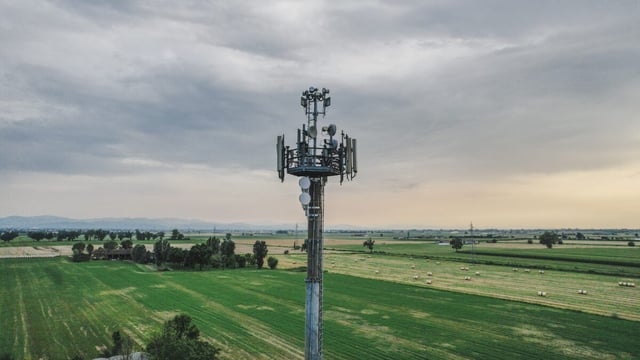
ROC42 is a departmental very low bit rate radio network based on the LoRaWAN protocol, and the SIEL-TE network page lists 359 gateways, most of them installed on property owned by local authorities. Each object is seen by at least two antennas to provide redundancy, and the syndicate says data is collected whether a sensor sits indoors, outdoors or underground. The network page adds that gateways transmit for about 1 percent of the time, and that the maximum power of a mobile phone, 2 W, is about 100 times that of a LoRaWAN gateway, a comparison the syndicate uses to address public concern about radio emissions.
SIEL-TE is declared with the French electronic communications regulator ARCEP as an operator of an electronic communications network, and its operation runs through an industrial and commercial public service created in 2023 that also gives non-members access to the network. According to Sensing Vision, the company signed a service contract with the syndicate to act as operator of ROC42 and to support public and private economic actors in the Loire with connected uses, although the page carries no signing date.
Members of the platform include the intercommunal bodies Roannaise de l’Eau, SIEAC Chazelles-Viricelles, Charlieu-Belmont, Roannais Agglomération and Saint-Étienne Métropole, together with six private companies: Axione, Birdz, Optimiz Network, Sensing Vision, Serfirm and Solem. Private firms may use the network after signing an agreement with the syndicate, and an earlier presentation of ROC42 at the Salon des maires de la Loire on 18 October 2023 named Optimiz Network as the first partnership signed.
Financing, Tariffs and the Break-Even Arithmetic
The network is co-financed by the European Union through the European Regional Development Fund, and Objetconnecte.com reports, citing SIEL-TE, that cumulative investment since 2018 is about €3 million, including €435,000 of FEDER money. The same source gives annual operating costs of €100,000 to €150,000 and a degressive tariff that starts at €0.32 per object per month below 1,000 objects and falls to €0.15 above 10,000 objects.
On those figures the syndicate expects revenue to cover one year of operating costs once the network reaches 100,000 connected objects, a threshold equal to four times the current count of 25,000 and to two thirds of the 2031 target of 150,000.
“25,000 sensors are 25,000 ways of acting more intelligently for our communes,” said Robert Regeffe, Vice-President of SIEL-TE responsible for the THD42 optical fibre network and the ROC42 connected-object network, in the syndicate’s press release of 21 October 2026.
How ROC42 Compares With Other Public LoRaWAN Networks
Other public authorities are building comparable networks. In the central French department of Nièvre, the syndicate Nièvre Numérique began rolling out its own public LoRaWAN network in 2026 under a procurement contract covering design, deployment, maintenance and operation, while seven South Essex councils brought a shared network online covering 98 percent of their area through 44 gateway sites, as Kurrant reported in June 2026.
ROC42 runs roughly eight times as many gateways as the South Essex network, 359 against 44, and has been in service for eight years since its 2018 launch, which makes its sensor growth a reference for the newer departmental networks.
The measure that will decide whether the 100,000-object break-even is reachable is the pace at which water utilities beyond Roannaise de l’Eau move their metering fleets onto ROC42, since meters made up about 60 percent of the 25,000 sensors counted in October 2026 and the 150,000-object target for 2031 requires the network to add an average of 25,000 objects every year for the next five years.