Alchera Technologies, a Cambridge software company founded in 2016, announced on 13 October 2026 a £2,7M seed round to scale a traffic forecasting platform used by highways operators and local authorities, with £2M from Maven Capital Partners through the British Business Bank’s South West Investment Fund and £700,000 in match funding from Innovate UK under its Investor Partnerships programme.
The Bayes Entrepreneurship Fund, The FSE Group and existing investor Cambridge Applied Research also took part, according to ITS UK’s account of the announcement, although the sources reviewed do not give their individual amounts, and Maven’s £2,000,000 plus the Innovate UK £700,000 already sum to the full round.
Forecasting Roadworks Windows On The M25
The platform’s best-documented use is on the M25, where Alchera says it predicts traffic flows up to 24 months ahead so that planners can schedule roadworks in the windows that cause least disruption. Connect Plus and Connect Plus Services, which manage the motorway on behalf of Highways England, now National Highways, received the Digital Initiative of the Year award at the 2024 British Construction Industry Awards for their collaboration with the company to extend working windows.
Building in this space?
Kurrant Ventures backs start-ups digitalising cities and utilities, and opens doors to the operators that buy from them.
- Latitudo 40
- GoodVision
- Meersens
- Cortexia
Alchera has two other named deployments. In Lancashire it analyses more than 300 junctions and 85,000 network links to assess bus performance and to inform where investment should be directed, and in Cambridgeshire it has carried out a multi-modal transport assessment.
How The Software Works
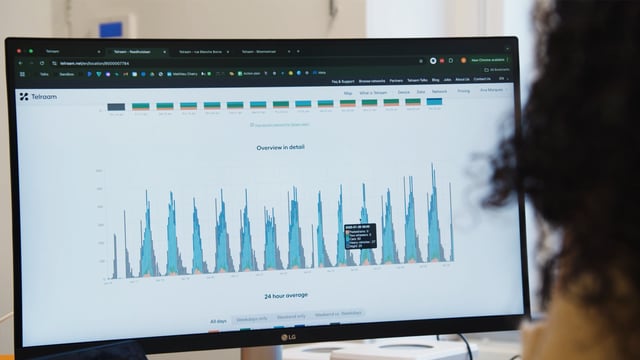
The company combines customer-owned open data with third-party sources covering bus locations, traffic signals, vehicle movements, weather and air quality, then cleans the data and applies machine learning, including a patent-pending traffic model, to identify patterns and predict outcomes. Results reach users through dashboards and application programming interfaces.
Alchera states that the platform reduces analysis time from weeks to seconds, a claim that comes from the company and that the announcement does not support with a named customer benchmark. The company has not published revenue, saying only that its customer count has more than doubled over the past 12 months and is expected to double again this year.
Funding Use And Targets
The money is earmarked for product development, particularly engineering and product, and for faster customer deployment. Alchera has a team of 15, with three hires onboarded since the round closed, and aims to double its recurring customer base over the next 12 months and to build a multi-million-pound annual recurring revenue business within 36 months.
Those targets are modest in absolute terms. A business of that size would still be small relative to the transport software suppliers it will meet in tenders, and the company has not said how many customers it has today, which makes “doubling” impossible to translate into a revenue figure.
A Crowded Field With Different Data Models
The UK road-data market includes VivaCity, which makes roadside AI sensors and has raised £7,000,000 to expand in the United States, TransHumanity, a Loughborough University spin-out that raised £400,000 in September 2025 for its AptIq analysis tool, and London-based GoodVision, which had raised €3,700,000 by early 2023, according to Tech Funding News. Alchera differs from the sensor suppliers in that it uses data operators already hold rather than installing hardware.
The same report cites MarketsandMarkets as forecasting that the global intelligent transportation systems market will grow from $42,550,000,000 in 2025 to $55,360,000,000 by 2030, a compound annual rate of 5.4%. That is steady rather than rapid growth, and it measures a far wider market than the roadworks planning niche Alchera occupies.