in Barcelona
 3 to 5 Nov 2026
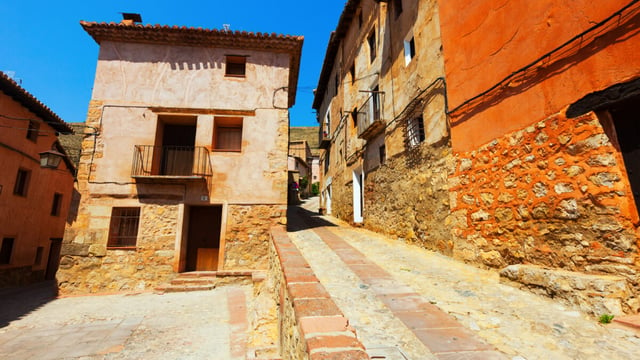
The Ayuntamiento de Onda, the town council of a municipality of 26,297 residents in the province of Castellón, Spain, has rolled out Ondata Smart Data City, known locally as Ondata, a municipal data project that applies machine learning to its asset inventory and big data analytics to mobility and tourism flows, funded by a €150,000 grant from the Generalitat Valenciana‘s Territoris Innovadors programme against a total project budget of €203,139.50. The council presented the completed pilot on 13 November 2026, as reported by Castellón Información and El Periòdic, with the grant representing the maximum award available under the call.
Machine Learning Applied To The Municipal Asset Register
The first component of Ondata uses machine learning to digitise and geolocate the municipal inventory, identifying, classifying and placing on digital maps the elements that make up Onda’s heritage assets and public spaces. Municipal technicians use the georeferenced inventory to track the condition of equipment and infrastructure and to plan conservation work and preventive maintenance.
For a town of Onda’s size, the asset inventory is the practical starting point for data-driven management, because maintenance contracts, insurance and capital planning all depend on knowing what the council owns and where it sits, and a mapped inventory can later be linked to work orders and sensor data.
Big Data Analysis Of Visitor And Mobility Flows
The second component applies big data tools to urban mobility and tourism activity, analysing travel patterns, visitor flows and the areas where people concentrate. The council plans to use the results to adjust tourism promotion and to redesign public spaces around observed rather than assumed movement patterns, giving planners a measured baseline of how visitors move through the town and which public spaces absorb the heaviest concentrations of people.
“Technology allows us to better understand how our city works so that we can keep making Onda a more comfortable and attractive place to live in and visit,” said Vicent Bou, councillor for Innovation and Citizen Participation at the Ayuntamiento de Onda, in the council’s November 2026 announcement as reported by Castellón Información (translated from Spanish).
The project also feeds the Oficina Municipal del Dato, the council’s municipal data office, which is responsible for coordinating information across departments and for anchoring decisions in verifiable data. The council describes Ondata as a pilot whose results will guide the extension of the same tools to other areas of local management, within the framework of its Plan Director Smart City Onda 2020-2030.
A €3.9 Million Regional Call Spread Across 59 Projects
The Territoris Innovadors programme is run by the Generalitat Valenciana’s Conselleria de Industria, Turismo, Innovación y Comercio. Its latest resolution, published on 15 September 2026, distributed €3,899,265.68 across 59 municipal innovation projects, according to El Periòdic.
The call is split into two lines: Programme I, for high-impact innovation projects, funded 31 projects with €2,614,202.07, while Programme II, for small-scale pilots that test viability, cost and design before a full deployment, funded 28 projects with €1,285,063.61. Small and medium-sized municipalities can receive between 75% and 95% of eligible costs, and about 90% of the funded projects are in towns of that size.
Geographically, the awards were concentrated in the province of Valencia, with 46 projects, against eight in Alicante and five in Castellón. Onda’s €150,000 matched the largest awards in the call, alongside Orihuela and Pilar de la Horadada in Alicante and Xirivella and Rafelbunyol in Valencia, while other Castellón recipients included Montanejos with €149,957.50 and Vila-real with €82,733.75. Pilot-line awards in the same province were roughly half that size, with Castellnovo receiving €74,996.83 and Benafer €74,955.
On Onda’s own figures, the €150,000 grant covers 73.8% of the €203,139.50 project budget, leaving €53,139.50 to be met from the council’s own resources, a municipal share of just over a quarter for a project that now underpins the council’s data office.
Regional minister Marián Cano framed the awards around the role of town councils in turning innovation into practical services when the resolution was published, according to El Periòdic.
Regional Funding Has Become A Steady Source For Small-Town Data Projects
The Territoris Innovadors line has run on a recurring annual cycle. The 2024 edition, resolved on 30 September 2024, awarded about €3.94 million to 51 municipalities, split between €2,681,995.45 for the first line and €1,254,017.35 for the second, according to esmartcity. The 2026 resolution distributed a similar total, at €3,899,265.68, across 59 projects.
Because the programme covers up to 95% of eligible costs for smaller municipalities, it allows towns of Onda’s size to fund analytics tools and their first datasets without a full local budget line, and the Oficina Municipal del Dato gives the council an internal owner for those assets once the grant-funded phase ends.
Onda has been building its smart city programme for several years: in 2021 the council presented a connected bus stop linked to the local police, a mobile application showing air quality and parking availability, and fire control systems at the Greencities forum in Málaga, and signed a collaboration agreement with the regional Clúster Smart City to analyse needs in mobility, energy efficiency and citizen management platforms, according to Revista Poble.
The next test for Ondata is its extension beyond the pilot: whether the council budgets the georeferenced inventory and visitor-flow analytics into recurring operations, or submits a follow-on project to a future Territoris Innovadors call under Programme I, will determine how far the €203,139.50 pilot shapes the remaining four years of the 2020-2030 smart city plan.