in Barcelona
 3 to 5 Nov 2026
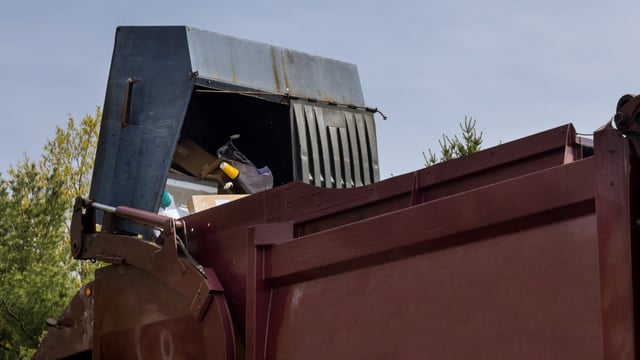
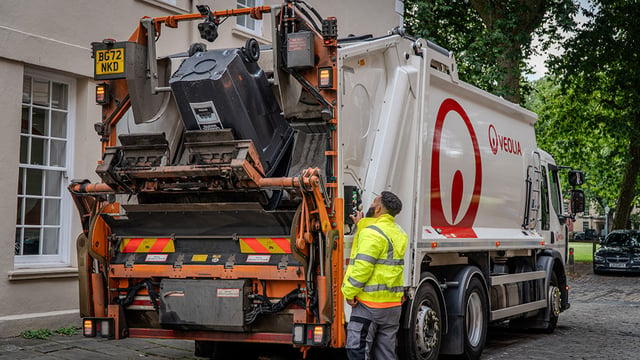
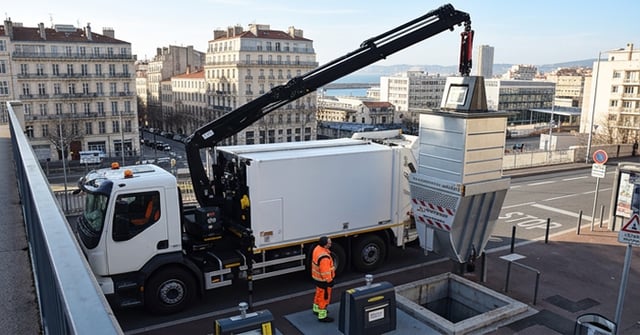
Veolia is fitting refuse collection vehicles based in Saint-Herblain, on the western edge of Nantes, with onboard optical cameras and recognition software developed with Paris start-up Lixo, at a cost of €10,000 per unit. The equipment analyses the commercial and industrial waste Veolia collects across Loire-Atlantique, a department of 1,487,570 residents according to INSEE’s 2023 reference population, where the group handles 60,000 tonnes a year, at least 20% of which is recoverable material that still ends up in landfill or incineration.
The cameras photograph each load as it is tipped into the truck, sort what they see into more than 30 families of recyclable material and send a diagnosis to the business that produced the container, so that sorting errors can be traced back to their source. Veolia is also extending the equipment to collection contracts with local authorities, which takes a tool built for business customers into household waste streams.
The Next Site In A 40-Truck National Programme
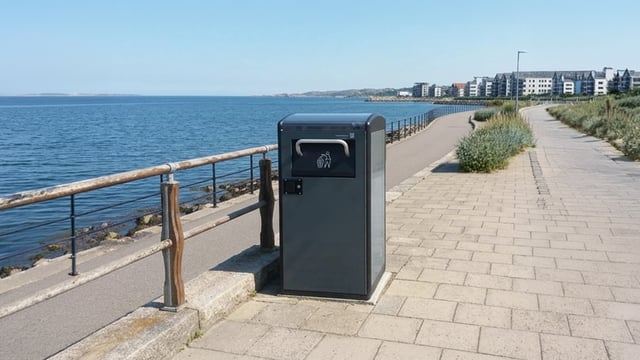
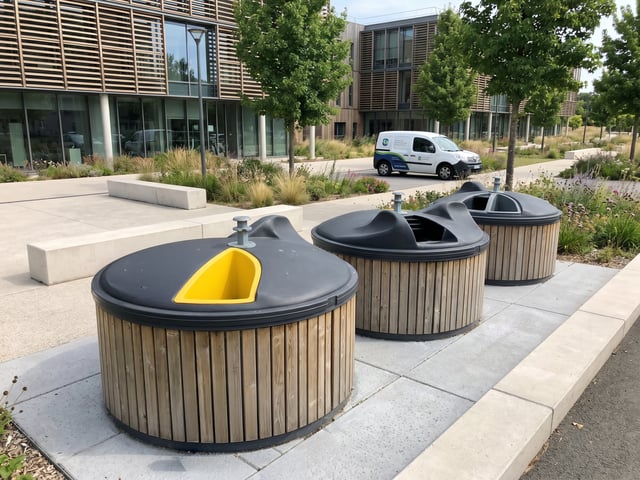
Saint-Herblain joins a national programme Veolia announced on 9 October 2025, with a target of 40 camera-equipped vehicles serving more than 12,000 professional customers in France, which Kurrantly has followed region by region, from four trucks in Alsace to the Bordeaux metropolitan area and the Loiret. The same Lixo cameras also sit inside the smart bins Veolia is placing in Auvergne-Rhône-Alpes.
Lixo, founded in 2019, supplies a compact camera aimed at the truck’s hopper, while the classification layer in the Veolia offer is Veolia’s own, according to Économie Matin. Because each lift is tied to an identified customer, the images record which business placed which materials in which container, the information a manual characterisation campaign would otherwise gather through periodic sampling on site. Veolia sells the camera report together with adapted containers, new signage, adjusted collection frequencies and staff training.
At €10,000 per onboard unit, the full 40-vehicle target implies €400,000 in camera hardware across Veolia’s French fleet.
Turning An Annual Compliance Duty Into A Continuous Record
The commercial case rests on French source-separation rules for businesses. Decree 2021-950 of 16 July 2021, adopted under the 2020 AGEC anti-waste law, extended the sorting obligation for business waste from five to seven flows and allows the prefect or the mayor to order an independent audit, while Decree 2021-1199 of 16 September 2021 requires producers to justify their sorting before non-hazardous waste is accepted for landfill or incineration.
Veolia presents the second requirement as an annual characterisation duty that its cameras automate. For a company that previously paid for occasional manual sampling, an image record attached to every collection replaces a one-off audit with a continuous dataset that can be produced on request.
Household Contracts Bring In Competing Systems
The move into local-authority contracts puts Veolia in a market where public buyers have been testing truck and bin cameras on their own terms. Grand Besançon Métropole has trialled Lixo technology with SULO on household recycling bins, and Grenoble-based Ficha is running a camera pilot on a collection truck for Mauges Communauté, an authority of about 120,000 residents in neighbouring Maine-et-Loire.
Lixo’s own customer list, published on its website, includes Suez, Paprec and Derichebourg alongside Veolia, so the camera itself gives Veolia no exclusivity in a tender. Household collection is also procured through public contracts in which per-vehicle equipment costs are weighed against tonnage-based fees, rather than sold as an add-on to individual businesses.
The 12,000-Tonne Benchmark In Loire-Atlantique
If the 20% recoverable share applied evenly to Veolia’s 60,000 tonnes in Loire-Atlantique, roughly 12,000 tonnes a year of recyclable material would be leaving the department’s commercial stream as residual waste. The measure of the Saint-Herblain deployment will be how much of that tonnage moves into separate recycling containers once business customers have received a full year of camera diagnostics, which depends as much on collection rounds and recovery outlets for each material as on what the cameras detect.