in Barcelona
 3 to 5 Nov 2026
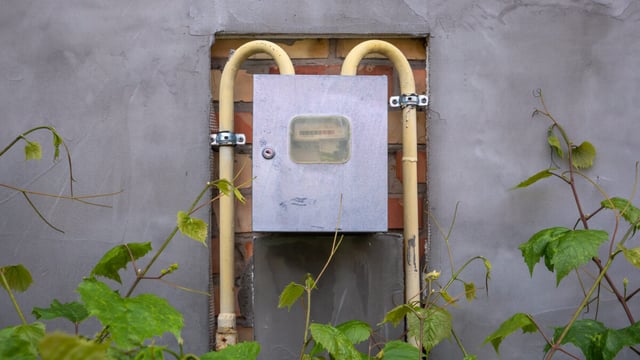
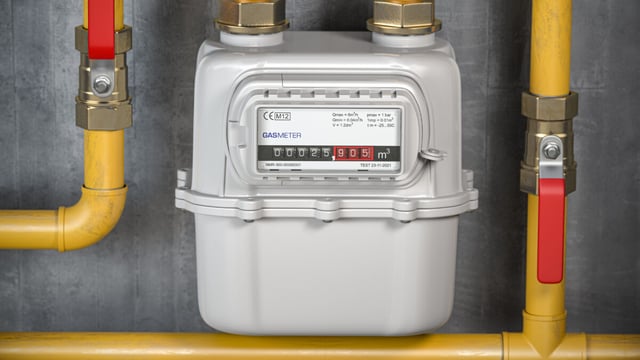
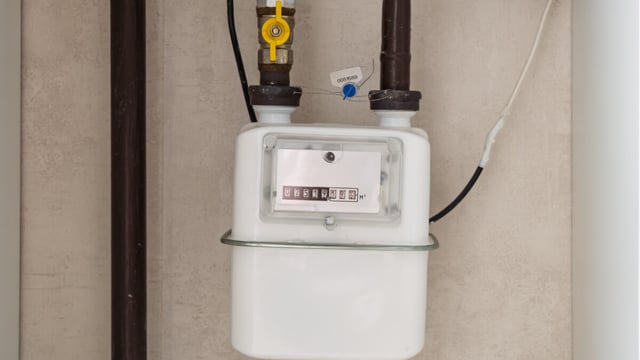
The Spanish Ministry for the Ecological Transition and the Demographic Challenge has ordered gas distributors to replace roughly 8 million conventional natural gas meters with remotely read smart meters by October 2036, under Orden TED/1122/2026, dated 23 October 2026, published in the Official State Gazette (BOE) no. 266 on 27 October 2026 and in force from 28 October. The order applies to supply points consuming 50,000 kWh a year or less, which covers households and small businesses, and requires 20% of conventional meters to be replaced within three years, 50% within five, 80% within seven and 100% within ten.
Up to 2% of meters may remain unreplaced at the end of the period where the cause cannot be attributed to the operator, but only with the approval of the National Commission on Markets and Competition (CNMC), the regulator that must also receive annual progress reports from each distributor.
A Ten-Year Calendar With Its Steepest Installation Years in the Middle
The four milestones in Annex I of the order translate into an uneven workload, because the first three years require only 20% of the installed base, or about 1.6 million of the 8 million units, while the two-year windows that follow each require 30 percentage points, or about 2.4 million meters. On the ministry’s figures that implies a peak of roughly 1.2 million replacements a year between the third and seventh years, more than double the 533,000 a year needed in the opening period, an arithmetic derived here from the published percentages rather than a figure stated in the order.
The ministry’s press release states that conventional meters must be replaced at 20 years of service life and that 82% of them will reach that age before 2033, which gives the schedule a metrological basis alongside the regulatory one.
Minimum Specifications Fix the Communications Protocol, the Data Cycle and Hydrogen Tolerance
Article 5 of the order sets the minimum functions every installed meter must provide, beginning with secure two-way communication with the distributor’s remote management system, remote software and firmware updates, and alarm and event reporting. Consumption must be measured daily in line with the gas day, transmitted to the operator at least every three days and stored locally for a minimum of 65 days, while remote disconnection is required at least for supply points with a measured pressure of up to 150 mbar.
The communication protocol must be open and based on standards, with NB-IoT and LoRaWAN named as the preferred options and GPRS limited to exceptional cases, and the requirement for an open, non-proprietary protocol applies to every unit installed under the plan, which sets the interoperability terms for any manufacturer bidding to supply the distributors.
Each meter must also be compatible with gas mixtures containing at least 20 mol% hydrogen, allow battery replacement without removing the meter or breaking the metrological seal, comply with the UNE 60510 dimensional standard and apply the best available cybersecurity techniques, including data encryption and secure authentication. The order partially transposes EU Directives 2024/1788 and 2023/1791 and implements Article 14 of Royal Decree-law 18/2022.
Consumers Pay Nothing for Installation, While the Rental Question Stays With the Regulated Tariff
Installation of the smart meter carries no cost to the consumer, whether the meter is rented or owned, unless the customer’s internal installation needs substantial modification to meet technical or safety requirements. The ministry reports that more than 90% of Spanish gas meters are currently rented at a nationally regulated price that covers acquisition, installation and operating costs, and under the order a rental charge for the new device applies only once it is integrated into the operator’s system and the customer can access the consumption data.
Distributors must give at least three months’ notice of a replacement, confirm the specific date at least 15 days beforehand, publish their implementation plans and provide free web access to each customer’s consumption data. A customer who prefers to own the meter and chooses a model that is incompatible or unavailable on the scheduled date receives a rented unit instead, and cannot be charged for the later visit to fit the owned one.
The Cost-Benefit Case Rests on a Gas Price Well Below Today’s
The ministry cites a cost-benefit analysis showing that smart meters reduce consumption by between 1.8% and 5%, and that at the lower end of that range the programme yields a net benefit of more than €800 million over the 25-year service life of the new meters. That analysis assumes an average gas cost of €34/MWh, which the ministry describes as less than half the current price, and the order records that the CNMC’s 2021 study (INF/DE/023/21) returned a positive result in one scenario and a negative one in the other before current gas and carbon prices were applied.
A Separate Track for 70,000 Larger Supply Points
Points consuming between 50,000 kWh and 5 GWh a year, about 70,000 in total, follow a different schedule in Annex II that requires remote reading rather than a full smart meter, at 50% within five years, 80% within seven and completion within ten, with the same 2% exception.
Operators may delay the start of that track until the CNMC sets the rental price for the telemetering module, so the timing of that price decision will determine when the first of those 70,000 installations can begin, and it sits alongside the 1.2 million-a-year replacement peak as the second operational constraint on the programme.