 in Barcelona
 3 to 5 Nov 2026
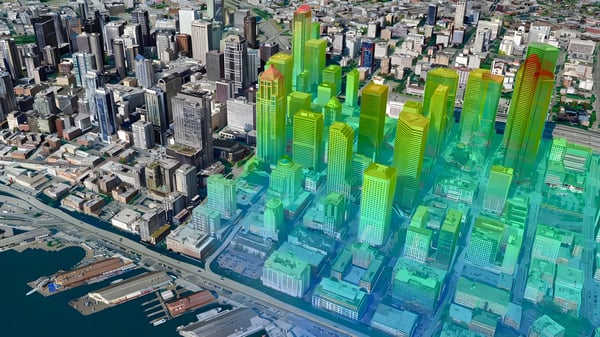
for las vegas a digital twin is a logical next step in its smart city plans why wouldn't you want to have better control and better understanding of your environment already the nevada city is home to a number of sensors they collect data on air quality mobility traffic and more a digital twin will take in this data to create a 3d model of a city but getting all this data to work together isn't easy. You have clued in on one of the larger challenges. Today, I'm joined by Michael Sherwood, Chief Innovation Officer of Las Vegas. In January of 2022, Las Vegas made news as one of the first U .S. cities to embark on a digital twin journey, joining New York and Phoenix and partnering with City Zenith and its Clean Cities Clean Future initiative. Under this pilot, City Zenith will connect its smart world OS platform. version of the digital twin technology to Las Vegas's sensors and existing data platforms. CityZena says the goal is to drive down urban carbon emissions. But Michael, you say the decision to deploy digital twin technology goes beyond a green push. What do you mean by that? To me, it's not about green energy at all. It's about understanding and having a better view of your organization. And a lot of cities are into performance management. something around for 10 years. And I think the beauty about a digital twin in the future, it's not there yet, is the ability for private business to take part. So how well are their buildings being cooled, the efficiency of their buildings? So all of that comes into play. So where are you in your digital twin build out? You know, right now it's a lot of investigative phases. We haven't really settled on any one path for the future. You know, to have a good internal twin, you have to have it, you have to feed it. And so you need data to feed into that system. Well, some of our systems just weren't capable of making that transition. And, you know, it might not be until really next year this time where we fully have one that is truly a sustainable model where we're getting all the inputs we want. Well, it's interesting to learn about the building blocks you need to make a digital twin a reality, something that we know Vegas has been doing for a while now. Let's dive into the connectivity build out, which someone argued is the backbone to all smart city plans. Las Vegas has worked with Koch Communications to develop a CBRS network, and AT &T to develop a public 5G network. For our viewers' background, CBRS is a spectrum known as the Innovation Band in the States. It supports private 5G networks. Michael, tell us more about the state of these networks and the kind of applications you're supporting. We've been working on deploying our own 5G network, which has been out there. It's under a technology called CBRS. We have pretty good... coverage in the downtown area now. We're working with some grant funding to expand it and even offer a little bit broader coverage. In addition, with working with AT &T to provide the first of its kind in the U .S., where you would be able to roam from our network to their network and vice versa. So from municipal to private, private to municipal. So we're excited about that. Air quality sensors, we're continuing to put out. We're looking at micro air quality. So when we say micro. looking at like on a two to three block radius we're testing about six different companies right now we haven't centered on any one there they range the gamut from um the higher end platform which i believe is an okia based product ubiquia is another company that we're using um as well they make a smart street light that also includes a camera and air quality our optical sensors which is our camera systems continuing to put those and they're scaling out as well and then we're doing some other new new sensors that are looking at all types of different aspects from garbage and trash collection and other verticals bottom line is if you don't have the data inputs you don't have a digital twin now previously many of these smart city applications were limited to pilots so las vegas didn't need to fund the deployments and they were also limited to your innovation district is this still the case today So it's still probably within a good 40 block radius. It is a large testing zone, but if we haven't scaled yet across the entire city, that's something that's going to be challenging. A lot of that has to do not with people excited about the data. It's the ROI. But, you know, slowly some of the technology is becoming less expensive. Let's take out the chip shortage and the pandemic issues. were on the same trajectory before the pandemic, I think you would see a lot more cities farther along in their sensor deployments. But you are starting to see the prices coming down and the quality of the sensors going up. And so you're getting that cross -intersect that there will be at some point where it's viable. We're getting closer and closer to that. So as we get closer to that, we will start scaling it outside of just the downtown area. We're finally starting to do that with some of our park technology. We're moving it outside the Innovation District and out into the field. And in those cases, we're using optical sensors to manage, you know, look at everything from where people, what times people go to the park, what equipment do they use, are the sprinklers on during the day, all types of management components that help us make the park a safer and more enjoyable experience for the constituent or the consumer in general. And so we'll start. seeing additional like air quality I think in the next two to three years you'll see it spread out now will it be as dense as it is downtown probably not because we're still experimenting with the ability of doing you know every other block okay so when we last investigated Las Vegas's smart city plans we highlighted the smart city platform that the city is using by NTT this takes in all the sensor data and analyzes it for your employees but how will this interact with the digital twin working on that that you have clued in on one of the larger challenges now the issue is how do you get all that data from that just that one platform in and linked to a digital twin not all of our sensors calculate time in the same way so time stamps are different somewhere when we're learning this and some of the challenges that we've had going forward some of the time stamps are military time stamps uh meaning 24 hour clock some are regular some include a leading zero others do not they include an am pm um and so you know just little things like that imagine temperature um the formats of all these different sensor platforms now bringing it into one platform that in the past would take it natively so we would have maybe 20 different sensor companies all of the formats for how they store and how they tag data is all different now you got to kind of make a translator i would call it middleware device that now goes and cleans that data and then can send it to the digital twin and that has been where we have had the most challenge and and getting that off the ground okay michael well thanks so much for your time today clearly we learned today that building and deploying a digital twin isn't easy you need a lot of building blocks to get there and even then combining all the data you're getting from these building blocks is a challenge, so we'll be sure to stay tuned with how this unfolds and for more coverage you can continue to follow Current Insights.
Originals Smart City Platforms
Las Vegas City’s Digital Twin Deployment Challenges Explained
Digital twinsLas VegasSmart City Platforms
In this video
-
 Michael Sherwood
Chief Innovation Officer, City of Las Vegas
About this video
The video features an interview with Michael Sherwood, the Chief Innovation Officer of Las Vegas, focusing on the city's involvement in the Clean Cities - Clean Future Initiative by Cityzenith. The primary topic of discussion is Las Vegas' journey in implementing digital twin technology, a significant step in urban digitalization. The interview delves into the complexities and challenges faced by the city in this endeavor, specifically highlighting the difficulties in achieving robust connectivity and cross-platform interoperability.
Sherwood provides insights into the technical and logistical hurdles that Las Vegas has encountered while integrating digital twin technology. This technology, vital for the advancement of smart cities, involves creating a virtual replica of urban areas to optimize various city functions and urban planning. The discussion sheds light on the necessity of high-quality connectivity and the importance of seamless interaction between different technological platforms to make digital twin technology effective.
Throughout the interview, Sherwood shares his experiences and the lessons learned from Las Vegas' initiative. This includes strategies for overcoming the mentioned roadblocks, and the city's approach to harnessing this technology for urban development. The video is particularly informative for city planners, technology enthusiasts, and professionals involved in smart city projects. It offers a realistic view of the challenges in implementing advanced urban technologies and the potential solutions to these challenges.
Viewers interested in the practical aspects of smart city technologies, digital urbanization, and IoT applications in urban settings will find this video valuable. The insights provided by Sherwood can help in understanding the intricacies involved in making a city smarter and more efficient through digital technologies. This video is recommended for those seeking a deeper understanding of the practical realities behind the integration of advanced technologies in urban development.
Read the transcript machine-generated
More in Smart City Platforms
See all 8:30
Digital Twins: Key tool to make utilities more resilient, efficient?
 7:18
Analyzing a Smart City Startup Series B Funding Round Success
 7:03
How a Game Engine is Powering Orlando’s Digital Twin
 8:26
Digital Twins for Cities: From Hype to Reality?
 9:12
Urban Digital Twins Hype Becomes Reality
 5:39
Founder’s Journey: How An Architect Built A Digital Twin Business
Latest news in smart city platforms
All news- Dubai’s Moro Hub Partners With ThingsBoard To Host Government IoT Applications On Moro Cloud25 Oct 2026
- Barbados Government Explores Urban Hypervisor Platform Modelled On Brazilian System18 Oct 2026
- Oviedo Council and Telefónica Deploy Smart Tourism Platform for Camino Primitivo17 Jul 2026
- Greek Private Equity Moves Into Municipal Technology With IoT Operator26 Jun 2026
Kurrant advisory
Planning a smart city platforms project? Talk to Kurrant.
Behind these interviews is Kurrant's advisory team, working with utilities, cities and the companies that serve them.
- Strategy AdvisoryKurrant is actively involved in resolving the challenges that cities, utilities and industry players are facing.
- M&A AdvisorySmart city and utility expertise for successful deals, turning insights into strategic gains.
- Engineering & ProcurementBetter engineering and procurement decisions, by identifying and developing digital and IoT solutions across use cases.
Or write to us: contact@kurrant.com
Send us a message