in Barcelona
 3 to 5 Nov 2026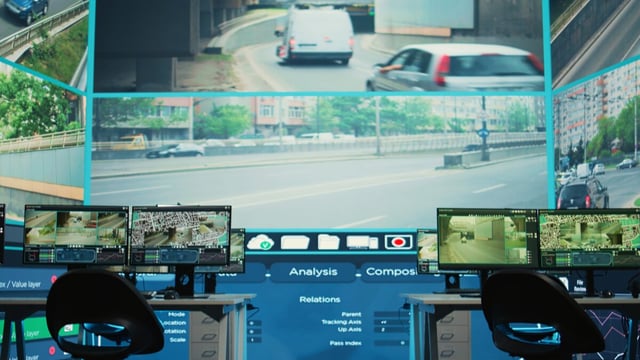
The Government of Barbados is examining the adoption of an urban hypervisor, a centralised software platform that collects, normalises and displays data from independent city management systems covering traffic, energy grids, public transport and surveillance, according to a Caribbean Broadcasting Corporation report published on 16 October 2026. Kirk Humphrey, Senior Minister coordinating Infrastructure and Minister of Transport and Works, made the disclosure at the opening of the Barbados Annual Construction and Design Conference, and said he had just returned from Brazil, where he had seen a system of this type in use.
The conference is organised by the TVET Council Barbados and runs from 14 to 18 October 2026 at the Wyndham Grand Barbados Sam Lords Castle Resort and Spa, under the theme “Integrating Technology into Quality Construction 2.0”.
What a Hypervisor Layer Adds to Systems a Government Already Runs
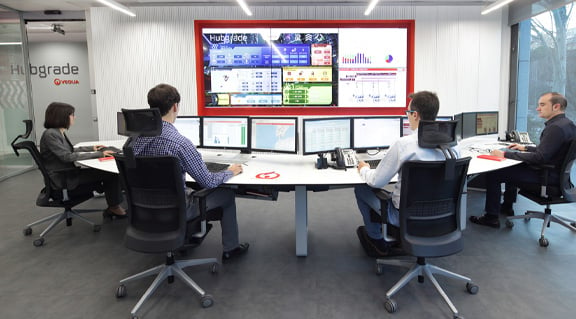
An urban hypervisor does not replace the traffic controllers, utility SCADA systems, transit dispatch tools or camera networks that a government already operates, and instead sits above them as an integration and visualisation layer that ingests each feed, maps it to a common data model and presents the combined picture to a single operations team. The architecture addresses a recurring problem in municipal technology, where each department procures its own platform and the resulting data silos prevent an operator from seeing, for example, how a flooding event in a drainage network affects bus routes and electricity supply at the same time.
Following projects like this one?
New smart city and utility tenders across Europe, flagged daily with an AI summary.
The value of the layer depends on how many independent systems feed it and how consistently each publishes data, which is why the integration agreements with utilities and security agencies tend to determine the schedule more than the software build does.
Curitiba’s Hypervisor Gives the Nearest Cost and Timeline Benchmark
One documented Brazilian deployment of the model is in Curitiba, the capital of Paraná state, where the Instituto de Pesquisa e Planejamento Urbano de Curitiba (Ippuc) received a budget supplement of €1.1million under Municipal Decree No. 147 on 7 February 2023, which the city described as the municipal counterpart to an initial $894,000 investment from the Inter-American Development Bank. The works at the operations centre were scheduled to begin in March 2023, with a first stage due in the last quarter of that year.
The French Development Agency contributed a further €148,000 through its Fexte fund, according to a municipal account of a May 2023 training course, and the consultancy Egis, hired by the agency, supported the design of the operating model. Ippuc’s president, Luiz Fernando Jamur, said at the time that operation was planned to begin in November 2023.
The city inaugurated the platform on 22 February 2024 at the Centro de Operações do Hipervisor in the Palácio da Inovação, about three months after the date given in May 2023, as set out in the municipal launch announcement.
“Curitiba is today evolving toward precision public management,” said Luiz Fernando Jamur, Secretary of Government and president of Ippuc, in the municipality’s 22 February 2024 launch announcement, translated from the Portuguese.
Utilities and Security Feeds Define What the Platform Can See
The Curitiba design draws on the Muralha Digital security monitoring system, the transport operations centre, the Civil Defense operations centre, the water utility Sanepar and the energy utility Copel. The same source list included rainfall and traffic data, camera feeds, and health and education sensing, which places the hypervisor closer to a city-wide data exchange than to a traffic management tool.
The platform described in the May 2023 account combines an integrated planning platform with a planning, management and control centre, and provides key performance indicator dashboards, predictive analytics, incident response workflows for traffic, public security, emergencies and cybersecurity, and a citizen portal with a smartphone app.
Kurrantly has followed the utility side of the same city, where Sanepar is working with Aganova on in-pipe inspection of more than 100 kilometres of water pipeline in a system that serves 4.1 million residents across 12 municipalities, and which represents the kind of asset-level data a hypervisor is built to absorb.
Procurement Choices Will Set the Boundaries of a Barbados Programme
The Curitiba programme was built by a public planning institute with development-bank financing and a consultancy engaged through a bilateral agency, a structure that keeps the data model and the operations centre under municipal control and places integration risk with the public owner.
Humphrey’s remarks position the idea at the exploration stage, so the relevant comparison is the sequence Curitiba followed: a financing package from a multilateral lender, a planning body that owned the data model, a defined list of five initial source systems, and an operations centre in place before launch. Curitiba’s launch arrived about three months after the date its planning body gave in May 2023, and that schedule is the nearest published benchmark against which any Barbados programme would be measured once a budget and a first set of data sources are fixed.