 in Barcelona
 3 to 5 Nov 2026
This is Michael Jensen. We want to talk to you. He's the founder of City Zenith, a company that develops virtual replicas of buildings and infrastructure, a technology called Digital Twins. In a nutshell, people call this technology Google Earth on steroids. And that's enabled City Zenith to do projects like this. Chicago, yes, is actually one of the most ambitious of all of our projects. we're actually modeling all of the underground physical infrastructure in the city. Jansen placed his bets on the industry over 10 years ago, surrounding himself with some of the best in the biz. And it paid off. I see you've brought your Digi Awards with you. A four-year-old, but thank you. In this episode of Get to Know, we explore how a man with no training in tech came to win high-profile projects. The journey was long. I am an architect by training. I graduated as an architect from first Yale University. Later on, I went to Cambridge in the U.K. to do my postgraduate work. And then from there, as I began to consider a profession or the profession of architecture, I moved to Asia in the early 90s, which was just beginning to really boom as a destination for new development. Jansen lived and worked in China for four years as an architect, the same time that an entrepreneur... energy was brewing in China, the Chinese leader Deng Xiaoping opened up China's economy with a series of reforms, fostering a wave of new businesses. I was exposed to an entire country that was reconfiguring itself even in the early 90s. And if people were doing something called which means to jump into the ocean and take a chance. This energy rubbed off on Jansen, who had made a name for himself in the field of architecture. Four or five years on, the time I was in the same thing. Everybody was diving into business opportunities. People were making incredible amounts of wealth overnight, so I was exposed to it all over again. The experience ultimately encouraged Jansen to take his own risk. By 2004, I had learned enough working with these different companies and providing CAD services to major firms like the one I referenced and several others that I felt it was time to really open my own company. That company was Satellier. It's specialized in BIM services, building information and modeling. It's an approach to the entire building lifecycle. So that company started modestly with 10 people in a basement in central New Delhi in a dilapidated school building where I rented the furniture from the school landlord. And we had a gentleman up on the roof dumping diesel fuel into the generator to keep the computers going. So it was a fascinating experience. The company grew from 10 employees to over 500. It was representative of a growing shift in the United States, with jobs being shipped overseas, a story that caught the attention of CNN. For the Trump Tower in Vegas, the MGM Hotel, and the Shermao in Shanghai, architecture and engineering firms from around the world contract out Janssen Studio. We were growing at 100% a year, and it started to serve by the time we exited. half of the world's top 50 architecture and engineering firms. It was a big success story. But as Satellier grew in its success, the same industry challenge continuously popped up. Every different software vendor had a different 3D CAD or what they call building information modeling or BIMT tool, which is kind of the 3D version of that. And we had teams that had to learn all these different things. And we said, you can't do a project like this. To do today's complex projects, which are technology-driven, you need one common platform. all of these tools can interoperate and so we set off on this journey to build a platform that really became you know the genesis of city zenith and everything else that would do later jensen founded city zenith in 2009 the company's smart world pro solution aggregates integrates analyzes and visualizes all data within a single 3d platform i had no real background in design technology so i had to to learn all of that That was the hardest part. Really, you know, you just don't learn technology. It was years of working with engineers. I got very lucky because the very first CTO we hired was the creator of Google Earth himself. So he was a fabulous mentor for me, among other mentors I had over my career that I think really kept me ahead of the curve. Digital twins have been around for several decades, but the rapid rise of IoT have made them a key tool, enabling developers to predict outcomes and analyze. performance in real time. Today, CityZena's SmartWorld Pro solution is used by customers worldwide from the construction of the Orlando Sports and Entertainment District to the development of Amaravadi, a planned $6 .5 billion smart city project in India. Even if we were wildly successful in five years, we still have less than half a percent of the whole market, right? So it's that big and they're been opportunities for a lot of different types of things i would just give the advice that focus on customer needs i think where some digital twin things go wrong is they get all about the technology and they forget about the customer so just focus on what your customer wants and then work from there if you have questions for jansen be sure to hit the link below you can also suggest who we should profile next for more coverage on the digital twin market and its founders stay with current insights
Originals Industry leaders Smart City Platforms
Founder’s Journey: How An Architect Built A Digital Twin Business
Digital twinsIndustry leadersSmart City Platforms
In this video
-
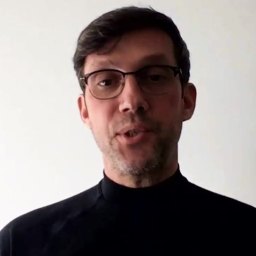 Michael Jansen
Chairman & CEO, Cityzenith
About this video
In the latest installment of the "Get To Know" series , we propose an insightful conversation with Cityzenith's Founder & CEO, Michael Jansen.
This episode delves into Jansen's formative years working across Asia, exploring the valuable experiences and lessons he gathered during that period. The discussion also highlights Cityzenith's role as an early influencer in the Digital Twin technology space, shedding light on the company's journey and contributions to this innovative field and its potential for smart cities.
This episode is particularly recommended for professionals and enthusiasts in the tech industry, especially those interested in Digital Twin technology, urban planning, and smart city development, as well as entrepreneurs seeking inspiration from successful business leaders.
Read the transcript machine-generated
More from Industry leaders
See all 1:12
Paolo Nesi: Wi-Fi Vs. Cameras for People Counting
 2:39
Syliva Haack on urban resilience related to water infrastructure
 1:48
João Matos Discusses the Challenges of Wildfire Detection
 2:08
Mark Dancy on the effectiveness of a pay-as-you-throw program
 5:20
Ubiik CTO on Diversifying IoT Connectivity Technologies
 5:34
Keys to Success in Mobility and Smart City with Gianluca Longo
More in Smart City Platforms
See all 4:20
Inside Valencia’s Smart City Strategy
 4:45
AI Agents in Digital Twins: Bringing Promises to Life?
 4:38
VR for Smart Cities, Utilities: Bop or Flop?
 7:19
Personal Safety App Becomes City Partner
 6:42
Raleigh’s Digital Twin, Another Example of Tech’s Endless Opportunities
 5:26
Orlando Digital Twin: Progress Report 1.5 Years After Launch
Latest news in smart city platforms
All news- Dubai’s Moro Hub Partners With ThingsBoard To Host Government IoT Applications On Moro Cloud25 Oct 2026
- Barbados Government Explores Urban Hypervisor Platform Modelled On Brazilian System18 Oct 2026
- Oviedo Council and Telefónica Deploy Smart Tourism Platform for Camino Primitivo17 Jul 2026
- Greek Private Equity Moves Into Municipal Technology With IoT Operator26 Jun 2026
Kurrant advisory
Planning a smart city platforms project? Talk to Kurrant.
Behind these interviews is Kurrant's advisory team, working with utilities, cities and the companies that serve them.
- Strategy AdvisoryKurrant is actively involved in resolving the challenges that cities, utilities and industry players are facing.
- M&A AdvisorySmart city and utility expertise for successful deals, turning insights into strategic gains.
- Engineering & ProcurementBetter engineering and procurement decisions, by identifying and developing digital and IoT solutions across use cases.
Or write to us: contact@kurrant.com
Send us a message