 in Barcelona
 3 to 5 Nov 2026
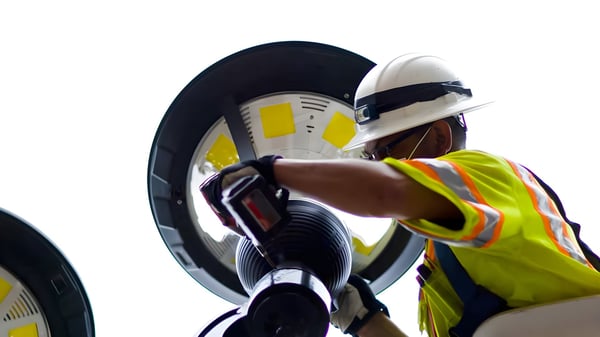
They say everything is bigger in Texas, but Dallas is now looking to add the adjective smarter to that equation, as they've launched the municipality's first smart community in their red cloud neighborhood. It's their first smart community, but it's not Dallas's first rodeo in the smart city. arena as the metropolis is investing in digitalization and tech to better manage the 1 .3 million resident city and adapt to new demands. The city of Dallas as a whole has invested in planning and producing a lot of and organizing our efforts to become more of a smart city and to implement more smart city programs and projects and so staff from various departments have gone through and they are starting test pilots to test technology startups test feasibility and functionality and a number of different interests an example of projects in the city comes from its water utility dwu which in 2017 launched a new wastewater monitoring system with radio communication sensors at 53 sites and a software to monitor and alert of the flow in the sewer system in real time dwu also manages seven percent of its network with smart water meters. The municipality is currently working to deploy air quality sensors, smart parking and irrigation systems and an intelligent traffic management system. The idea is to implement the project in the next one to three years. One of the projects the city has invested in to test smart technology at a full implementation skill and that was recently launched is that of the Red Cloud neighborhood. The area was chosen to have a smart glow. up for being historically underserved and because it needed renovations in which all the streets alley sidewalks they were all reconstructed in conjunction with installing smart city elements so that includes new led street lights that were installed and with the installation of those we were able to also add in wireless access points wireless access points and air quality monitors and both of those pieces of tech allow us to do several a variety of different things for that neighborhood, namely of which was providing Wi -Fi access to a neighborhood that previously had low or no access to internet at all. There's also AI -enabled cameras that are installed as part of the Red Cloud project as well, which will allow us to do things like get pedestrian counts, vehicle counts for transportation purposes. The city changed all the streetlights in the neighborhood, some 50, to LED, deploying smart For the technology they partnered with Ubiquia, a total of 52 devices were installed, 22 smart controllers to manage the lights remotely, two air -quality monitors installed on the poles, and 28 UbiHub solutions, which allow for Wi -Fi connectivity and have noise and visual sensors. In this case, though, only seven of these 28 are equipped with dual cameras with AI. When we spoke with Ubiquia in May, this was their biggest project so far. in terms of technology implementation, so not including smart controller projects. UB Hub AI, that you could kind of liken it to a Swiss Army knife of IoT connectivity. It has embedded in it the smart lighting controls, a Wi-Fi 6 access point, the traffic, pedestrian, bike lane, AI monitoring capabilities. So all of these things are built into one device. We have fiber, we have a backhaul point. We're fiber, we're fiber. Fiber was around, we bore traditional boring down to a backhaul station. In this one, it was a fire station. And down Red Cloud in particular, the poles, all the poles on Red Cloud are connected to fiber. And then there's a mesh network going down. So the units are actually all, they're all enclosed in one device. They plug in top of the NEMA socket on top of the pole so they fit seamlessly into it, really incorporates. well aesthetically to the neighborhood so you have um you have your mesh network based off the fiber down you know down red cloud so all the parallel or perpendicular streets have the mesh networks based about 100 feet apart in between the the 100 feet we have the uv cells that control the lights the public wi -fi is operational through lte with a speed of 25 megabits per second down something they'd like to get up to 100. all the data gathered by solutions are sent to ubiquitous platform which provides the analytics the company sells the hardware and also offers the platform as a service for the dashboard the other you know all the other live data as far as traffic counts and whether it's you know bicycles as he stated heavy you know heavy vehicles multi -axle vehicles commercial vehicles cars it can create charts graphs shows you the traffic mode you know the traffic movements um per hour, per 30 minutes over the course of a day, how many vehicles travel that road or traverse that path for the full day. The dashboard retains the highest video resolution for the data over a period of 12 days, but it can store lower resolution data for 30. And then past that point, we are going to, the city is going to look at retaining it according to our approved record retention schedules. The whole project, including renovations, had a budget. some 3 .8 million dollars most of the budget going to construction works the installations of fiber and ubiquitous solutions had a cost of around 475 000 the price makes us think of scalability since the entire city has some 80 000 street lights it might be scalable if the city compromised on some of the features but something else makes us wonder about scalability across the u .s cities are facing a problem and that's that most streetlights are owned by the utility companies and not the city. The city of Dallas for example owns 15 ,000 streetlights among which are those in the Red Cloud neighborhood which is why they were able to move forward with the project. The utility in Dallas on core doesn't want the city to add anything to their poles and isn't interested in selling them to the city so this type of solution won't be scalable to the entire metropolis but for the future they would like to bring the project to other underserved communities and scale up what's in place. The ubiqui equipment had everything that we needed in one and it's scalable you know for the gunshot detection the facial recognition and things like that so that was kind of what sold us on it. We are awaiting funding approval and also some grant applications we have some that we submitted so we'll see time will tell you know we've already identified areas part of our race equity plan so we have that it basically shows areas that are underserved and lack internet connectivity and things like that so we've identified 10 or more neighborhoods that are currently there for you know for the scalable technology you know but before we do that we want to have hard data we want to see how well this works in comparison to the other 10 networks that we did that were all you know basically on laura the city had already tested out sharing wi-fi Laura and weren't too happy with the results, so they're looking forward to getting hard data on the Red Cloud project, which should happen in around 6 to 12 months, and to get past the testing phases and straight to implementation to help with traffic, security and other types of decision making.
Unveiling Dallas’ First Official Smart Community
Air quality monitoringDallasEnvironmental MonitoringStreet LightingStreetlighting control
In this video
-
 Ryan Wagoner
PR Coordinator, Dallas’ Department of Public Works
-
 Jacob McCarroll
Performance Manager, Dallas’ Department of Public Works
- Greg Steininger VP of Public Safety and Networks, Ubicquia
About this video
This year, Dallas embarked on an innovative journey to transform Red Cloud into a smart community, marking a significant milestone in the city's urban development efforts. The municipality undertook a comprehensive renovation of the area's infrastructure, a crucial step in modernizing the neighborhood. One of the key changes was the replacement of traditional streetlights with energy-efficient LED lights. This shift to LED not only enhanced the area's lighting but also set the stage for integrating smart city technology.
Utilizing the new LED streetlights, Dallas deployed Ubicquia's UbiHub solution. This technology represents a forward-thinking approach to urban management, leveraging existing infrastructure for greater efficiency and data collection. Additionally, the city installed air quality monitors on the lights. These monitors play a vital role in gathering essential data, providing insights that could significantly influence future city planning and environmental initiatives.
In our video, we conduct in-depth interviews with several key figures involved in the Red Cloud project. We speak with Jacob McCarroll, Performance Manager at Dallas’ Department of Public Works, who sheds light on the project's objectives and implementation. Ryan Wagoner, PR Coordinator for Dallas’ Department of Public Works, provides insights into the community engagement and public awareness aspects of the project. Furthermore, Greg Steininger, VP of Public Safety and Networks at Ubicquia, offers a detailed perspective on the technological elements of the project, including the UbiHub solution.
Our discussion encompasses various aspects of the Red Cloud project. We delve into the scalability of the initiative, exploring how this pilot project could serve as a blueprint for future smart community developments in Dallas and beyond. The interviewees also discuss the technological advancements installed in the neighborhood, the infrastructural changes undertaken, and the broader implications for Dallas’s future urban planning.
This video is an informative exploration of how Dallas is navigating the path towards becoming a smart city, with the Red Cloud project at its forefront. It provides valuable insights into the intersection of technology, urban infrastructure, and community development.
Read the transcript machine-generated
More in Street Lighting
See all 7:10
How New Orleans Plans for Resilient, Smart Future
 6:45
Optimizing Street Lighting with Telco Network Data
 7:03
Valencia Targets Energy Efficiency & Light Pollution Reduction
 5:47
Are Smart Poles Scalable to Entire Cities?
 11:19
Las Condes’ Journey to Becoming a Smart City
 8:05
A Look at Philadelphia’s Advanced Lighting Fixtures
Latest news in street lighting
All news- Aléria Closes €793,236.52 Street Lighting Renovation Backed By State, Corsican Agency And EDF8 Nov 2026
- BMF GRUP Signs Deal to Buy 100% of Romanian Smart Lighting Firm Flash Lighting Services7 Nov 2026
- Emcali Selects Consortium for COP 450B Cali Streetlight Overhaul of 101,037 LED Luminaires7 Nov 2026
- Canberra Adds 16,000 Itron Controllers, Taking Connected Streetlights Above 47,0007 Nov 2026
Kurrant advisory
Planning a street lighting project? Talk to Kurrant.
Behind these interviews is Kurrant's advisory team, working with utilities, cities and the companies that serve them.
- Strategy AdvisoryKurrant is actively involved in resolving the challenges that cities, utilities and industry players are facing.
- M&A AdvisorySmart city and utility expertise for successful deals, turning insights into strategic gains.
- Engineering & ProcurementBetter engineering and procurement decisions, by identifying and developing digital and IoT solutions across use cases.
Or write to us: contact@kurrant.com
Send us a message