 in Barcelona
 3 to 5 Nov 2026
← Back to all events
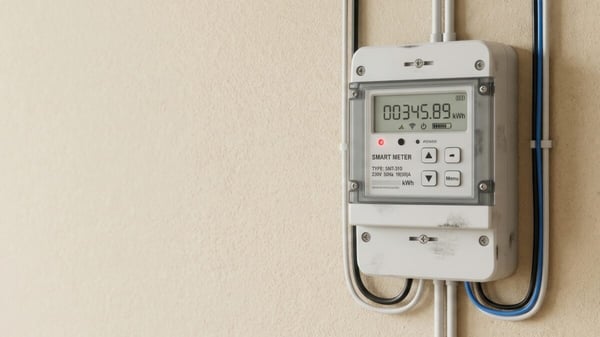 SWW Wunsiedel Hands Smart Meter Rollout For 14,000 Metering Points To Octopus Unit Energy Metering
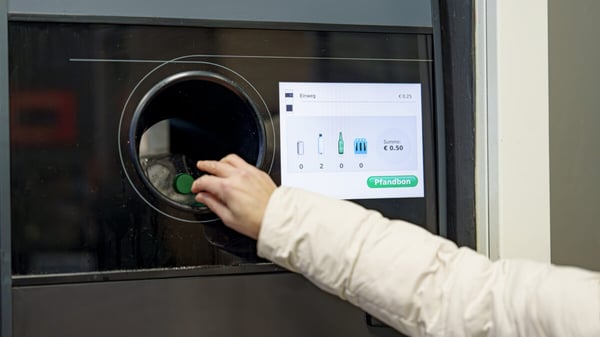 Moldova’s Deposit Return Operator Eco-Ret Picks Sensoneo To Build National IT Platform
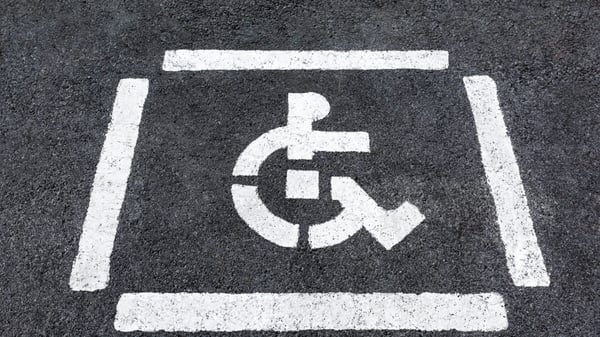 Lecce Pilots In-Ground Sensors To Flag Misuse Of 10 Disabled Parking Bays
 Jerusalem Completes Vehicle LiDAR Pilot To Build Digital Records Of Public Trees
 San Diego Council Suspends License Plate Readers And Rejects Smart Streetlight Camera Policy
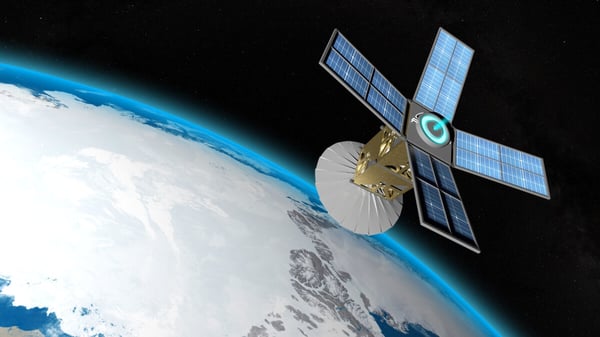 Marble Imaging Adds €6M From Cherry Ventures For German Very-High-Resolution Satellites
Distributech 2025
Cybersecurity: Unreachable is the New Secure with Galeal Zino from NetFoundry
📖 Read Video Transcript
Unfortunately, distributed grid is not connected with, let's say, private dedicated circuits, firewalls, Old school technology that works good if you're talking about a fixed substation.
Talking to a fixed central office.
Instead, what you have to have is the cloud equivalent of a network, where the network can be a part of the actual applications on the edge, and establish a super secure connection to wherever it needs to go without actually exposing, let's say that distributed grid site to the networks.
It's the network.
And although we talk about all these kind of proximate causes like this breach happened for this reason, that breach, the reality is 100% of them, the attacks are executed over the network.
No one is walking into a data center and into a server, grabbing some data and hightailing it out of there.
No attackers are coming in on the network.
They're getting the data they want, and then they're exfiltrating out on the network.
So if we can find a way to make these assets so that they cannot be reached from the network, that solves the greatest problem in cybersecurity today.
It's a shift.
If we were talking a few years ago, I would have talked about the value of the data and how much you're paying for ransomware and this type of thing in tomorrow's world, it's more of a core business continuity issue, because if you get breached, your operations stop.
And so you're managing or you're the impact is measured in terms of, okay, my services are unavailable to my customers for X amount of time.
Yeah.
CRA is one cyber resiliency act in Europe.
It went into legislation in December.
It's been in the works for quite some time.
CRA is super cool because CRA says, hey, if you're the vendor, if you're selling software, if you're selling services of course you're trying to provide the best product to your customers.
But the CRA puts additional responsibility on that vendor to deliver what they call a secure by design product.
And they're saying, you know what?
No matter what your Eula is with your end user, no matter what they've signed, if there's a breach and we find that you haven't been very proactive about providing a secure by design or secure by default connected product to your customers, you can be held liable.
And the reason that's super cool is it's often the vendors who are actually the best positioned to sell a secure by design or secure by default type solution to the end customer.
And on the flip side, the end customer, whether it's electrical grid or smart city or whatever it might be, if they're handed something that's not secure by design, it's just a lot of work to try to take something that's inherently insecure and then bolt on a bunch of stuff to make it secure.
So this kind of really flips the script.
And so I'm super excited.
A lot of the folks we talk to in Europe have known this is coming, has been in the works for a couple of years, so they've already started to implement Secure Design into their products.
It's because historically the trade off was, do I put a lot of time, money and effort into trying to make something more secure?
And I may not have that time.
The resources, the money, the effort.
I have 100 other things that I have to do.
So as an industry within our own worst enemy, because we've handed solutions that are just too difficult.
So with this CRA that we just talked about with Secure by Design, we're saying back to the end user, listen, you don't have to choose between strong security and essentially operations efficiency, automation, business velocity.
Like we don't want you to be forced to make that choice.
Instead, let's hand you a secure by design product.
So actually your life will be simpler.
Your operations will be faster if you do go with Secure by Design.
So we're flipping the script.
But of course, folks, they need to see that in order to believe it.
Yeah, I think the smart city distributed grid, the ones who are a little bit more greenfield their ROI is exceptionally obvious because they know what it costs to do things like maintain firewalls, maintain VPNs, maintain infrastructure, have infrastructure dependent software.
We are hardcoding IP addresses, and you're doing all these kind of wonky things that at the end of the day, are operational cost and developer velocity kind of barriers.
So when they look at it and they're doing like a greenfield, let's say like distributed grid, it's just a no brainer because we're like, oh my gosh, I'm going to be that much faster and that much more efficient.
If I have brownfield type stuff there, it's more of a okay, I know that I'm vulnerable.
I know how much every second or minute or hour of downtime costs my customers.
And now let me calculate how much do I think you can help me not have that second minute, hour day or week of downtime?
There's more, let's say bad guys and good guys.
More attackers than defenders.
It disproportionately favors them initially.
It's another reason why we say take your assets off the networks, make them unreachable.
Because now not only do the quote unquote hackers have access to your resources, but so do the AIs and the AI agents and the AI assisted software.
So you're just going to multiply the amount of lets say parties that can leverage the network to go exploit some vulnerability that's deep inside your substation or your distributed grid or whatever that deployment.
So in my opinion, the number one thing you can do to prepare for AI, please don't expose your assets to the AIs.
Don't expose them to the networks.
Talking to a fixed central office.
Instead, what you have to have is the cloud equivalent of a network, where the network can be a part of the actual applications on the edge, and establish a super secure connection to wherever it needs to go without actually exposing, let's say that distributed grid site to the networks.
It's the network.
And although we talk about all these kind of proximate causes like this breach happened for this reason, that breach, the reality is 100% of them, the attacks are executed over the network.
No one is walking into a data center and into a server, grabbing some data and hightailing it out of there.
No attackers are coming in on the network.
They're getting the data they want, and then they're exfiltrating out on the network.
So if we can find a way to make these assets so that they cannot be reached from the network, that solves the greatest problem in cybersecurity today.
It's a shift.
If we were talking a few years ago, I would have talked about the value of the data and how much you're paying for ransomware and this type of thing in tomorrow's world, it's more of a core business continuity issue, because if you get breached, your operations stop.
And so you're managing or you're the impact is measured in terms of, okay, my services are unavailable to my customers for X amount of time.
Yeah.
CRA is one cyber resiliency act in Europe.
It went into legislation in December.
It's been in the works for quite some time.
CRA is super cool because CRA says, hey, if you're the vendor, if you're selling software, if you're selling services of course you're trying to provide the best product to your customers.
But the CRA puts additional responsibility on that vendor to deliver what they call a secure by design product.
And they're saying, you know what?
No matter what your Eula is with your end user, no matter what they've signed, if there's a breach and we find that you haven't been very proactive about providing a secure by design or secure by default connected product to your customers, you can be held liable.
And the reason that's super cool is it's often the vendors who are actually the best positioned to sell a secure by design or secure by default type solution to the end customer.
And on the flip side, the end customer, whether it's electrical grid or smart city or whatever it might be, if they're handed something that's not secure by design, it's just a lot of work to try to take something that's inherently insecure and then bolt on a bunch of stuff to make it secure.
So this kind of really flips the script.
And so I'm super excited.
A lot of the folks we talk to in Europe have known this is coming, has been in the works for a couple of years, so they've already started to implement Secure Design into their products.
It's because historically the trade off was, do I put a lot of time, money and effort into trying to make something more secure?
And I may not have that time.
The resources, the money, the effort.
I have 100 other things that I have to do.
So as an industry within our own worst enemy, because we've handed solutions that are just too difficult.
So with this CRA that we just talked about with Secure by Design, we're saying back to the end user, listen, you don't have to choose between strong security and essentially operations efficiency, automation, business velocity.
Like we don't want you to be forced to make that choice.
Instead, let's hand you a secure by design product.
So actually your life will be simpler.
Your operations will be faster if you do go with Secure by Design.
So we're flipping the script.
But of course, folks, they need to see that in order to believe it.
Yeah, I think the smart city distributed grid, the ones who are a little bit more greenfield their ROI is exceptionally obvious because they know what it costs to do things like maintain firewalls, maintain VPNs, maintain infrastructure, have infrastructure dependent software.
We are hardcoding IP addresses, and you're doing all these kind of wonky things that at the end of the day, are operational cost and developer velocity kind of barriers.
So when they look at it and they're doing like a greenfield, let's say like distributed grid, it's just a no brainer because we're like, oh my gosh, I'm going to be that much faster and that much more efficient.
If I have brownfield type stuff there, it's more of a okay, I know that I'm vulnerable.
I know how much every second or minute or hour of downtime costs my customers.
And now let me calculate how much do I think you can help me not have that second minute, hour day or week of downtime?
There's more, let's say bad guys and good guys.
More attackers than defenders.
It disproportionately favors them initially.
It's another reason why we say take your assets off the networks, make them unreachable.
Because now not only do the quote unquote hackers have access to your resources, but so do the AIs and the AI agents and the AI assisted software.
So you're just going to multiply the amount of lets say parties that can leverage the network to go exploit some vulnerability that's deep inside your substation or your distributed grid or whatever that deployment.
So in my opinion, the number one thing you can do to prepare for AI, please don't expose your assets to the AIs.
Don't expose them to the networks.
More DistribuTECH International editions

Latest Kurrantly News
All news
SWW Wunsiedel Hands Smart Meter Rollout For 14,000 Metering Points To Octopus Unit Energy Metering
Moldova’s Deposit Return Operator Eco-Ret Picks Sensoneo To Build National IT Platform
Lecce Pilots In-Ground Sensors To Flag Misuse Of 10 Disabled Parking Bays
Jerusalem Completes Vehicle LiDAR Pilot To Build Digital Records Of Public Trees
San Diego Council Suspends License Plate Readers And Rejects Smart Streetlight Camera Policy
Marble Imaging Adds €6M From Cherry Ventures For German Very-High-Resolution Satellites
Latest Kurrant Originals
See all

Kurrant advisory
Planning a smart city or utility project? Talk to Kurrant.
Behind these interviews is Kurrant's advisory team, working with utilities, cities and the companies that serve them.
- Strategy AdvisoryKurrant is actively involved in resolving the challenges that cities, utilities and industry players are facing.
- M&A AdvisorySmart city and utility expertise for successful deals, turning insights into strategic gains.
- Engineering & ProcurementBetter engineering and procurement decisions, by identifying and developing digital and IoT solutions across use cases.
Or write to us: contact@kurrant.com
Send us a message
© Kurrant. All Rights Reserved. · Editorial Standards · Cookie settings
This site is protected by reCAPTCHA and the Google Privacy Policy and Terms of Service apply.