 in Barcelona
 3 to 5 Nov 2026
← Back to all events
 UKRI Opens £15M Competition To Scale Interoperable Bidirectional EV Charging
 Galapagar Awards Veolia 15-Year Energy-Services Contract Covering 4,500 Streetlights
 Smart-Bin Billing Dispute in Florence Area Heads to Italy’s Court of Auditors and ARERA
 Signify Adds Smart Faults To Interact To Correlate Outdoor Lighting Network Anomalies
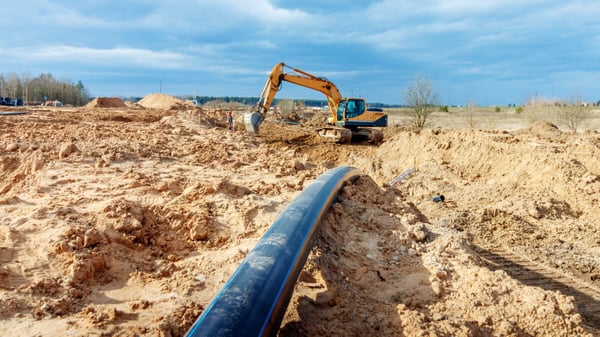 Famagusta Approves €17.7M For 2027 Flood, Sewerage And Smart Meter Projects
 Chiyoda City Installs 22 Forcetec SmaGO Solar Compacting Bins In Akihabara
Distributech 2025
Drones in Utilities: Beyond the Buzz with Grant Hosticka from DJI
📖 Read Video Transcript
So we see a lot of growth within the adoption of drones within the utility industry.
For one, the ability for these drones to reliably capture a variety of data, whether it is Lidar, visual or thermal, has been a big part of that.
And then folks being able to make decisions based off of that data that they collect, right.
There is a lot of data coming in at the end of the day, but being able to extrapolate that Lidar data to understand where vegetation needs to be taken care of, or getting a look at a pole that you wouldn't have been able to from the ground.
Those are just some, I think, of the easy wins we've seen folks realize and really helped start to grow programs.
I'd say the big one off the gate is inspection programs, right?
Some states here in the US require those on a set basis.
So maybe it's something like every six years.
So utilizing the drones able to see cost savings in flying those assets, taking pictures and looking at them after the fact rather than just having someone walking on the ground who's not able to see as much and is going to have to take a longer period of time and say, next bucket.
As we are starting to see some more on demand automated response with the drone dock products.
So the idea there is you have a little house for the drone parked out at a location, keeps the drone safe from different climates or other, you know, issues that may present itself charges the drone, offloads the data.
But just that ability to respond on demand to an outage or an alarm with the drone itself is starting to grow as a use case as well.
And then finally, we talked about actually managing a vegetation and something like a transmission corridor or similar.
So definitely three of the big use cases seeing right now.
I think there's two big buckets.
One being they work with drone service providers.
So maybe it's a small business who has pilots on staff, has the equipment, and they're hired to collect certain photos over X amount of miles of line.
There's a, you know, contract in place there or the utility builds up a program in-house.
Maybe they purshase those assets themselves.
They are able to do that as capital on their end and then running the program from in-house, they hire people on staff, right.
Sensor operators, drone pilots, and they build out the program there.
Oh, you see some hybrid mixes overall, right?
On the DJI side of the house, we also have software that one uses for post-processing some of the data, like after you do a Lidar flight, you're going to have to process that to get your what's called a point cloud out.
So we do have software along with that to help the customer succeed.
Then we also have additional software partners that the whole ecosystem overall.
So we have a thread here at the booth.
And right there we able to build out more custom software solutions for analyzing those photos.
Training models over time to see what issues look like and similar.
So we do look for those software partners as well that works directly with our drones, that can cater solutions to just what utility customers are looking for.
Some good I guess.
Quantitative data from my previous work in the utility industry would be on the distribution side, right?
Someone walking at maybe holding up a handheld thermal camera or trying to look at it with some type of binoculars.
Maybe they're knocking out 40, 50 distribution poles in a day for inspections, while someone with a drone, 200, 300 poles right anywhere in there where they're able to collect data.
And then someone can look at that better data back at the office from the comfort of a nice computer screen, zoom in and high resolution to better determine what issues may exist.
So I'd say that's one bucket there.
On the storm response side, right?
It's a matter of how quickly you can get teams in place, how quickly you can get customers back online, or being able to assess an area that has an outage.
Finding where that issue is, where lines are down so you can send linemen exactly to the task.
There's obviously some major cost savings and efficiency there as well.
More DistribuTECH International editions

Latest Kurrantly News
All news
UKRI Opens £15M Competition To Scale Interoperable Bidirectional EV Charging
Galapagar Awards Veolia 15-Year Energy-Services Contract Covering 4,500 Streetlights
Smart-Bin Billing Dispute in Florence Area Heads to Italy’s Court of Auditors and ARERA
Signify Adds Smart Faults To Interact To Correlate Outdoor Lighting Network Anomalies
Famagusta Approves €17.7M For 2027 Flood, Sewerage And Smart Meter Projects
Chiyoda City Installs 22 Forcetec SmaGO Solar Compacting Bins In Akihabara
Latest Kurrant Originals
See all
Kurrant advisory
Planning a smart city or utility project? Talk to Kurrant.
Behind these interviews is Kurrant's advisory team, working with utilities, cities and the companies that serve them.
- Strategy AdvisoryKurrant is actively involved in resolving the challenges that cities, utilities and industry players are facing.
- M&A AdvisorySmart city and utility expertise for successful deals, turning insights into strategic gains.
- Engineering & ProcurementBetter engineering and procurement decisions, by identifying and developing digital and IoT solutions across use cases.
Or write to us: contact@kurrant.com
Send us a message
© Kurrant. All Rights Reserved. · Editorial Standards · Cookie settings
This site is protected by reCAPTCHA and the Google Privacy Policy and Terms of Service apply.