 in Barcelona
 3 to 5 Nov 2026
← Back to all events
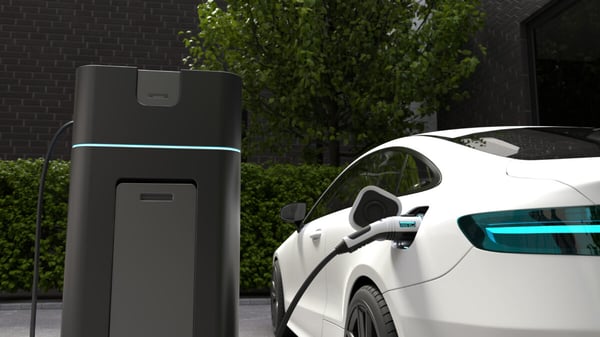 UKRI Opens £15M Competition To Scale Interoperable Bidirectional EV Charging
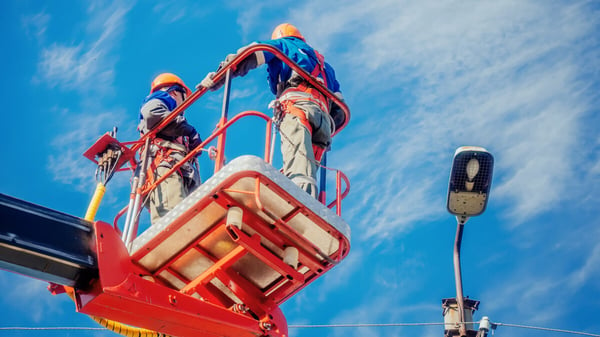 Galapagar Awards Veolia 15-Year Energy-Services Contract Covering 4,500 Streetlights
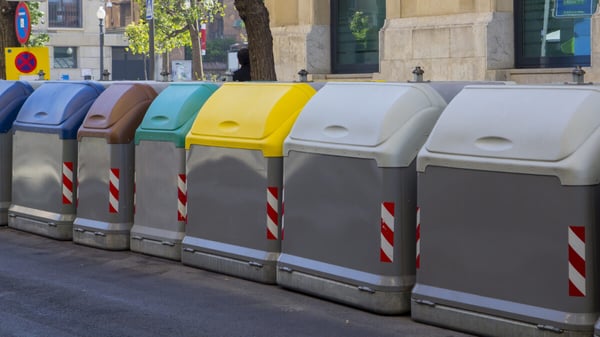 Smart-Bin Billing Dispute in Florence Area Heads to Italy’s Court of Auditors and ARERA
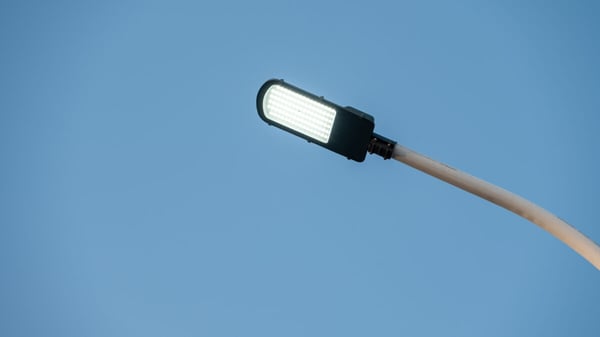 Signify Adds Smart Faults To Interact To Correlate Outdoor Lighting Network Anomalies
 Famagusta Approves €17.7M For 2027 Flood, Sewerage And Smart Meter Projects
 Chiyoda City Installs 22 Forcetec SmaGO Solar Compacting Bins In Akihabara
Distributech 2025
The Role of AI in Reviving and Securing the Nuclear Industry with Phil Zeringue from NuclearN
📖 Read Video Transcript
We're very optimistic with the opportunity that AI has to just improve the safety, the reliability, the efficiency and the labor savings.
And so it's always been a big cost of nuclear.
Can you operate it as affordably as gas?
And that is our goal.
We believe that if you want carbon free, you have to go with nuclear.
However, it should also be affordable.
Well, I've been in the nuclear industry, almost 30 years, and I've seen a few attempts at bolstering nuclear power.
And this is the first one I've seen have the amount of steam and popular opinion that I've ever seen.
I believe we tried wind and solar to find carbon free solutions, and they're just physics limits to what is possible compared to how we wish to use electricity.
And with AI data centers and other growth potential, you're seeing need for large amounts of electricity coming online and large amounts of clean, carbon free energy.
The only viable commercial option right now really is nuclear.
You see states talking about it now that don't currently have nuclear operations.
You're seeing multiple plants that were planned to be shut down being either continued in operation, such as Diablo Canyon or being restarted, such as Crane Clean Energy, formerly Three Mile Island, Palisades, Duane Arnold...
So you're seeing a lot of interest in the US.
You're seeing in Canada investments into their plants as well.
And then France is also looking, it's always been a leader in Europe and in nuclear power.
And you continue to see that happen on their side as well.
Yeah.
We're seeing a surprisingly a lot of movement.
Nuclear always has been a ‘let someone else do it first and will follow’.
It's been interesting how quickly we've seen adoption.
So we're in over half of the North American market in the nuclear utility side already.
We're doing business in three countries currently.
All English speaking.
But we've seen a lot of interest internationally as well.
So most of our interactions with customers, with prospective customers, come from requests come from word of mouth from other utilities that we work with.
So there's definitely a lot of appetite.
Utilities in general, nuclear specifically has a lot of natural language that's not in databases.
It's written down, it's handwritten, it's in old PDFs.
It's in logs, it's in issues, it's in work order history.
And being able to take that information into a machine, make it easily available to people.
You can start to do document generation, you can do evaluations, you can do regulatory correspondence.
You can solve almost any process that you do in a computer can be done faster and easier with an assistant with an AI assistant.
And so we're building a lot of those assistance.
And what we're finding is, the ability to do that in nuclear, where the data has to be secure, the solutions have to be secure...
It can't use commercial tools, it can't go to the internet.
And it has to be precise and accurate, and it has to be done over extremely large documents, sometimes 10,000 page documents that solving that use case becomes very applicable to distribution, to fossil generation, to engineering services, to uranium entrenchment, manufacturing, to construction, to any various industry that kind of has that heavy paperwork burden and regulatory burden.
I think they're the same.
But with the nuclear, it's more more it's more and more.
They have a high burden of proof, a high burden of certainty and accuracy.
When you're working with nuclear fission, it can be dangerous if you don't take the precautions.
And you need to be able to prove that you've taken the precautions.
And so there are a lot of business processes over, you know, the 60 years that nuclear, commercial nuclear has been in operations that have become best practices, but they all require a lot of overhead.
Nuclear is a very difficult business to build solutions for.
If you don't have experience.
We have to do a number of things with our solutions that commercial tools are not viable to service the nuclear industry.
For example, you don't want an AI model to hallucinate.
You don't want it to make information up.
You also want to bias it towards certain decisions.
If you're determining if something is reportable to a regulator or if it's a safety issue, you don't you're okay with a false positive.
You're okay having the model say, I think it might be a safety problem.
So I'm going to say it is.
But you never want to say it's not a safety problem when it is or oh, the regulator doesn't need to know when they really do.
And so you have to bias the algorithms and the models to make predictions, the way nuclear professionals are trained to make their decisions.
More DistribuTECH International editions

Latest Kurrantly News
All news
UKRI Opens £15M Competition To Scale Interoperable Bidirectional EV Charging
Galapagar Awards Veolia 15-Year Energy-Services Contract Covering 4,500 Streetlights
Smart-Bin Billing Dispute in Florence Area Heads to Italy’s Court of Auditors and ARERA
Signify Adds Smart Faults To Interact To Correlate Outdoor Lighting Network Anomalies
Famagusta Approves €17.7M For 2027 Flood, Sewerage And Smart Meter Projects
Chiyoda City Installs 22 Forcetec SmaGO Solar Compacting Bins In Akihabara
Latest Kurrant Originals
See all
Kurrant advisory
Planning a smart city or utility project? Talk to Kurrant.
Behind these interviews is Kurrant's advisory team, working with utilities, cities and the companies that serve them.
- Strategy AdvisoryKurrant is actively involved in resolving the challenges that cities, utilities and industry players are facing.
- M&A AdvisorySmart city and utility expertise for successful deals, turning insights into strategic gains.
- Engineering & ProcurementBetter engineering and procurement decisions, by identifying and developing digital and IoT solutions across use cases.
Or write to us: contact@kurrant.com
Send us a message
© Kurrant. All Rights Reserved. · Editorial Standards · Cookie settings
This site is protected by reCAPTCHA and the Google Privacy Policy and Terms of Service apply.