in Barcelona
 3 to 5 Nov 2026
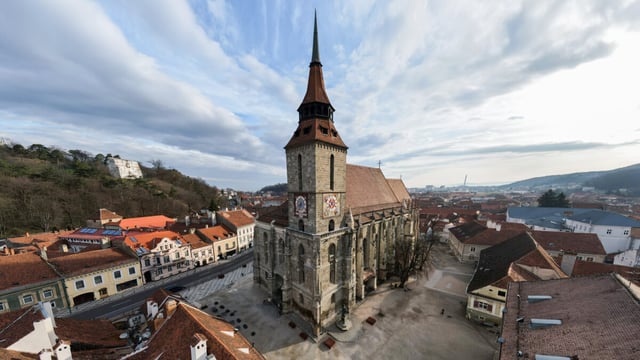
Primăria Brașov, the city hall of Brașov in central Romania, has launched a framework agreement tender for design services and technical-economic documentation for the public investments it plans over the next four years, with an estimated value of 170.48 million lei (€31.99 million) excluding VAT, a duration of 48 months and contracts with no more than five economic operators, according to Transilvania 365 on 20 October 2026. The euro figure applies the Romanian National Bank rate of 5.3285 lei per euro on 20 October 2026.
What The Framework Agreement Covers
The services the city hall may call off span a wide range of project types: road infrastructure and utility networks, urban mobility, urban regeneration, the arrangement of public spaces and green areas, energy efficiency, built heritage, and sports, cultural, educational and medical infrastructure. Smart city projects are listed within the same scope.
Within those categories, the contracted firms will carry out studies and expert assessments, prepare documentation for permits and authorisations, produce technical designs and provide technical assistance during works. The agreement therefore covers the full pre-construction chain, from feasibility work through to supervision support.
This project is heading to tender
New smart city and utility tenders worldwide, flagged daily with an AI summary.
A Ceiling, Not A Budget
The 170.48 million lei (€31.99 million) figure is the estimated ceiling of the agreement and not a sum that will be spent automatically. Contracts will be awarded according to the investments the municipality needs and the funds approved for them.
Kurrantly’s calculations from the published figures show that the ceiling averages 3.55 million lei (€0.67 million) per month across the 48-month term, or 42.62 million lei (€8.00 million) per year, and that if five operators are appointed the ceiling averages 34.10 million lei (€6.40 million) per operator. Those averages assume an even spread, whereas call-offs under a framework agreement follow project timing.
Why Municipalities Buy Design Capacity In Advance
A four-year framework with up to five suppliers lets a city commission design work as funding windows open, without running a separate procurement for each project. For European Union-funded investments, where application deadlines depend on mature technical documentation, that shortens the time between a funding call and a submittable file.
Other Romanian municipalities are at later stages of delivery on technology projects. Bucharest City Hall secured General Council approval in May 2026 for the technical and feasibility framework of the first phase of an intelligent traffic signal programme covering 92 intersections, with 547 intersections and pedestrian crossings planned in total, and Oradea signed a €950,000 contract to modernise public lighting along a central corridor with an underground LED network designed to support future urban technology.
Smart City Within A Wider Design Pipeline
In the Brașov framework, smart city projects share a ceiling with road, heritage and social infrastructure, so the design work for connected technologies competes for the same pool as conventional works. Mobility, energy efficiency and smart city are the three categories most likely to involve sensors, controls and data platforms, according to Kurrantly’s reading of the list, and each will need technical documentation that specifies the equipment and integration requirements before any supply tender can be issued.
The Bucharest and Oradea examples show where such documentation leads: a feasibility framework in Bucharest and a signed lighting contract in Oradea.
What Comes Next
The first call-offs under the framework will show which of the listed categories takes the largest share of the 170.48 million lei (€31.99 million) ceiling, and whether the smart city category produces design briefs for the connected projects that the municipality’s later supply tenders would build on.